Most beginner mistakes come down to a few things: skipping safety gear, ignoring the wind, standing in the wrong place, and setting up the board or paddle wrongly. All of them are easy to fix once you know about them.
Here are 12, with the fix for each. For a longer list of what to do right, see our 25 paddle board tips for beginners.
Quick answer
- Safety: wear a life jacket and a leash, and check the wind before you go.
- Position: stand with your feet either side of the center handle, knees soft, eyes up.
- Paddle: blade angled away from you, hands shoulder-width apart, full blade in the water.
- Board: pick a stable board, inflate it fully, and start on calm water.
Safety mistakes
1. Not wearing a life jacket
The US Coast Guard treats a stand-up paddle board as a vessel once you’re beyond a swimming, surfing or bathing area, and it says a Coast Guard-approved life jacket is required. It recommends wearing it whenever you’re underway, and children under 13 must wear one on an underway vessel. State rules vary, so check yours.
Fix: wear a comfortable, properly fitted jacket every time, even if you swim well. Our guide on whether to wear a life jacket paddle boarding covers the types.
2. Skipping the leash
Falling off is normal. Without a leash, the board can drift away faster than you can swim, and it’s your best flotation. Every beginner guide we read lists it.
Fix: wear a leash on flat water and the open ocean. The American Canoe Association’s advice, as summarized by NRS, is that on flat water a coiled or hybrid leash on the ankle or calf is appropriate. On moving water like rivers, use a quick-release leash attached at the waist and reachable with both hands, so you can release it fast if it snags.
3. Forgetting a whistle
The Coast Guard says boats under 39.4 feet need some way to make an efficient sound signal, and it gives an athletic whistle as an example. Your voice doesn’t count.
Fix: clip a whistle to your life jacket.
4. Ignoring the wind
A light breeze can feel pleasant on the beach and become hard work on open water. Lifeguards and rescue services in several news reports warn that wind blowing away from shore makes it easy to paddle out and very hard to get back.
Fix: check the forecast, wind speed and direction before every trip. Paddle into the wind on the way out so the return is easier, and kneel to cut your drag if it picks up. If you’re unsure, stay home or stick to a sheltered spot. See what are the best conditions for paddle boarding.
5. Dressing for the air, not the water
A warm day doesn’t mean warm water. The water is often much colder than the air.
Fix: dress for the water temperature, in quick-dry layers or a thin wetsuit when it’s cool, plus sun protection. Try our wetsuit check and read what to wear while paddleboarding.
Technique mistakes
6. Standing in the wrong spot
Too far back and the nose lifts and the board is hard to steer. Too far forward and the nose digs in.
Fix: use the center carry handle as your marker. Stand with your feet about shoulder-width apart on either side of it, knees slightly bent. Kneeling first is a good way to build confidence.
7. Holding the paddle backwards
Many beginners put the blade on the wrong way round, which wastes effort. The blade is angled, and it should tilt forward, toward the nose of the board.
Fix: the angle should point away from you. Put the hand on the opposite side to your paddling side on the T-grip. Left hand on top when paddling on the right. Full steps in how to hold a paddle board paddle.
8. Paddling with just your arms
Arms alone tire quickly, and a slanted paddle gives you less power per stroke.
Fix: keep the paddle close to vertical as it enters the water, rotate your torso and pull from your core. If the board keeps veering, read how to paddle a SUP straight.
9. Looking at your feet
Looking down throws your balance off.
Fix: pick a point on the shore or water ahead and look at it. More in how to improve balance for paddle boarding.
10. Not practicing falling
You will fall at some point, so it helps to know how.
Fix: practice in calm, shallow water. Fall away from the board, then climb back on: how to get back on a paddle board after falling.
Gear mistakes
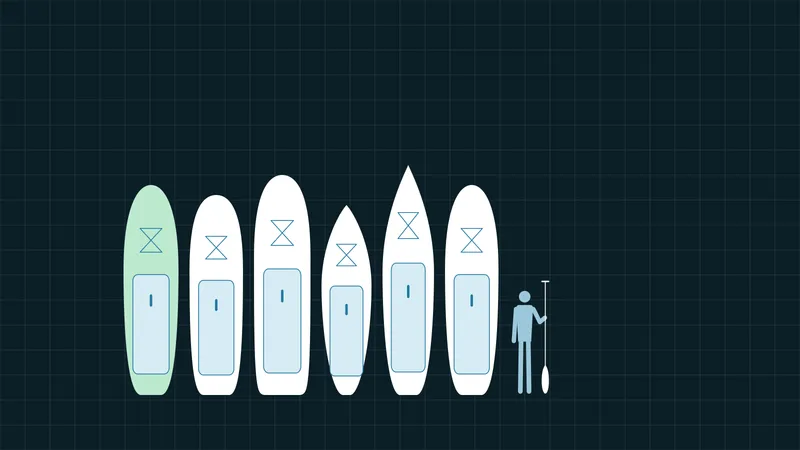
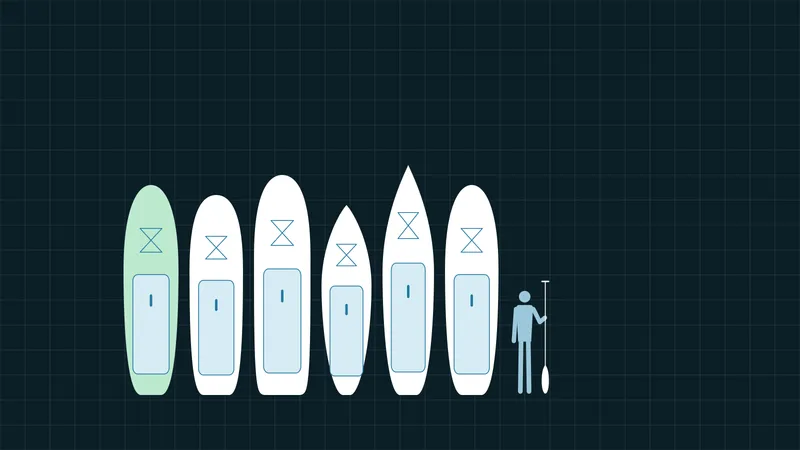
11. Choosing a board that’s too narrow
Narrow boards are faster but harder to balance on. Glide, a board maker, recommends beginners look at boards at least 32 inches wide and check the weight rating. That’s one maker’s rule of thumb, so treat it as a starting point.
Fix: pick a board that suits your weight and how you’ll paddle. Our Board Fitter narrows it down, and what size paddle board do I need explains the numbers.
12. Under-inflating an inflatable board
A soft board bends under your weight and feels wobbly. Brands give different numbers, so we won’t give one pressure for every board. One maker suggests 15–18 PSI, another 12 PSI, which shows how much it varies.
Fix: use the PSI printed on your board or in its manual, and use a pump with a gauge. See the best SUP pumps.
FAQ
What is the biggest mistake beginners make?
Skipping safety gear and ignoring the wind are the two that matter most, because they can turn a small problem into an emergency. Technique mistakes just make the session harder.
Is it OK to paddle board alone as a beginner?
It’s safer with a friend, especially while you’re learning. If you do go alone, wear a PFD and leash, carry a whistle and tell someone your plan.
Should I kneel or stand first?
Kneeling first is common advice and helps you feel the board before you stand.
How do I know the wind is too strong?
Check the forecast first. If whitecaps are forming, or you struggle to make headway, stay close to shore or don’t go out. The National Weather Service tells less experienced mariners in small boats to stay off the water during a Small Craft Advisory (winds of roughly 21 to 33 knots).
Do I need a different leash on a river?
Yes. Use a quick-release leash at the waist, not an ankle leash. See the leash section above.