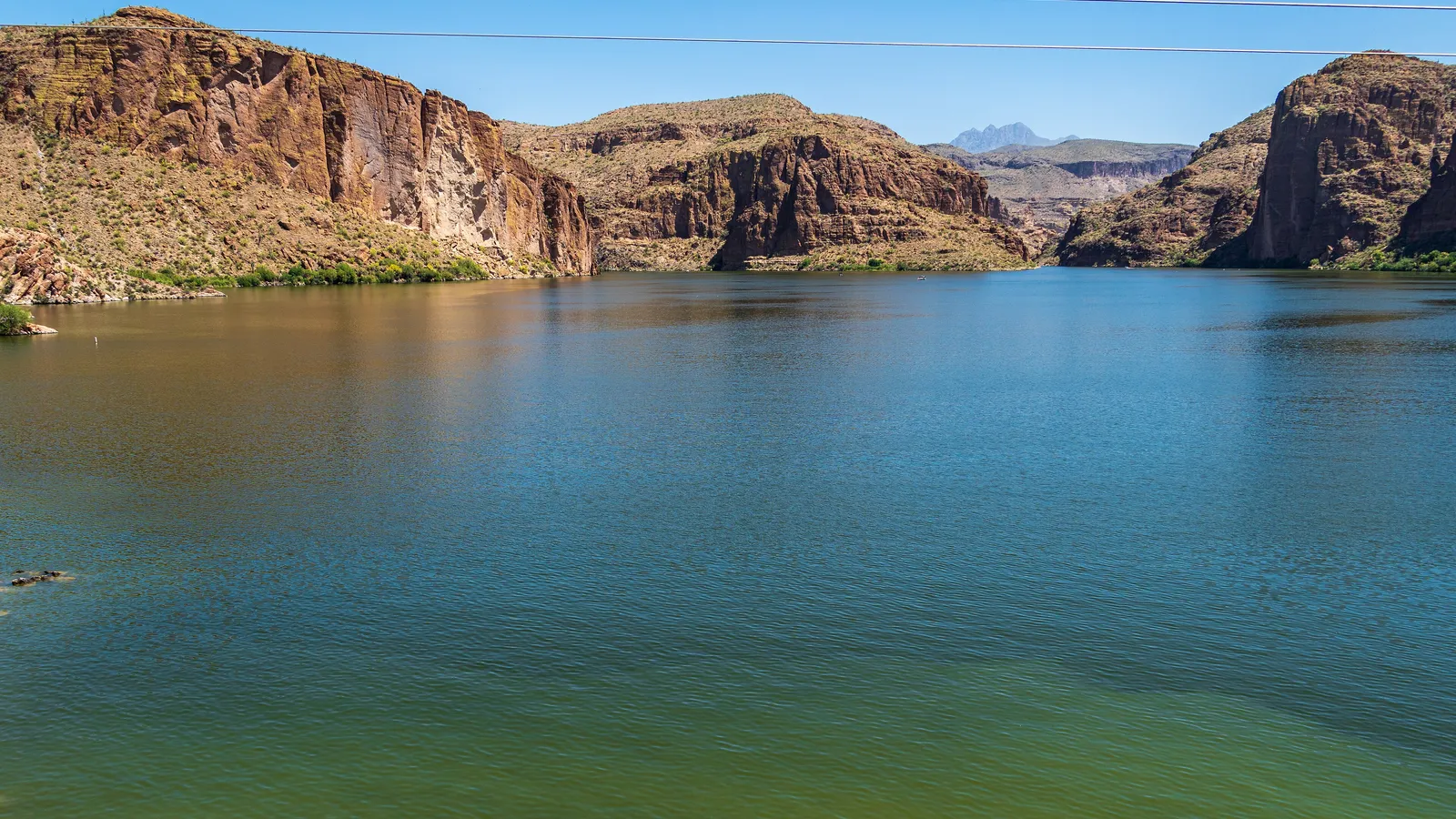

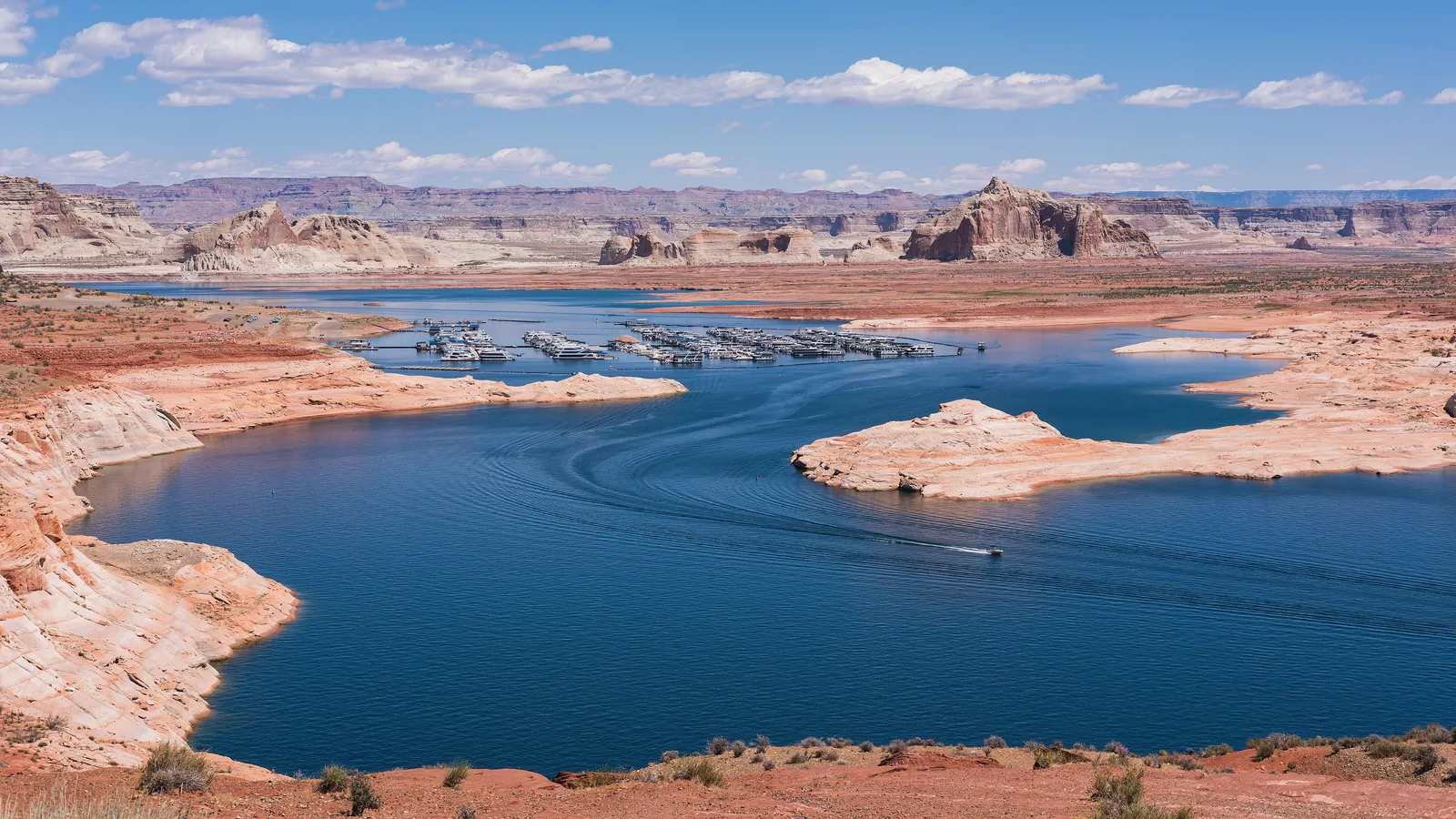
The best place to paddle board on Lake Powell is Antelope Canyon, launching from Antelope Point near Page: the canyon is a no-wake zone, and you paddle between sandstone walls that close in as you go. For an easier first paddle, try the coves around Wahweap Bay; for the most dramatic river trip, take a backhaul boat up the Colorado from Lees Ferry and paddle back through Horseshoe Bend.
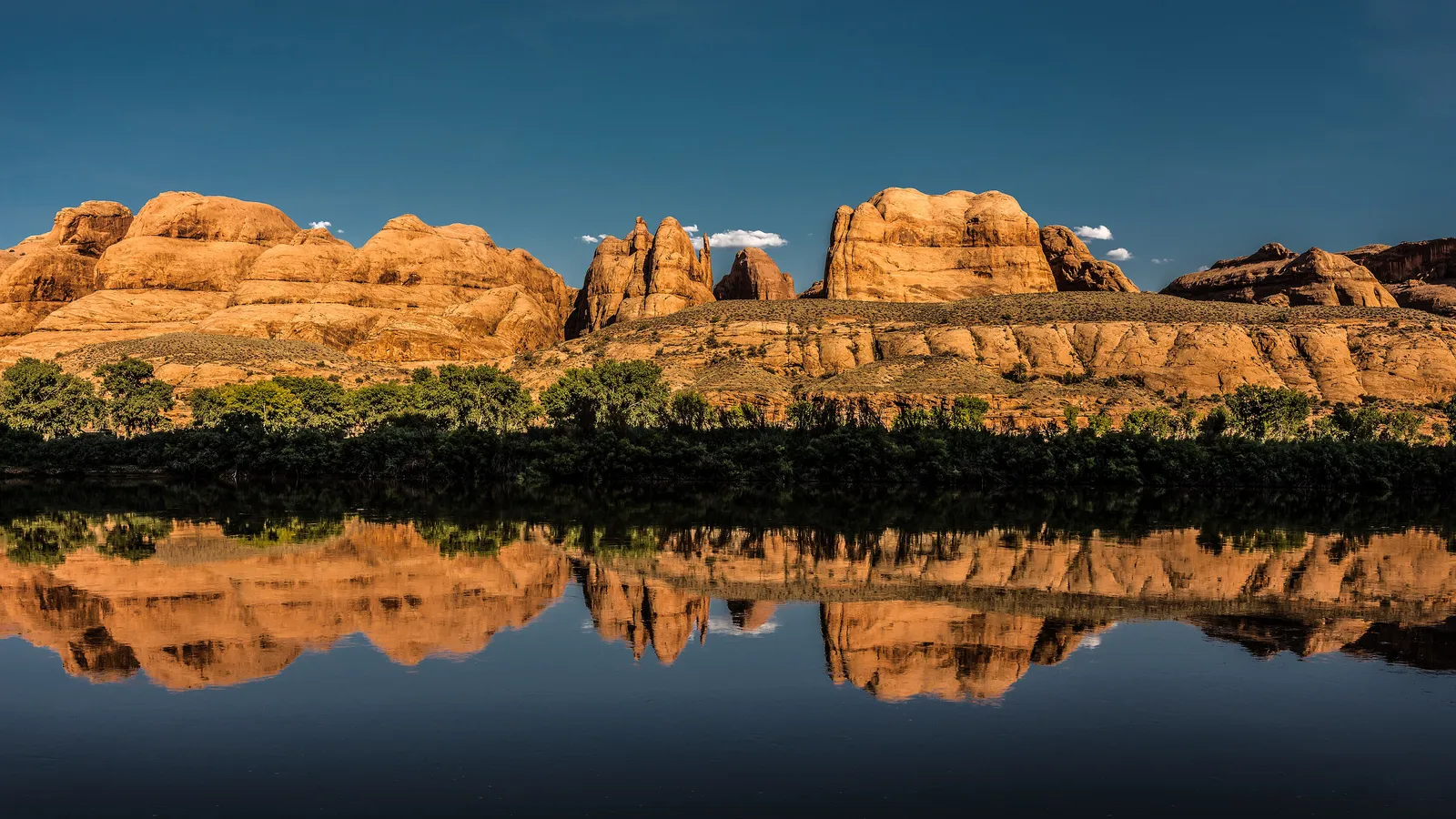
Lake Powell works for paddling because it’s a huge reservoir flooded into red-rock canyons, with hundreds of side canyons that boats can’t reach at speed. The water is warm by late summer and the scenery is unlike anywhere else in the US. The trade-offs are heat, wind, boat wakes on the main channels and a lake level that keeps changing which launches are open. In early October 2026 the lake stood at about 3,519 feet, low enough that the main ramps at Wahweap and Antelope Point are open to paddlecraft only.
Quick answer
- Most famous paddle: Antelope Canyon, from the Antelope Point public ramp.
- First time on a board: the coves around Wahweap Bay, early in the morning.
- Camp and paddle: Lone Rock Beach in Utah, where you can drive close to the water and camp.
- A river trip: Horseshoe Bend on the Colorado, by backhaul from Lees Ferry.
- Rentals: Lake Powell Paddleboards in Page rents boards at Antelope Point and Wahweap.
The best places to paddle board in Lake Powell
Antelope Canyon from Antelope Point
Directions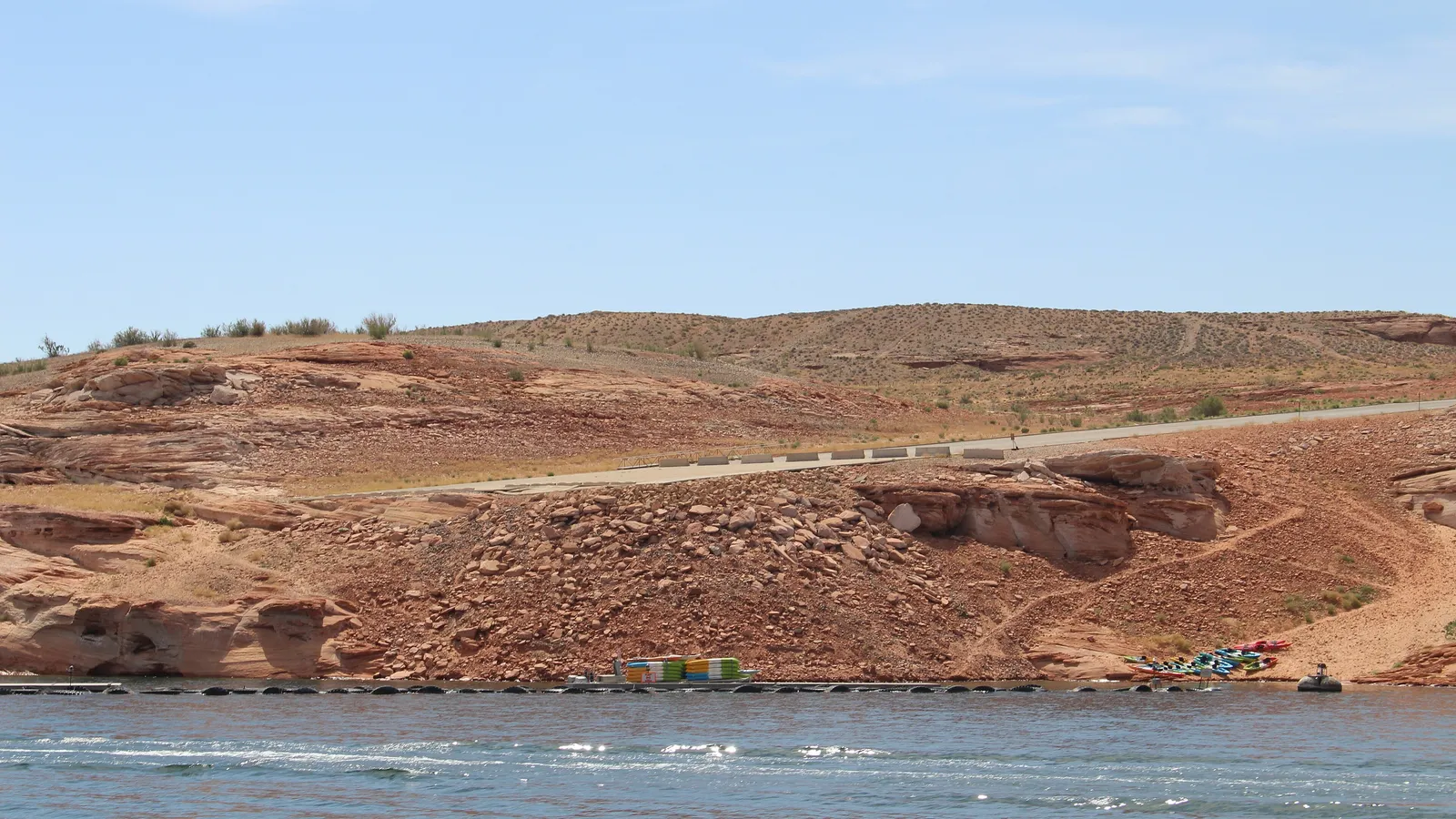
Best for: the classic Lake Powell paddle. Flat water in a narrow canyon.
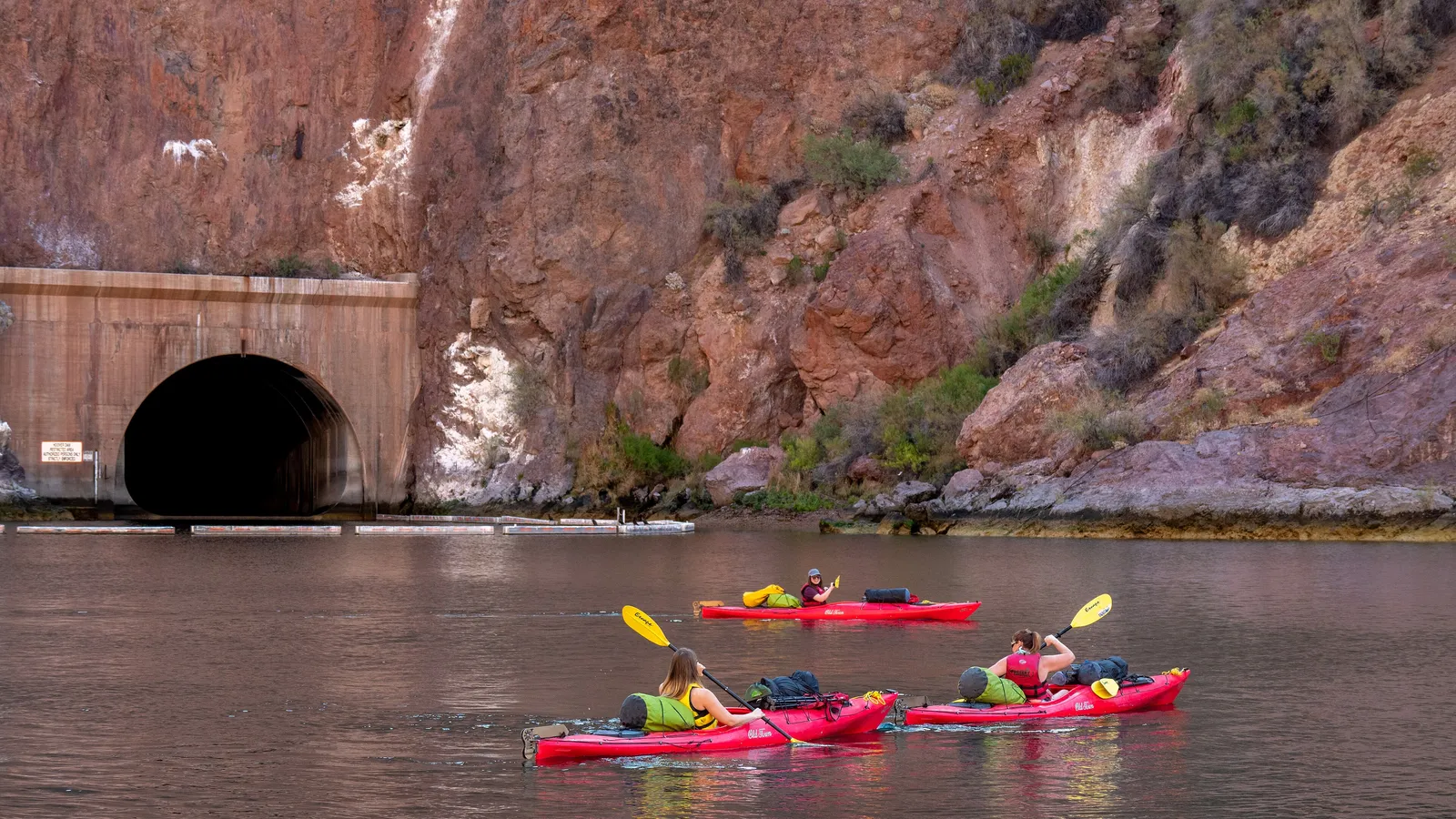
The lower, flooded end of Antelope Canyon opens onto the lake a short paddle southwest of Antelope Point Marina. The National Park Service designates it wakeless at all times, so boats have to idle, and the canyon narrows the farther you go. Paddling guides put the round trip from the marina to the end of the water and back at under 6 miles, depending on the lake level.
Where to launch: The Antelope Point Public Launch Ramp is at the end of Navajo Route 22B, beside Antelope Point Marina, about 15 minutes from Page. At current lake levels it’s closed to motorboats and open for hand-launching paddlecraft. The ramp is long and changes as the water drops, so expect a walk from your car. There are courtesy docks with a 30-minute limit.
Rentals and tours: Lake Powell Paddleboards (836 Vista Avenue, Page) rents SUPs and kayaks at Antelope Point and Wahweap and runs guided Antelope Canyon tours. It’s on the Park Service’s list of authorized paddlecraft guides.
Good to know: Antelope Point is on Navajo Nation land. Navajo Nation Parks lists a $15-per-person day-use fee for its Lake Powell Navajo Tribal Park areas, and dogs are banned at all Navajo Tribal Park sites. The famous upper slot of Antelope Canyon can only be visited on a guided Navajo tour, so don’t hike up beyond the water on your own.
Wahweap Bay
Directions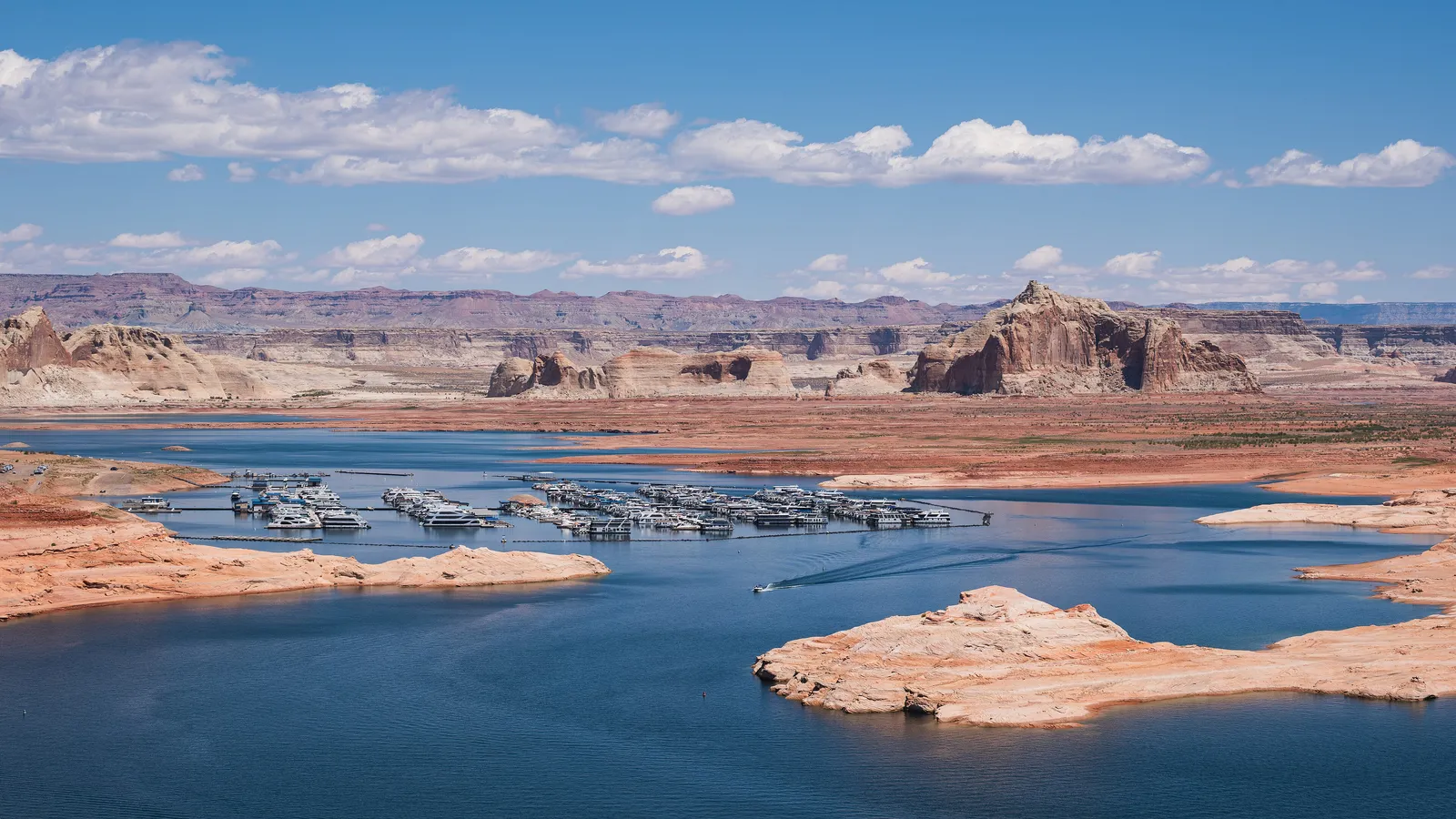
Best for: beginners, an easy morning paddle near Page. Flat water, with boat traffic.
Wahweap is the main marina area at the south end of the lake, just north of Page on the Arizona–Utah line. Around the bay you’ll find sandstone islands, buttes and quiet coves, and the Park Service notes that many locals paddle day trips around Wahweap and Lone Rock.
Where to launch: At current levels the Wahweap Main Launch Ramp is closed to motorboats and open to paddlecraft only. Motorboats use the Stateline Auxiliary ramp nearby, so the main ramp is a calmer place to get on the water.
Rentals: Lake Powell Paddleboards also rents at Wahweap.
What to watch for: Wahweap Bay connects to the main channel, which can get busy with boats, especially on summer afternoons. Stay in the coves, paddle early, and turn your nose into wakes. The Park Service warns that falling water exposes unmarked underwater hazards, so watch for rocks near the surface.
Lone Rock Beach
Directions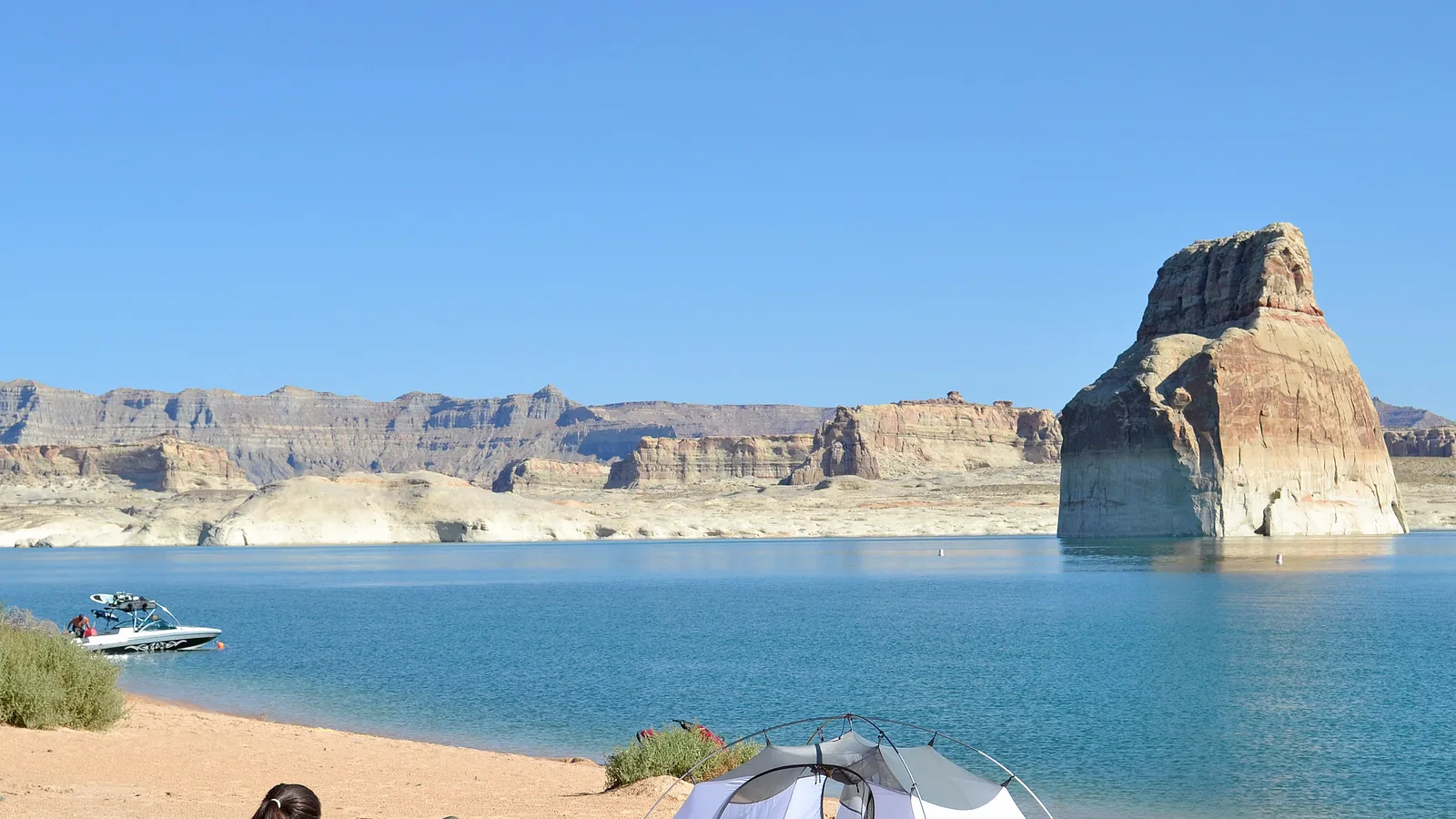
Best for: camping and paddling from your campsite. Flat water, wind-exposed.
Lone Rock Beach is a primitive camping area on the Utah side of Wahweap, reached from Highway 89 near the state line. A sandstone tower called Lone Rock stands just offshore, and paddling around it is a favorite. The beach has vault toilets year-round, flush toilets and outdoor showers in summer, running water and an RV dump station.
Where to launch: Drive toward the water and launch from the beach. The Park Service warns that the roads get sandier the closer you get to the water and there’s no guaranteed tow if you get stuck, so park on firm ground and carry your board the last stretch.
Fees: Park entrance and camping fees apply.
Good to know: The shoreline here moves a lot with the lake level. During the 2022 low-water period, Lone Rock sat on dry land and people could walk or drive up to it; check conditions before you plan a paddle around it. Afternoon wind across this open bay can kick up waves quickly.
Horseshoe Bend from Lees Ferry
Directions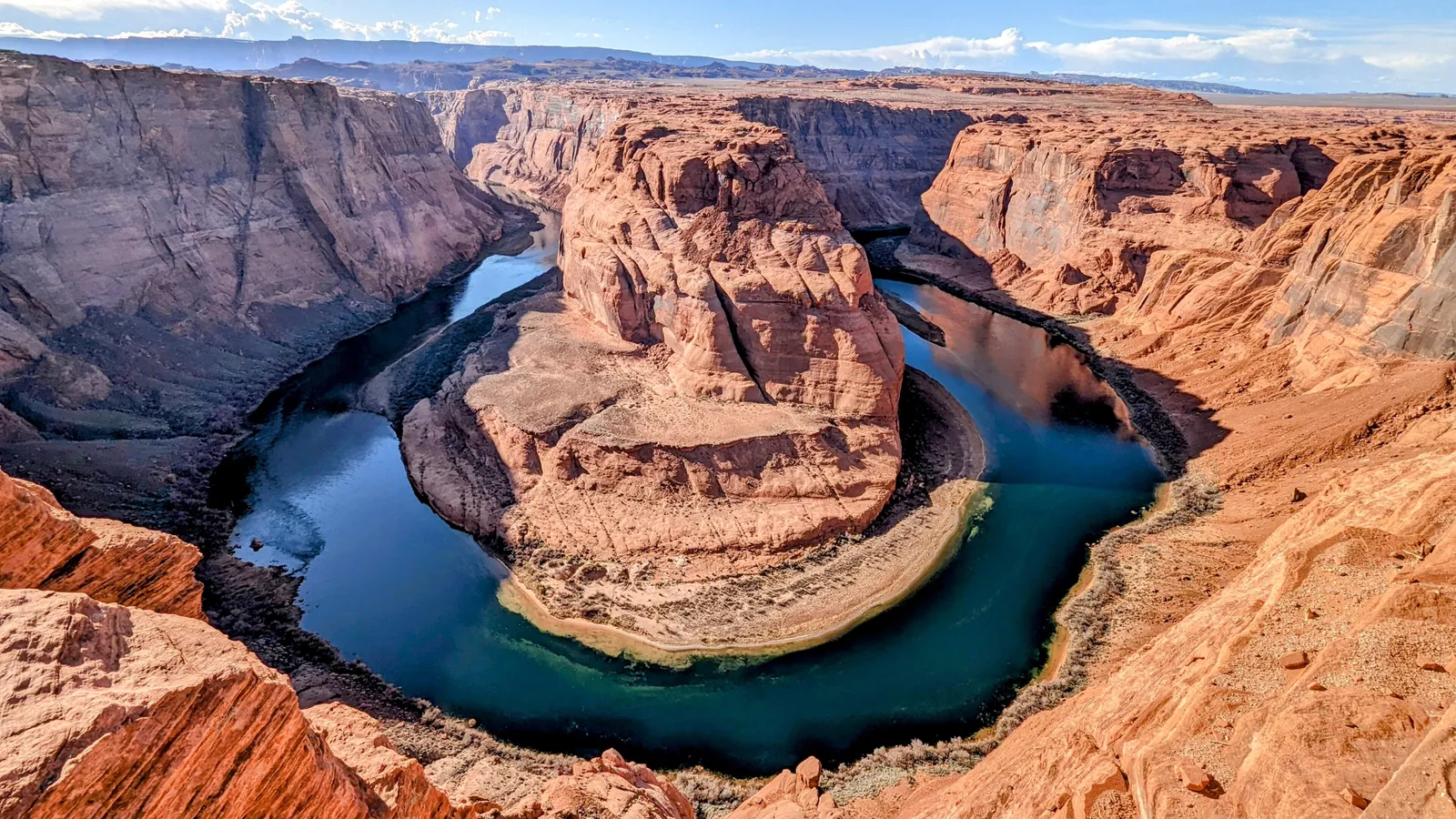
Best for: confident paddlers who want a river trip. Cold river current.
Below Glen Canyon Dam, the Colorado runs about 15 miles through a deep canyon to Lees Ferry, curling around Horseshoe Bend on the way. The Park Service says the flow is usually steady and not extreme. Most paddlers take a commercial backhaul boat upstream from Lees Ferry, get dropped off and paddle back down, past sandy beaches and canyon walls you can only see from the water.
Where to launch: Lees Ferry is 42 miles south of Page on Highway 89. Backhaul companies run from the launch area there; the Park Service lists the authorized ones.
Permits and rules: One free backcountry river permit per group is required, from the self-service kiosks near the launch. Everyone on a hand-propelled craft between the dam and the Grand Canyon boundary must wear a Coast Guard–approved life jacket while underway. River campsites are free with the permit.
Good to know: The water comes from deep in Lake Powell, so it’s cold and clear year-round, even when the air is over 100°F. Dress for a swim, not for the air temperature.
When to go
The paddling season runs from about May to October. According to Lake Powell Resorts & Marinas, the park’s concessioner, the lake’s surface water averages 46–47°F in January and February, 52–64°F from March to May, 70–80°F from June to August (warmest in August) and 69–76°F in September and October.
- Summer: warm water, but air temperatures of 90–100°F. Paddle early, carry plenty of water and wear sun protection.
- Fall: warm water and cooler nights, and fewer boats. September and October are some of the best months to paddle here.
- Spring: cool water. Our wetsuit check uses water and air temperature to tell you what to wear.
- Time of day: mornings are usually calmest. Wind often builds through the day on the open bays, and summer storms can bring sudden gusts.
Planning Antelope Canyon or a stretch of the Colorado? Our Trip time calculator estimates how long a route will take at your pace.
Rules and safety in Lake Powell
Lake Powell is inside Glen Canyon National Recreation Area, which straddles Arizona and Utah. Park rules that matter for paddlers:
- Entrance fee: $30 per private vehicle for 7 days, card only. There are no launch fees, and the vessel pass is for motorized boats.
- Life jacket: carry a US Coast Guard–approved life jacket for each person. Children 12 and under must wear one. Between Glen Canyon Dam and Lees Ferry, everyone on a paddle craft must wear one. See our pick of the best PFDs for SUP.
- Sound and light: carry a whistle, and a light if you’re on the water after dark.
- Quagga mussels: Lake Powell has them. The park requires you to clean, drain and dry your board and gear when you leave, and every vessel goes through decontamination protocols on exit. Rinse and fully dry your board before you paddle anywhere else.
- Wakeless canyons: Antelope, Labyrinth and Lost Eden canyons are wakeless at all times, and boats must not make a wake within 100 feet of people in the water.
- Camping: you can camp up to 14 days without a permit, but away from developed areas you must carry a portable toilet or approved waste bag system. Pack out all trash.
FAQ
Can you paddle board into Antelope Canyon?
Yes. Launch at the Antelope Point public ramp and paddle into the wakeless lower canyon. The upper slot canyon on land requires a guided Navajo tour, so turn around where the water ends.
Where can beginners paddle board on Lake Powell?
The coves around Wahweap Bay, launching from the Wahweap Main Launch Ramp, which is currently open to paddlecraft only. Go early before the wind and boat traffic build, and rent from Lake Powell Paddleboards if you don’t have a board.
Do you need a permit to paddle board on Lake Powell?
You need to pay the park entrance fee, but there’s no launch fee for paddle boards. The Colorado between Glen Canyon Dam and Lees Ferry needs a free river permit, and Navajo Nation areas such as Antelope Point have their own fees.
Can you paddle board to Horseshoe Bend?
Yes, from the river. Take a backhaul boat from Lees Ferry, then paddle downstream through Horseshoe Bend. You must wear your life jacket the whole time, and the water is cold.
Can I bring my dog paddle boarding at Lake Powell?
Dogs are banned at all Navajo Tribal Park sites, which rules out Antelope Point. Elsewhere in the recreation area, check the park’s pet rules before you go, and read how to paddle board with a dog.
Not sure what board you need for a long lake paddle? Our Board Fitter suggests a size and type for your weight and where you paddle. Read what conditions are best for paddle boarding before you head out on a windy lake.