
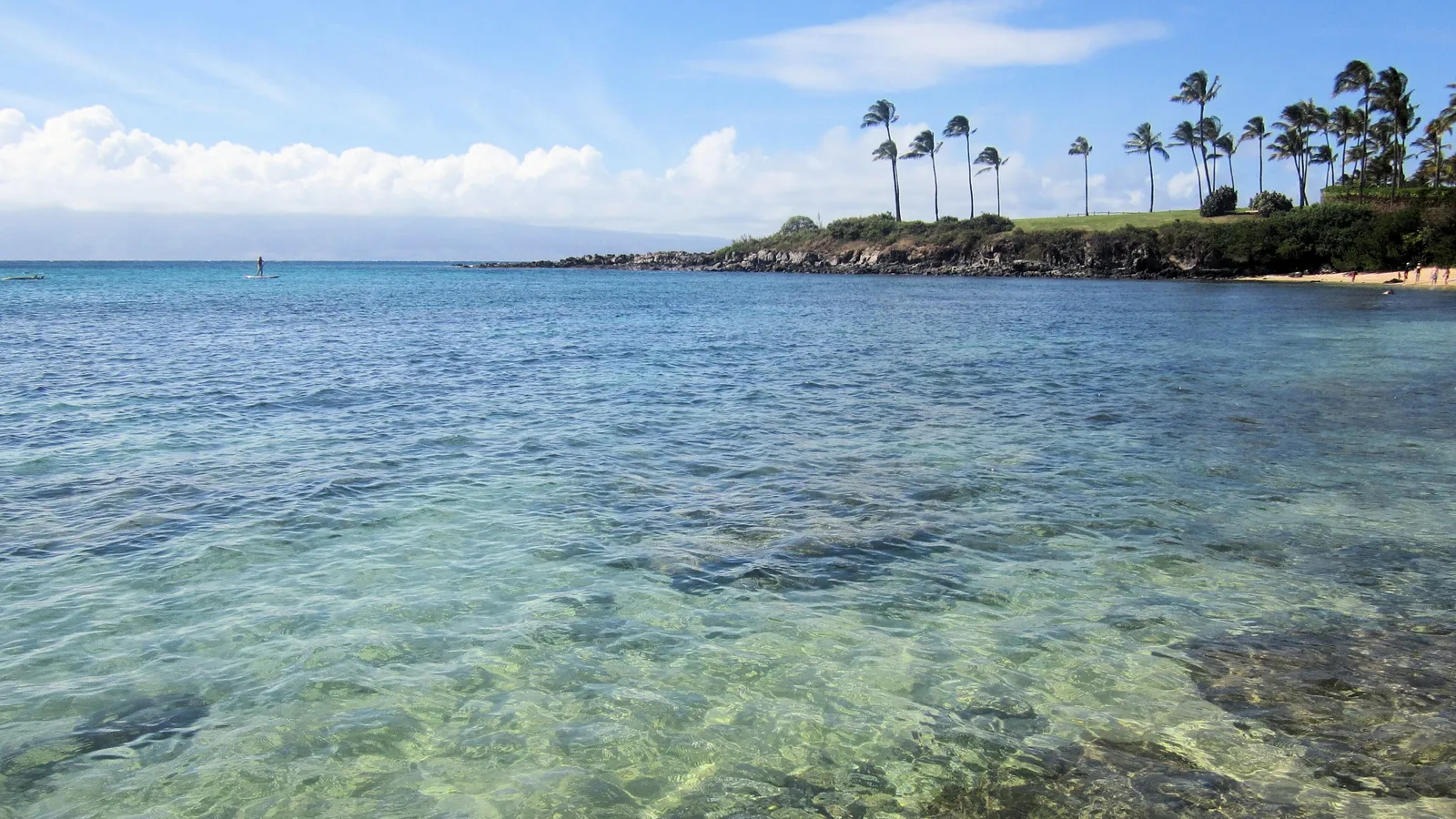
The best place to paddle board in Maui for beginners is Kihei, launching from Kalama Park on a calm early morning. For the most scenic paddle, go to Makena Landing or Olowalu, where you paddle over reef and are likely to see green sea turtles under your board.
Maui works for paddling because its south and west shores sit in the lee of the island’s mountains, so mornings are often glassy, and the water is warm all year. The catch is the wind. Maui’s trade winds usually build by late morning, and local tour operators rarely schedule paddles in the afternoon. Plan every session around an early start.
Quick answer
- First time on a board: Kihei, from Kalama Park, before about 10 a.m.
- Turtles and reef: Makena Landing in South Maui, or Olowalu on the west side.
- Resort-beach paddle: Ka’anapali Beach, early, toward Black Rock.
- Sheltered bay: Kapalua Bay, in summer when the north swell is down.
- Whale season: any of these from roughly December to April, keeping at least 100 yards from humpbacks.
The best places to paddle board in Maui
Kihei: Kalama Park and the Cove
Directions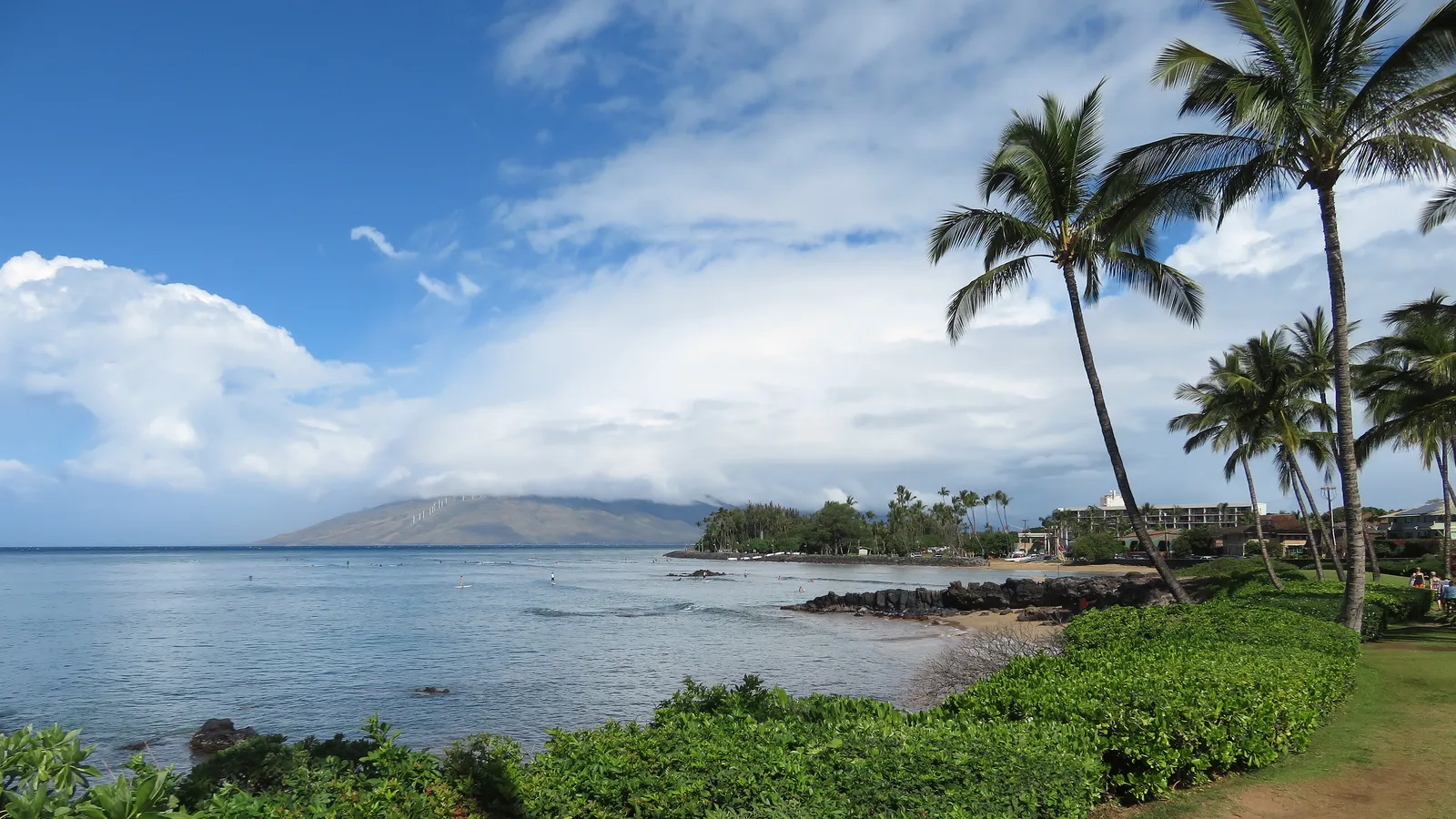
Best for: beginners and lessons. Ocean, usually calm early.
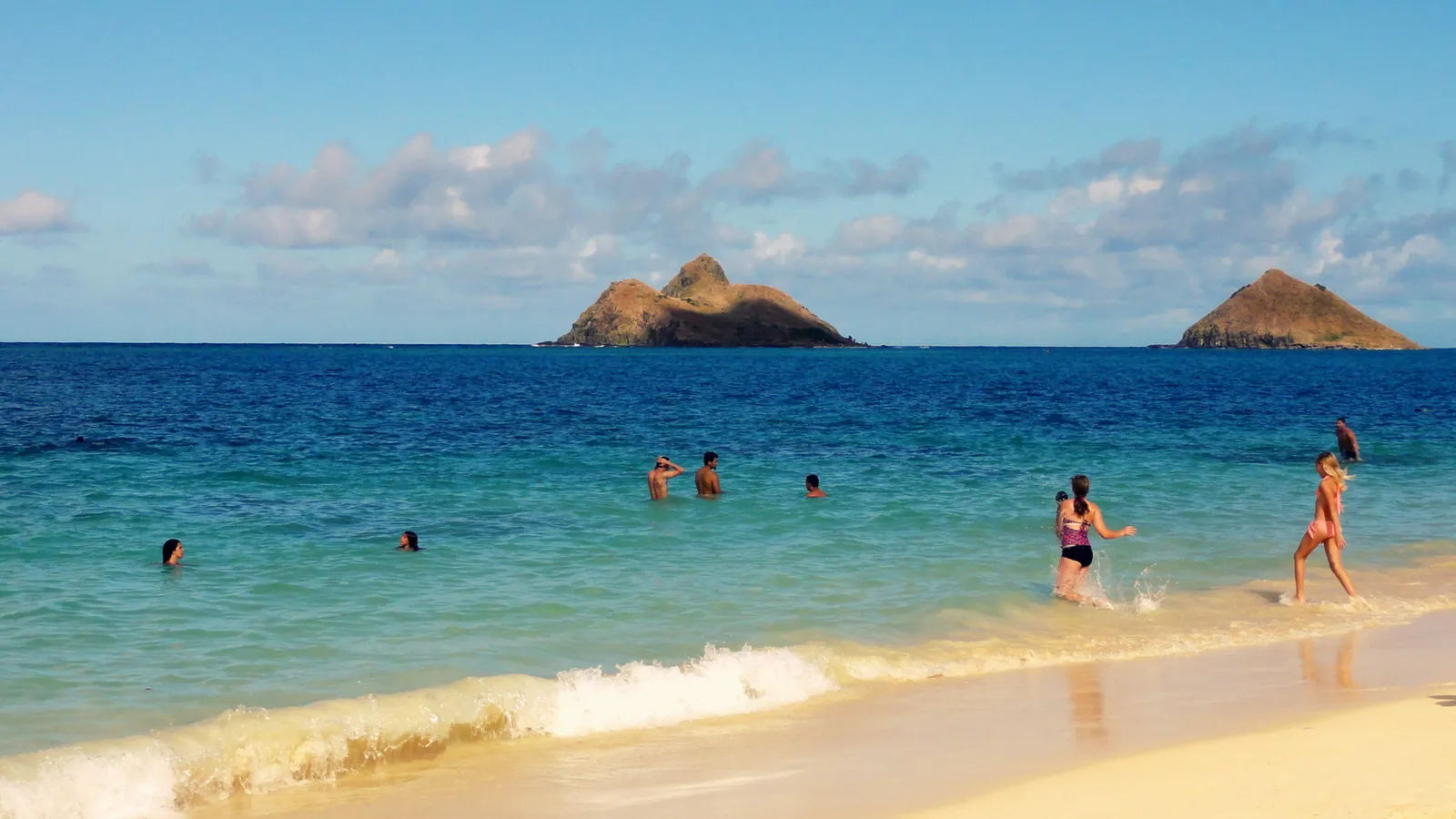
Kihei is Maui’s easiest place to learn. The shoreline by Kalama Park is shallow and, by Maui standards, gentle, and the small beach at the Cove at the park’s south end is where many surf and SUP schools teach. Across the bay you look at the West Maui Mountains, and outrigger canoes come and go from the park.
Where to launch: Kalama Park on South Kihei Road has a large parking lot. Launch from the sandy area by the Cove, and stay clear of surf lessons if a small wave is breaking.
Rentals and lessons: Maui Wave Riders (2021 South Kihei Road) rents boards and teaches private and semi-private SUP lessons in Kihei.
Good to know: Kihei is famous for its afternoon wind. It can blow you along the coast or away from the beach far faster than you can paddle back. Be off the water by late morning, and if the water is already covered in whitecaps, don’t go.
Makena Landing
Directions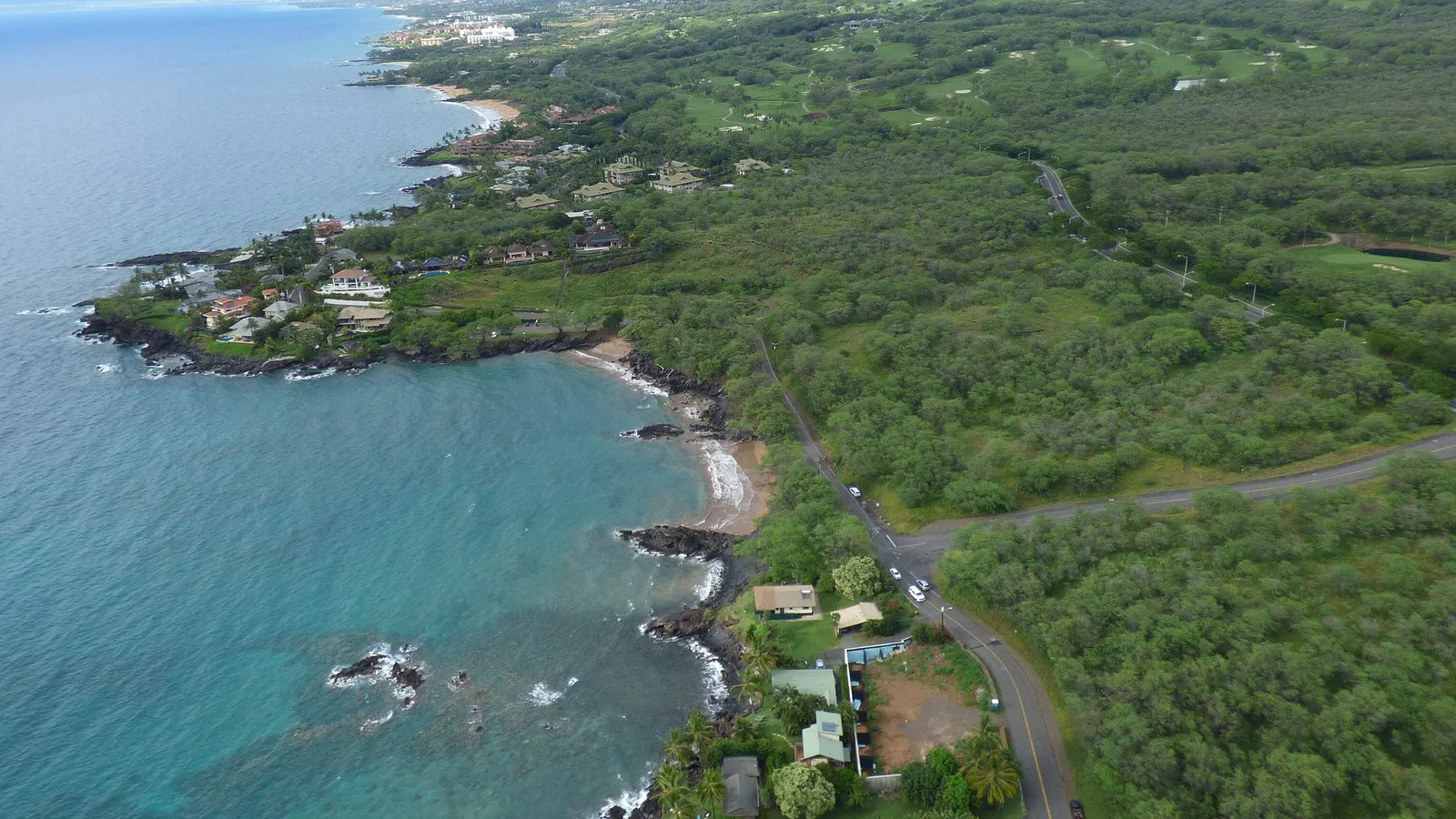
Best for: turtles, snorkeling from your board, guided tours. Ocean.
Makena Landing is a small county beach park at the south end of Wailea, with a little crescent cove and a boat ramp used by kayaks and outrigger canoes. The rocky coast either side is known for green sea turtles, which rest on the bottom and visit cleaning stations on the reef.
Where to launch: The ramp and small beach in the cove. Parking is free but very limited, and tour groups use it at dawn, so arrive early or park along the road. The park has restrooms and showers.
Rentals and tours: Maui Stand Up Paddle Boarding runs SUP tours and lessons from Makena Landing (and from Olowalu). Its Kihei address (27-B Halekuai Street) is a mailing office, not a shop; rentals are by appointment.
Good to know: NOAA asks you to stay at least 10 feet from sea turtles, in the water and on land. Never touch, chase or feed them. Don’t stand on the reef, even in shallow spots.
Olowalu
Directions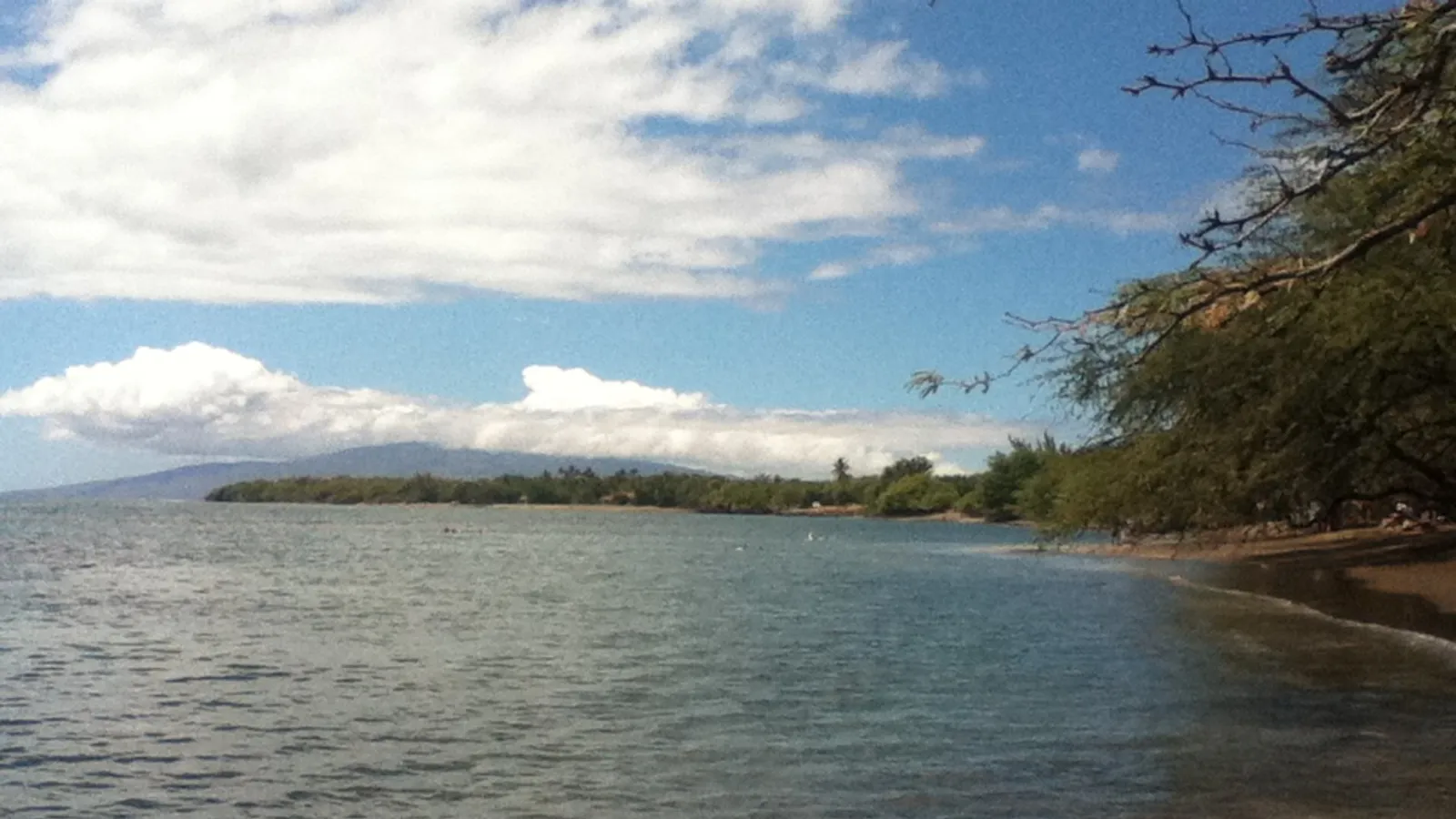
Best for: clear, shallow water over reef on the west side. Ocean, usually calm early.
Olowalu is a stretch of beach along Honoapiilani Highway, around mile marker 14, a few miles south of Lahaina. Offshore is Olowalu Reef, one of the most diverse reefs in Hawaii, with around two dozen coral species and a large gathering of green sea turtles. The water is shallow a long way out, so it feels sheltered on a calm morning.
Where to launch: People park along the highway shoulder and launch from the beach. Look for a sandy entry so you don’t walk on coral.
Rentals and tours: Maui Stand Up Paddle Boarding also runs SUP tours from Olowalu.
Good to know: At low tide parts of the reef are very close to the surface. Kneel or paddle around shallow patches rather than standing up over coral, and wear your leash so a fall doesn’t leave your board drifting.
Ka’anapali Beach
Directions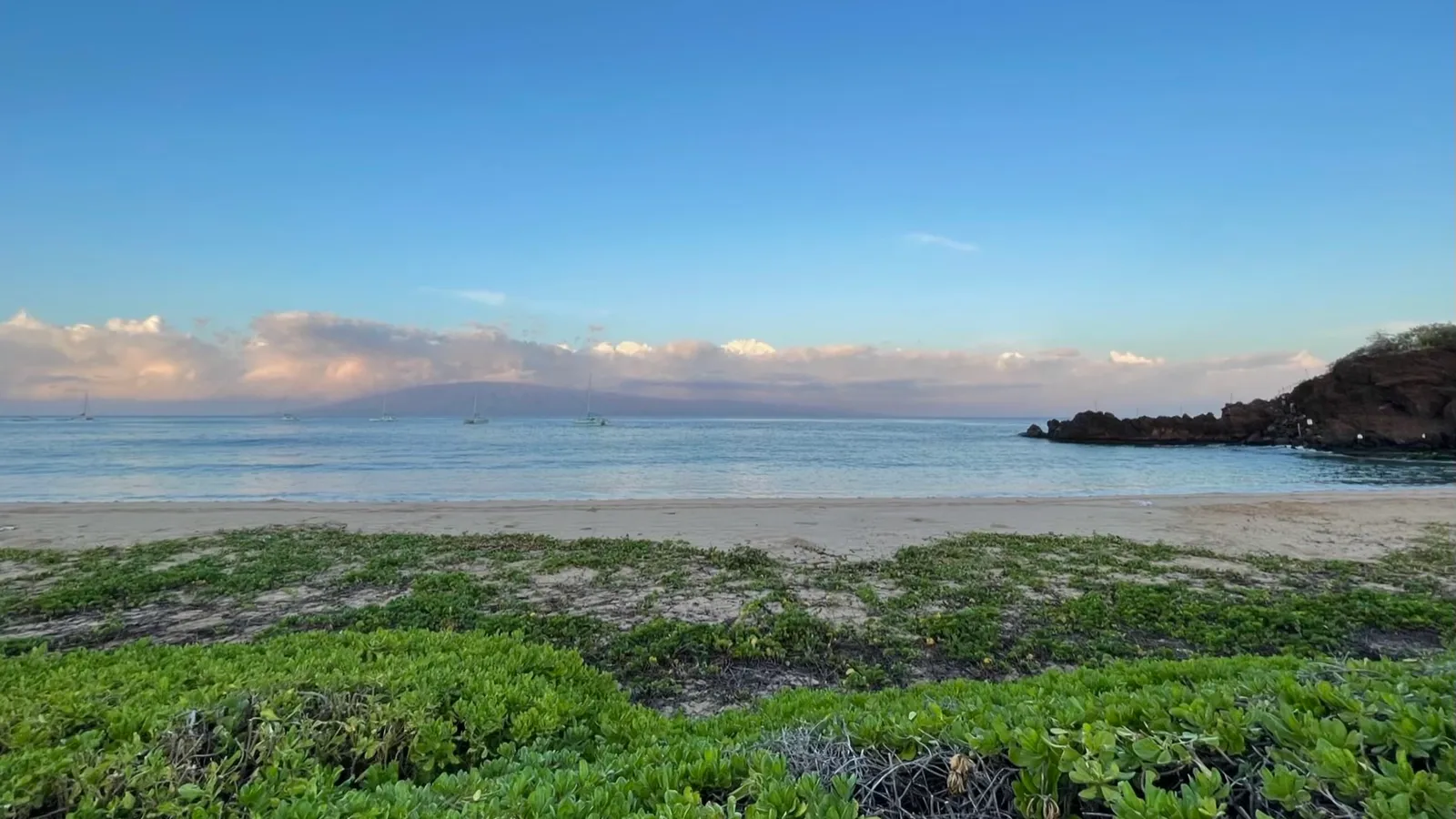
Best for: a resort-area paddle in West Maui. Open ocean.
Ka’anapali is a long run of golden sand lined with hotels, with Black Rock (Pu’u Keka’a) at the north end and Lanai across the channel. Early mornings can be glassy, and it’s a pretty paddle along the beach toward Black Rock.
What to watch for: This is a busy commercial beach. From mid-May to mid-December, parasailing and thrill craft such as jet skis operate in designated zones off Ka’anapali; state law bans both in West and South Maui waters from December 15 to May 15 for whale season. Stay close to shore, out of marked zones and away from boat traffic. Check the waves before you carry your board down: when a swell is running, it is no place for beginners.
Good to know: Parking near the beach is limited, so arrive early.
Kapalua Bay
Directions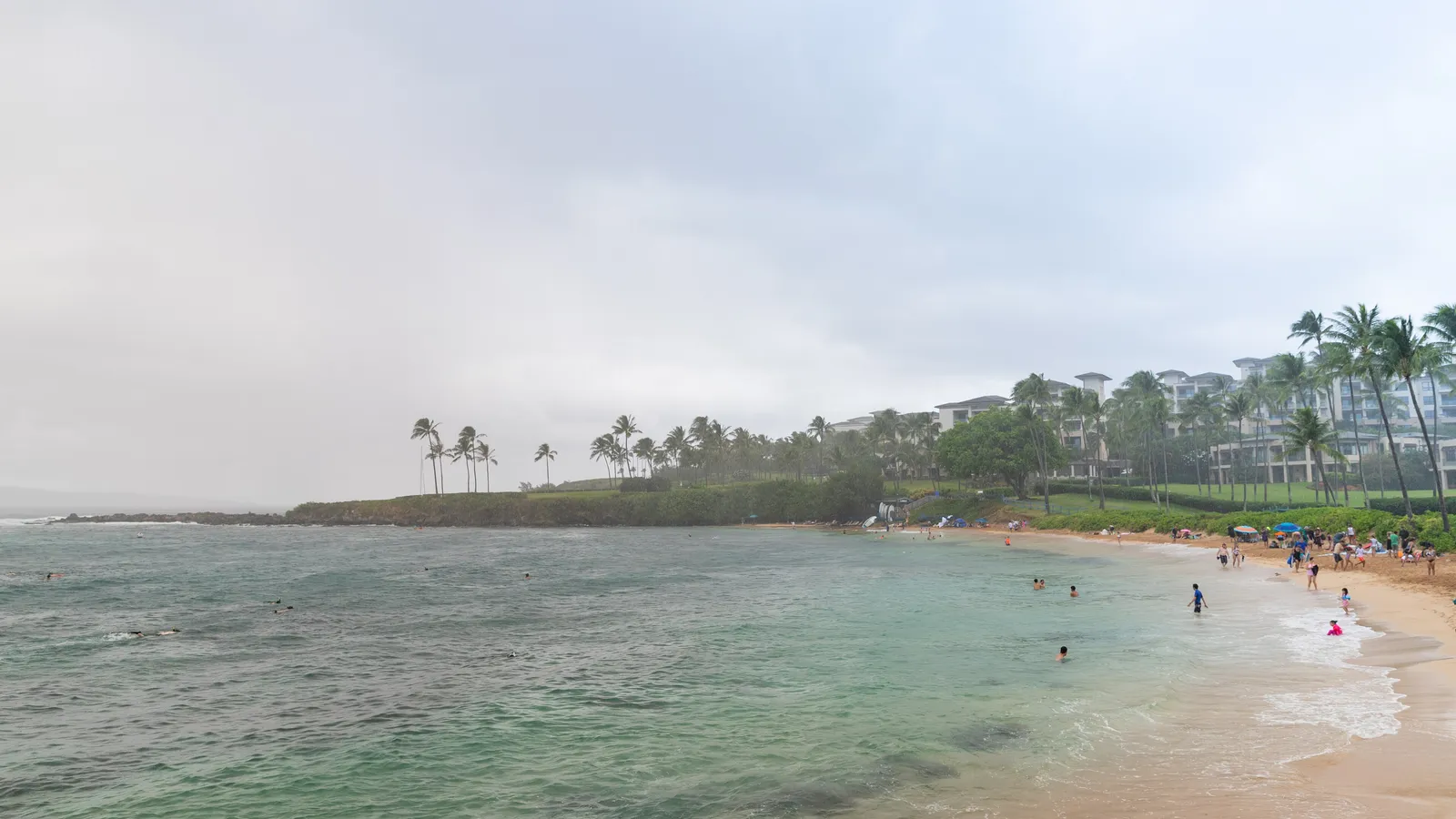
Best for: families, a sheltered bay in summer. Ocean, protected.
Kapalua Bay is a small crescent beach between two lava points in northwest Maui. The points block much of the wind and swell, so the water is often calm and very clear, with snorkeling along the rocks.
Where to launch: The public beach access lot (about 40 spaces) is just past Napili Kai Resort off Lower Honoapiilani Road, with restrooms and outdoor showers. When it’s full, park along the road by the golf course.
Good to know: The bay is small and popular with swimmers and snorkelers, so paddle around them, not through them. In winter, north swells can wrap into West Maui; skip it if waves are breaking in the bay. Napili Bay, just south, is a similar sheltered option with street parking.
When to go
You can paddle Maui all year. NOAA’s tide station at Kahului Harbor averages about 75–76°F in January to March and about 80–81°F from August to October, so most people paddle in board shorts or a rash guard. Use our wetsuit check if you run cold.
- Time of day: early morning is everything. Aim to launch at sunrise and finish by late morning, before the trade winds build.
- Summer (May–September): south swells can bring waves to Kihei and Makena. West Maui is usually calmest.
- Winter (December–April): whale season, and north and northwest swells can reach West Maui. Humpbacks are a highlight, but give them room.
Planning a longer paddle along the coast? Our Trip time calculator estimates how long it will take at your pace, which matters when the wind is due to rise.
Rules and safety in Maui
The US Coast Guard counts a paddle board as a vessel once you’re outside a swimming, surfing or bathing area. Hawaii’s boating rules then require:
- Life jacket: a US Coast Guard–approved life jacket for each person on board. Children 12 and under must wear one. See our pick of the best PFDs for SUP.
- Sound device: carry a whistle, easily attached to your life jacket.
- After dark: carry a white light, though you shouldn’t be paddling Maui’s open coast at night.
Marine life rules matter as much as boating ones:
- Humpback whales: federal law bans approaching within 100 yards, including by paddle board. If a whale surfaces near you, stay still and let it move on.
- Hawaiian monk seals: NOAA recommends at least 50 feet, or 150 feet from a mother and pup.
- Green sea turtles: at least 10 feet.
- Spinner dolphins: federal rules ban approaching within 50 yards.
- Reef: don’t stand or drag your fin on coral.
And a few Maui habits:
- Wear a leash in the ocean, so wind can’t take your board.
- Watch the wind: if it’s already whitecapping, don’t launch. Offshore wind is the most common way paddlers get into trouble here.
- Tell someone your plan and carry your phone in a dry bag.
FAQ
Where can beginners paddle board in Maui?
Kihei is the easiest, launching from Kalama Park early in the morning. Book a lesson with a Kihei school if you’ve never stood on a board, and be off the water before the wind picks up.
Can you see turtles while paddle boarding in Maui?
Very often, yes. Makena Landing and Olowalu are both known for green sea turtles. Look from your board and keep at least 10 feet away.
What time of day is best for paddle boarding in Maui?
Early morning. Maui’s trade winds usually build by late morning, and local tour companies rarely run paddles in the afternoon for that reason.
Can you paddle board with whales in Maui?
Humpbacks visit Maui’s waters in winter, and you may see them from your board. Federal law bans approaching within 100 yards, so enjoy them from a distance and don’t paddle toward them.
Do I need a permit to paddle board in Maui?
No permit is needed to paddle your own board recreationally. You do need a life jacket and whistle once you’re outside a swimming or surfing area.
Not sure what board suits ocean paddling? Our Board Fitter suggests a size and type for your weight and where you paddle, and our guide to paddle boarding in the ocean covers launching through small waves and handling wind.