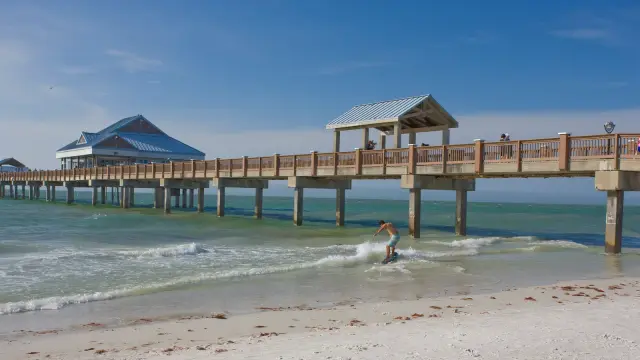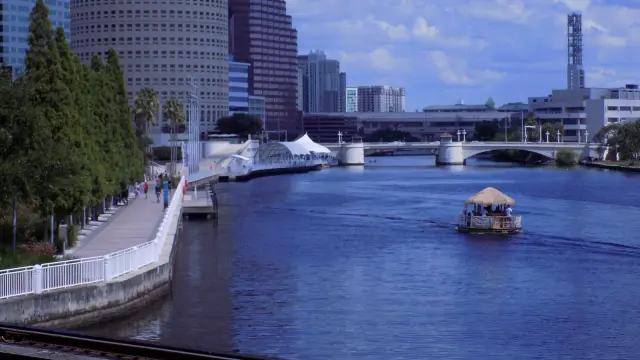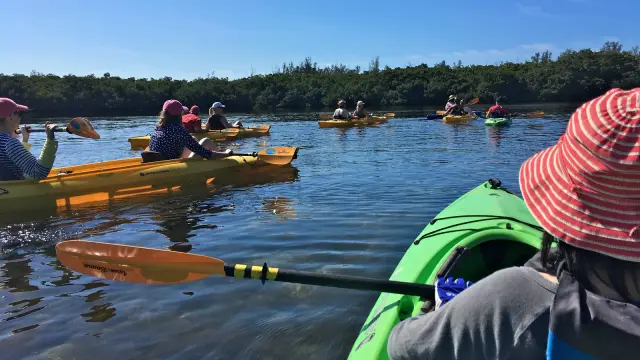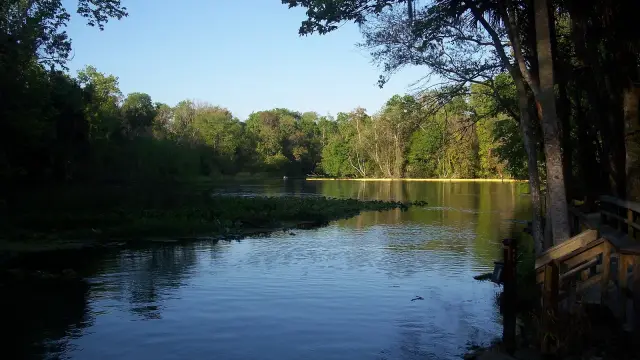


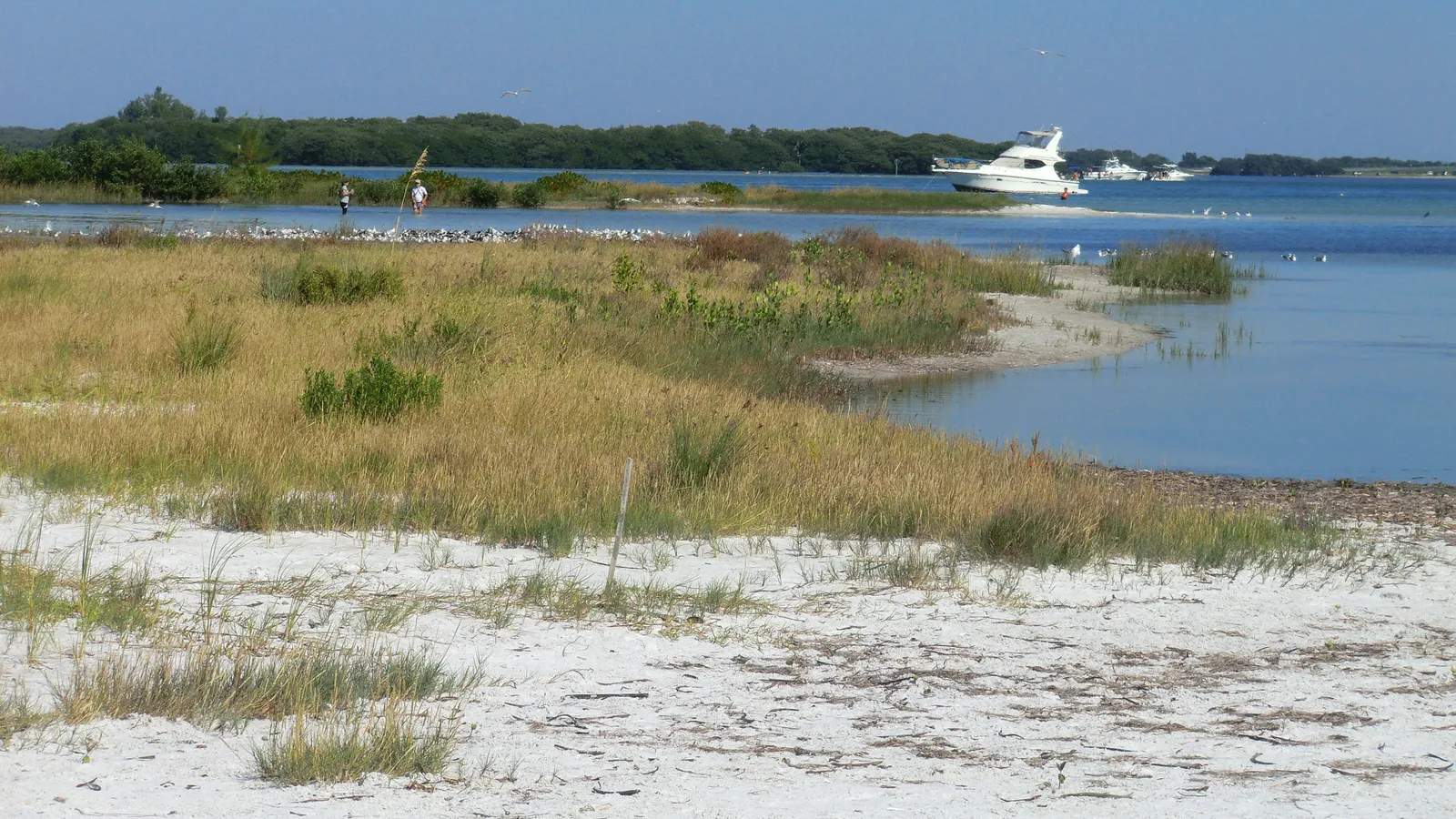
Fort De Soto Park is the best place to paddle board in St. Petersburg: it has a 2.25-mile paddling trail, a big boat launch and a kayak rental outpost, all in one county park. For a wilder trip, paddle from Fort De Soto across to Shell Key Preserve, an undeveloped barrier island you can only reach by boat.
St. Petersburg works for paddling because it’s almost surrounded by water: Tampa Bay on the east, Boca Ciega Bay on the west and the Gulf of Mexico beyond the barrier islands. The city alone runs nine public boat ramps, so there’s a launch close to almost every neighborhood. The water is warm most of the year, though wind can turn the open bay choppy fast.
If you’re also heading across the bay, our guides to Tampa (which covers Weedon Island Preserve in north St. Pete) and Clearwater cover the rest of the area.
Quick answer
- First time on a board: Fort De Soto Park’s paddling trail.
- Most scenic: Shell Key Preserve, paddling from Fort De Soto on a calm day.
- Close to downtown: Coffee Pot Bayou in the Old Northeast, from Coffee Pot Park.
- South St. Pete: Maximo Park, near the Sunshine Skyway.
- Mangrove tunnels: Weedon Island Preserve, covered in our Tampa guide.
The best places to paddle board in St. Petersburg
Fort De Soto Park
Directions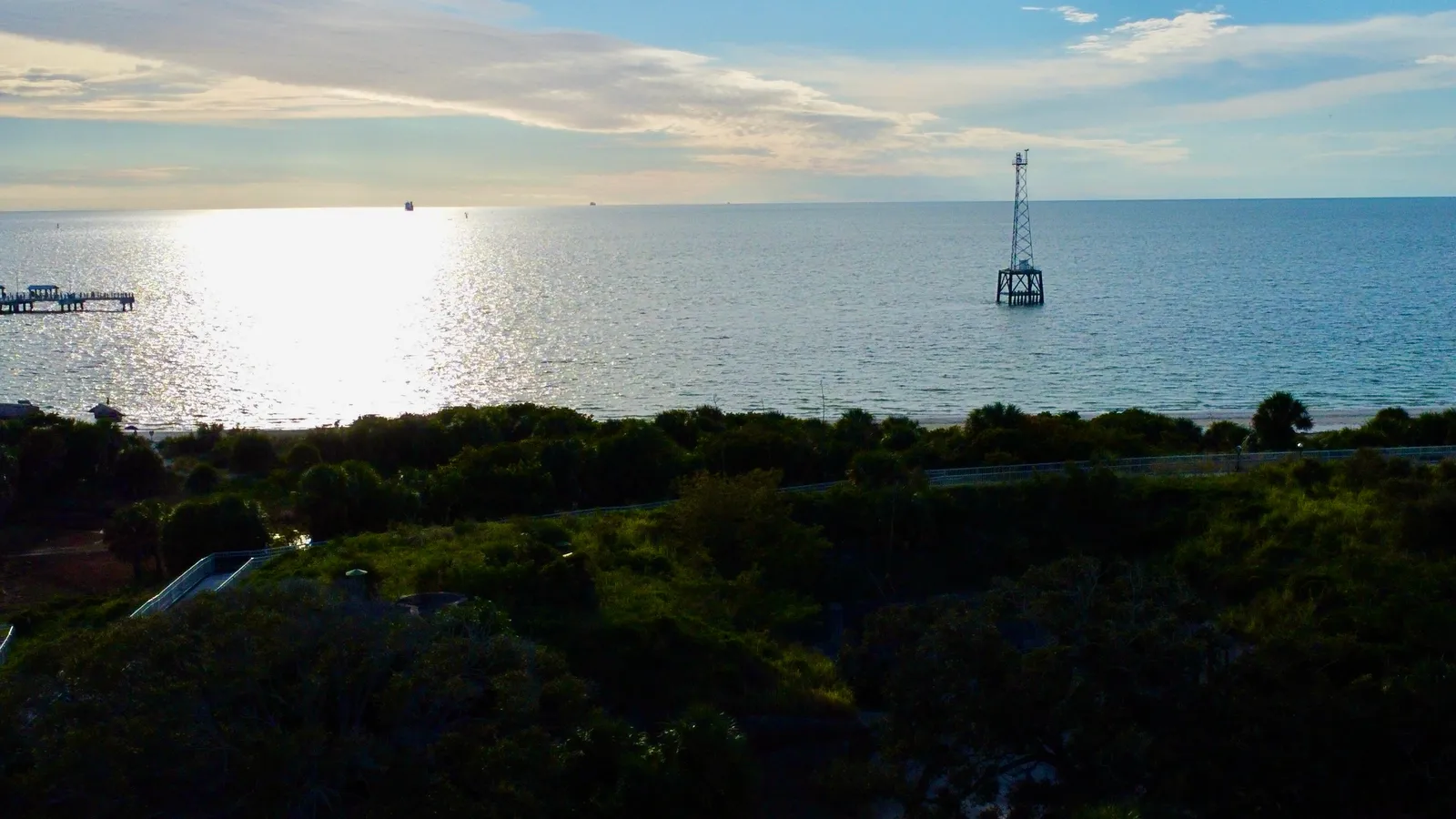
Best for: beginners, families and dog owners. Mostly sheltered water.
Fort De Soto Park covers 1,136 acres across five connected keys at the mouth of Tampa Bay, south of St. Petersburg. Besides its Gulf beaches, it has a 2.25-mile recreational canoe trail, and the Kayak Outpost’s staff point paddlers toward the park’s quiet coves.
Where to launch: the park has an 800-foot boat launch with 11 floating docks. Paddlers can also start near the Kayak Outpost, next to the dog park on the south side of the park. The park is open 7 a.m. to sunset, and parking is $6 at the time of writing (cashless).
Rentals and lessons: Fort De Soto Hospitality runs the Kayak Outpost, renting kayaks from spring, daily from 9:30 a.m. We couldn’t confirm paddle board rentals there, so bring your own board or call ahead (727-618-7132).
Good to know: Fort De Soto is the only place in Pinellas County where dogs are allowed on a beach, in a designated area. A fishing license is required anywhere in the park if you fish from your board.
Shell Key Preserve
DirectionsBest for: experienced paddlers and a beach-island adventure. Open water and tidal passes.
Shell Key Preserve covers 1,800 acres of undeveloped barrier island, mangrove islands and seagrass beds just north of Fort De Soto. It formed from a sandbar in the 1960s and is one of Florida’s most important places for nesting and wintering shorebirds. There are no roads or bridges: you get there by boat, paddle board included, or on the ferry from Fort De Soto.
Where to launch: Pinellas County says Fort De Soto has the closest boat ramps, parking and restrooms. Launch from the Fort De Soto boat launch area and paddle north.
What to avoid: Bunces Pass, the channel between Fort De Soto and Shell Key, is a tidal pass with boat traffic, and like any pass it can run strong. Cross on a calm day, close to slack tide, and don’t try it if you’re new to open water. The middle of the island is a closed Bird Preservation Area; land only at the public-use areas at the northern and southern ends.
Good to know: Dogs and alcohol are banned on Shell Key, there are no restrooms, and all plants and animals are protected, including live shells, sea stars and conchs.
Coffee Pot Bayou
Directions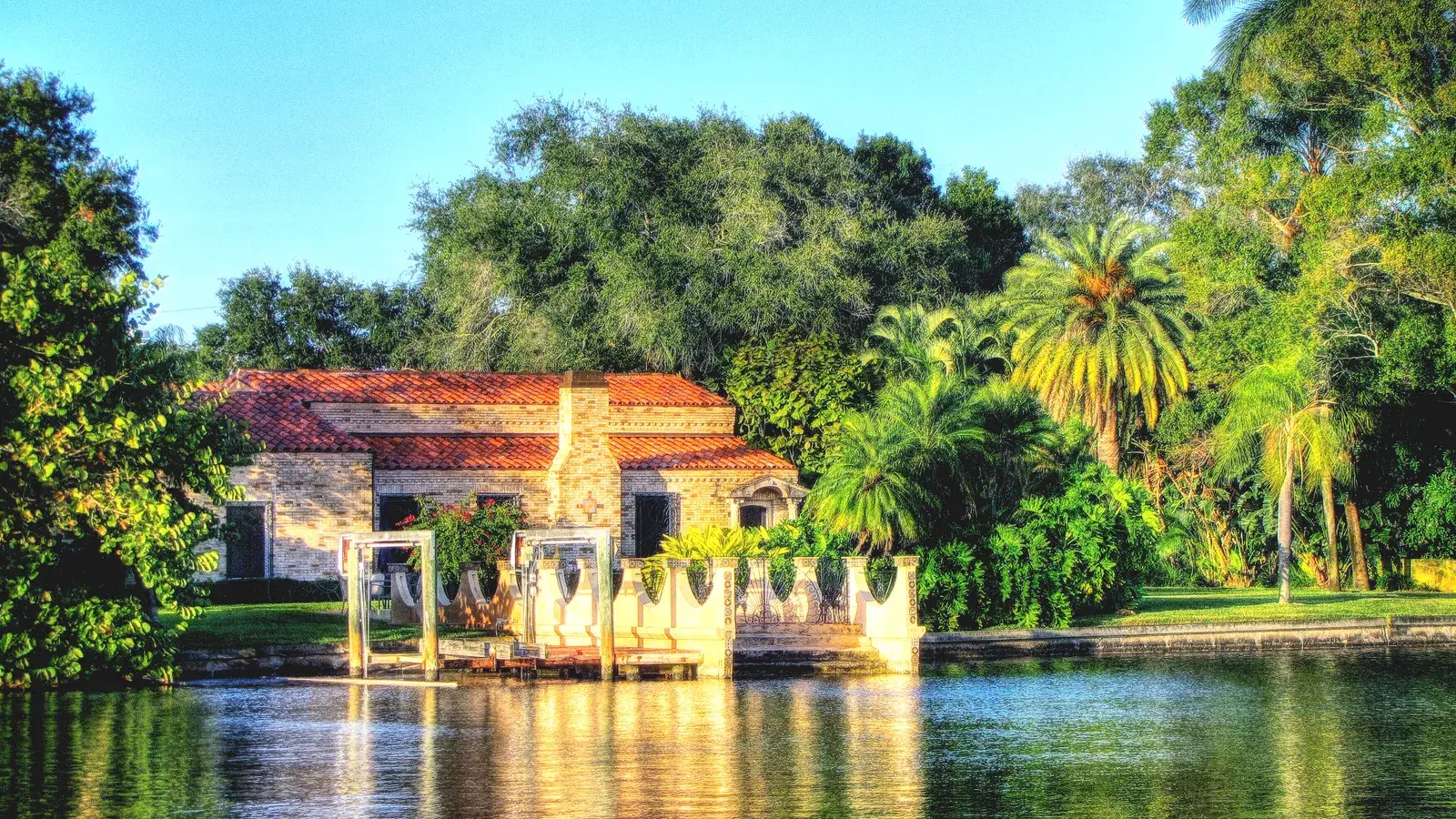
Best for: a quick paddle close to downtown. Sheltered bayou opening onto Tampa Bay.
Coffee Pot Bayou is a calm inlet off Tampa Bay in northeast St. Petersburg, lined with Spanish-style homes on Snell Isle, a neighborhood built in the 1920s. Inside the bayou you’re out of most of the wind and waves; outside it, the open bay and the downtown waterfront parks stretch south toward the St. Pete Pier.
Where to launch: the city’s boat ramp at Northeast Exchange Club Coffee Pot Park (1st Street NE and 31st Avenue NE). The ramp is open 24 hours; the park opens 30 minutes before sunrise and closes at 11 p.m.
What to avoid: the open bay when the wind is up. If you head out of the bayou, stay close to shore and watch for boats coming and going from the downtown marinas.
Good to know: The city tests water quality weekly at its recreational sites and posts results on the Tampa Bay Water Atlas map. Check it after heavy rain.
Maximo Park
Directions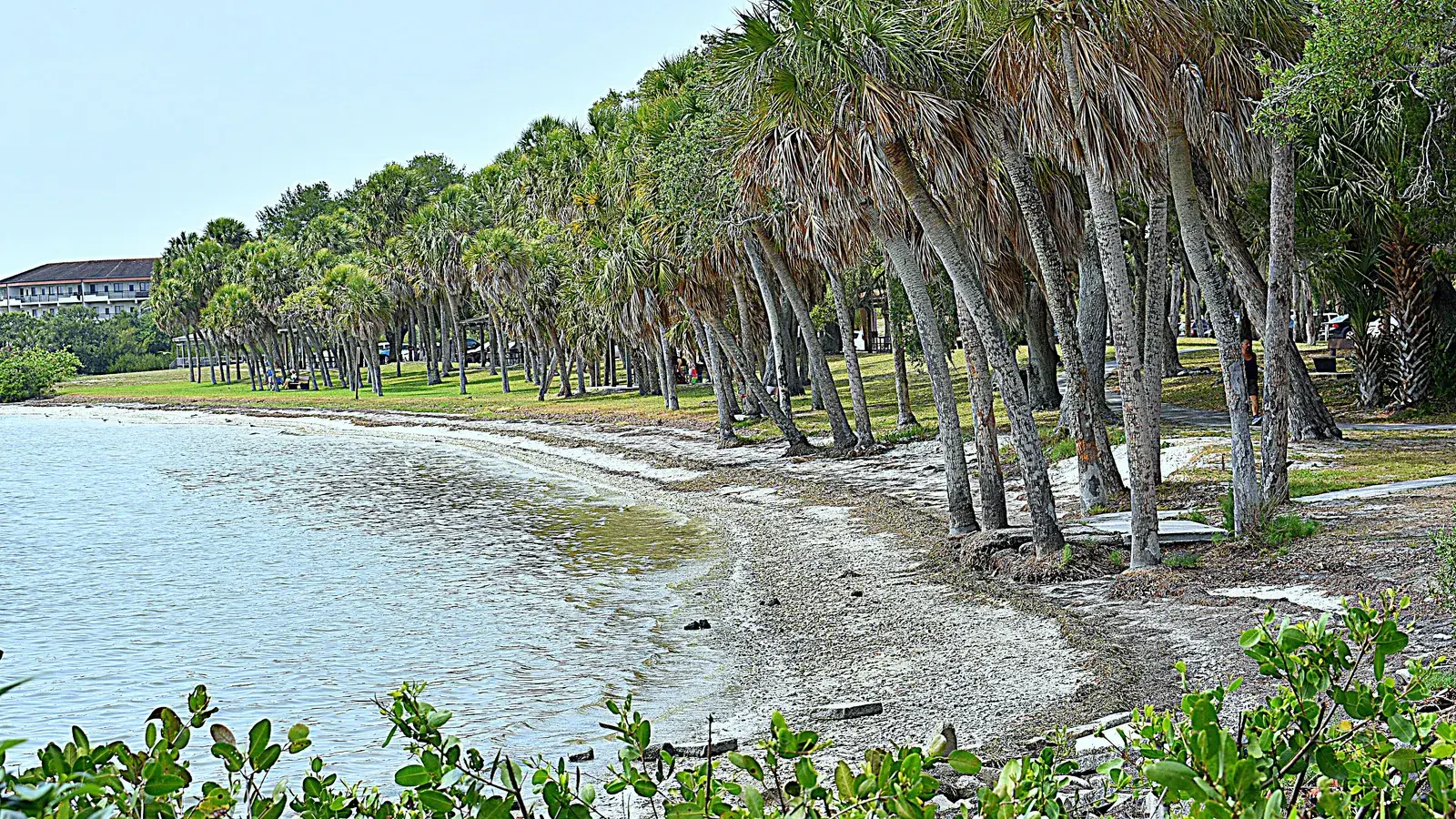
Best for: a sunset paddle in south St. Pete. Bay water, choppy in wind.
Maximo Park sits at Pinellas Point, the southern tip of St. Petersburg, with a palm-lined beach and a boat ramp. You look out over the water toward the Sunshine Skyway Bridge.
Where to launch: the city boat ramp at Maximo Park (34th Street S. and Pinellas Point Drive S.), open 24 hours. The park opens 30 minutes before sunrise.
What to avoid: this is a big, open stretch of water near the mouth of Tampa Bay. Stay close to shore, and don’t paddle toward the Skyway shipping channel.
When to go
You can paddle St. Petersburg year-round. NOAA’s long-term averages for St. Petersburg in Tampa Bay put the water at about 65°F in January, 76°F in April and 88°F to 89°F in July and August.
- Spring (March–May): warm water, drier weather and fewer afternoon storms than summer. Often the best time to go.
- Summer (June–September): bath-warm water, heat and frequent afternoon thunderstorms. It’s also hurricane season. Get off the water at the first sign of lightning.
- Winter (December–February): cooler water and cold fronts that bring wind, but plenty of calm, clear days. Our wetsuit check tells you what to wear.
- Time of day: mornings are usually calmer, before the sea breeze builds.
Planning a crossing to Shell Key or a loop around Fort De Soto? Our Trip time calculator estimates how long it will take at your pace.
Rules and safety in St. Petersburg
In Florida, a paddle board counts as a vessel when you’re outside a swimming, surfing or bathing area. According to the Florida Fish and Wildlife Conservation Commission (FWC):
- Life jacket: carry a US Coast Guard–approved wearable life jacket for each person. Children under 6 must wear one while underway. See our pick of the best PFDs for SUP.
- Sound device: carry a whistle or horn.
- After dark or in poor visibility: have a white light, such as a flashlight, ready to show in time to prevent a collision.
A few local rules and habits on top of that:
- Respect bird areas. Stay out of posted nesting areas on Shell Key and other islands.
- Give manatees and dolphins space. Don’t chase, touch or feed them.
- Stay out of boat channels, especially Bunces Pass and the Skyway shipping channel, and wear bright colors.
- Watch the wind. Small craft advisories mean Tampa Bay is too rough for a board.
- Wear a leash in open water so the wind can’t take your board.
FAQ
Where can beginners paddle board in St. Petersburg?
Fort De Soto Park. It has a canoe trail, quiet coves, plenty of parking and a big boat launch, and you can rent a kayak there if you want to scout the route first.
Can you paddle board to Shell Key?
Yes, if you’re comfortable in open water. Launch at Fort De Soto, cross Bunces Pass on a calm day near slack tide, and land only at the public-use areas at the northern or southern end. Dogs aren’t allowed.
Do I need a permit to paddle board in St. Petersburg?
No. Paddle boards don’t need registration in Florida, and the city’s boat ramps are open to the public. Fort De Soto charges for parking.
Can I bring my dog paddle boarding in St. Petersburg?
Fort De Soto has the only dog beach in Pinellas County, plus fenced dog areas, so it’s the best place to bring a dog. Dogs are banned on Shell Key. Read how to paddle board with a dog first.
Is there anywhere similar nearby?
Yes. For Weedon Island and the rest of Tampa Bay, see where to paddle board in Tampa. For the islands to the north, see Clearwater. Not sure what size board you need? Try our Board Fitter.