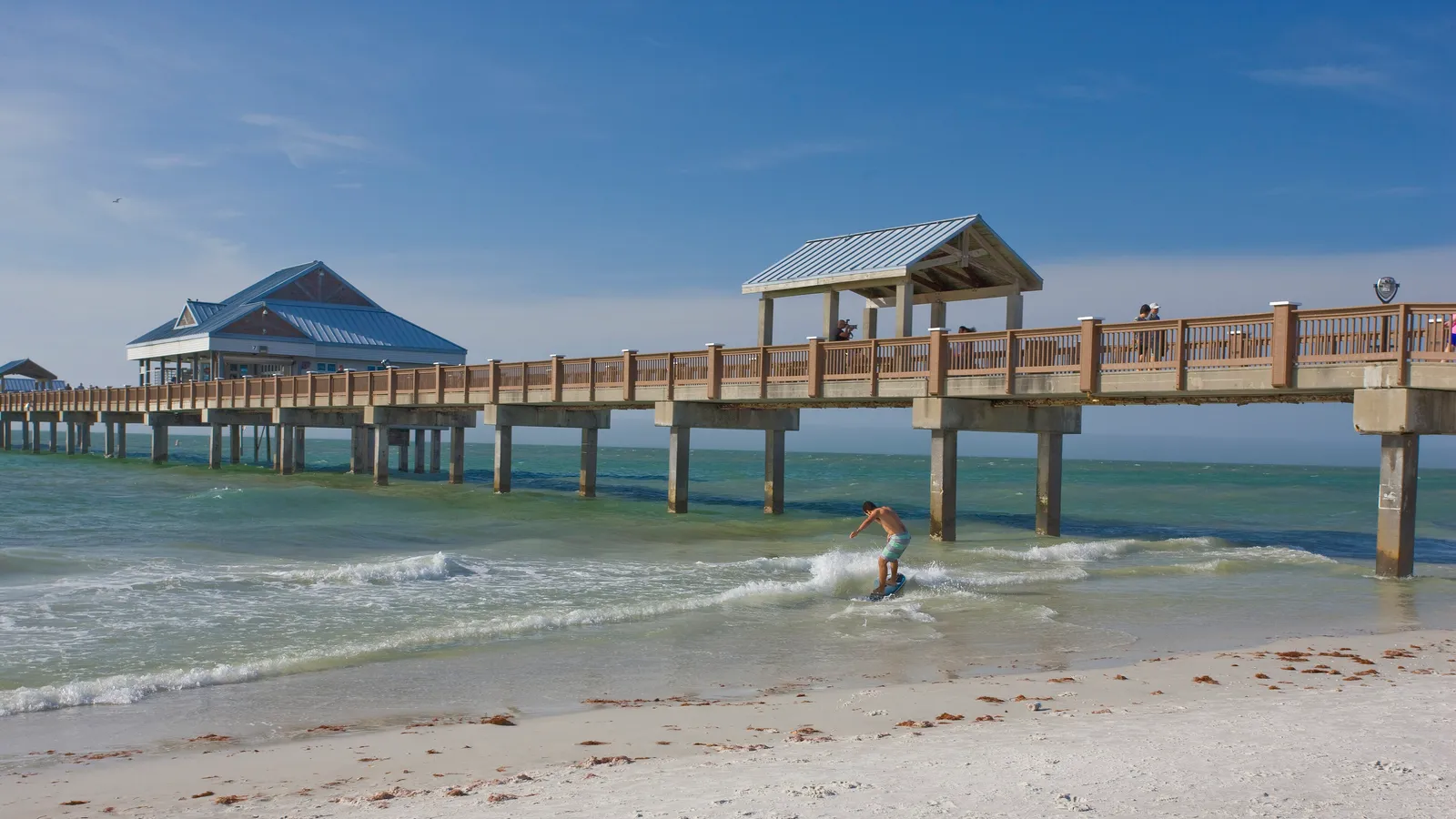
The Dunedin Causeway is the best place to paddle board around Clearwater, especially for beginners: the water in St. Joseph Sound is shallow and protected, there’s free roadside parking, and a rental shop sits right on the beach. For the most scenic paddle, cross from the causeway to Caladesi Island and follow its marked trail through the mangroves.
Clearwater works for paddling because a chain of barrier islands shelters a long, shallow inland waterway from the Gulf. Behind Honeymoon Island, Caladesi Island, Clearwater Beach and Sand Key you get calm water, seagrass flats, dolphins and manatees. On the other side, the Gulf beaches are often flat enough to paddle too.
Quick answer
- First time on a board: the Dunedin Causeway, renting from Sail Honeymoon.
- Most scenic: Caladesi Island State Park’s mangrove trail, reached by paddling from the causeway.
- Gulf paddling: Honeymoon Island or Sand Key Park, on a calm morning.
- From Clearwater Beach: the bay side, north toward the spoil islands and Caladesi.
- Away from the beaches: Philippe Park in Safety Harbor, on Old Tampa Bay.
The best places to paddle board in Clearwater
Dunedin Causeway and St. Joseph Sound
Directions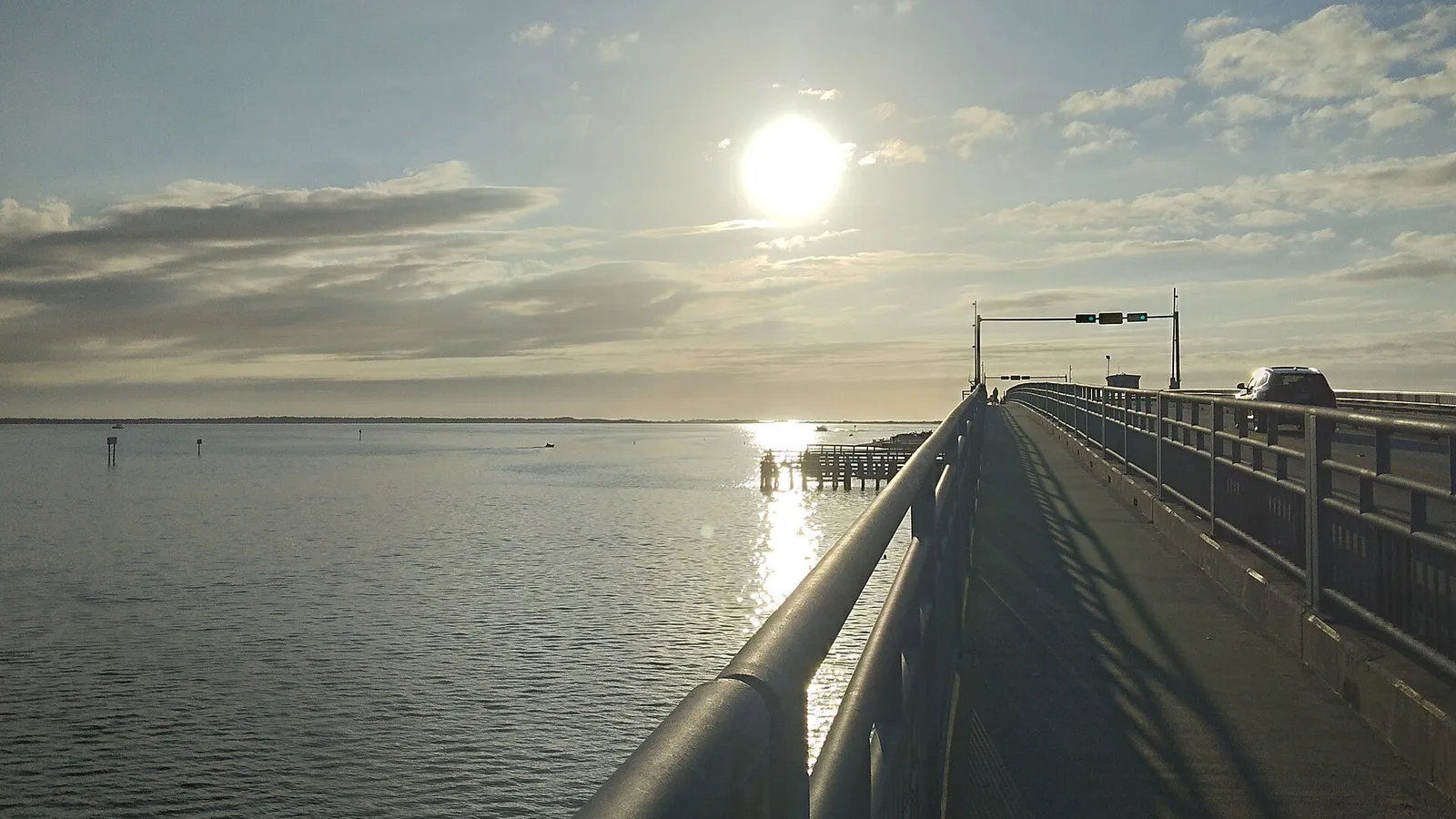
Best for: beginners, families. Flat, shallow water.
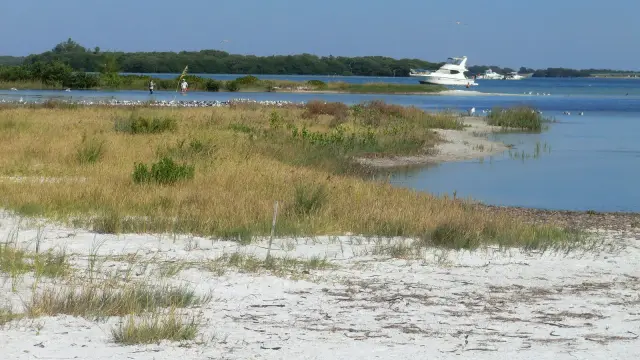
The causeway runs from Dunedin out to Honeymoon Island across St. Joseph Sound. Sandy beaches line almost its whole length, so you can park and launch nearly anywhere. Sail Honeymoon describes the water here as 2 to 5 feet deep along the mangroves, with seagrass flats where dolphins, manatees and wading birds are common.
Where to launch: Any of the sandy pull-offs along the causeway. Pinellas County’s Blueways Paddling Guide notes that rentals are on the causeway’s south side, which is also the side facing Caladesi. Parking along the causeway is free.
What to avoid: Boats pass under the causeway’s drawbridge, near the Dunedin end. Keep away from it and from the marked boat channels. Some nearby spoil islands are bird rookeries with “no landing” signs; watch from the water.
Rentals: Sail Honeymoon (61 Causeway Boulevard, Dunedin) rents paddle boards and kayaks year-round, weather and tides permitting. No reservation is needed. It closes during storms and high winds, and you can call ahead for conditions.
Caladesi Island State Park
Directions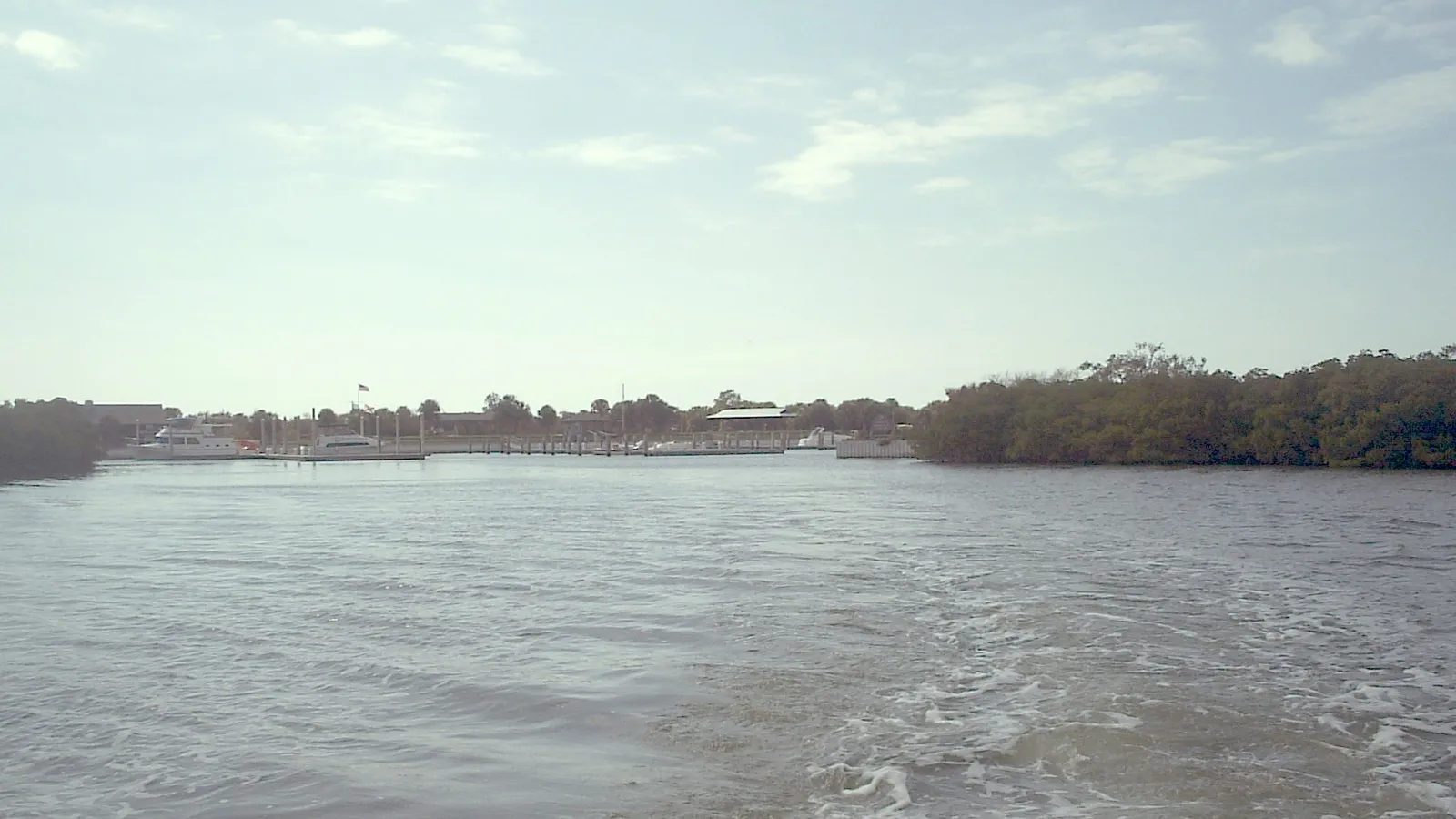
Best for: scenic paddling, wildlife. Flat water through mangroves; some tidal current.
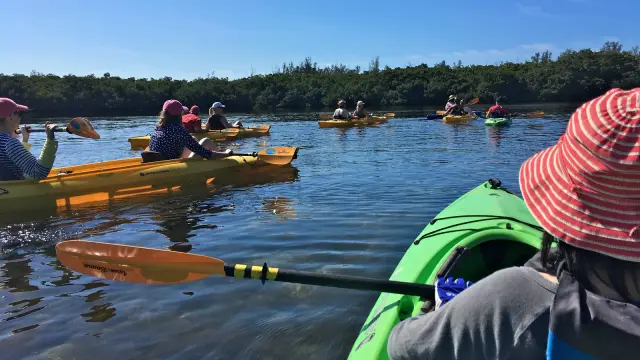
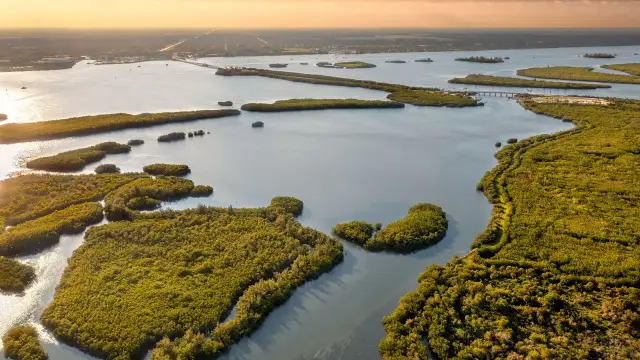
Caladesi Island has never been developed, and you can’t drive to it. It’s covered in native vegetation and edged with mangroves on the bay side. Pinellas County’s paddling guide describes a three-mile marked canoe and kayak trail through mangrove tunnels, starting at the southeast corner of the park’s marina. Florida State Parks also describes a shorter loop of about a mile. Expect herons, egrets, ospreys, mangrove crabs and the occasional manatee.
Where to launch: Paddle over from the Dunedin Causeway. Sail Honeymoon puts the crossing at about 15 minutes. You can also take the passenger ferry from Honeymoon Island and rent a kayak on the island, or launch from Clearwater Beach and paddle north (see below). Land at the marina’s sandy beach or floating dock. There’s a small per-person fee to enter the park by boat.
What to avoid: The marina has 108 slips and heavy weekend boat traffic. Cross the channels quickly and in a group.
Good to know: Plan around the tide. Much of the bay side is very shallow, and parts of the trail get skinny at low water. Go on a rising or high tide so you’re not walking your board back.
Honeymoon Island State Park
Directions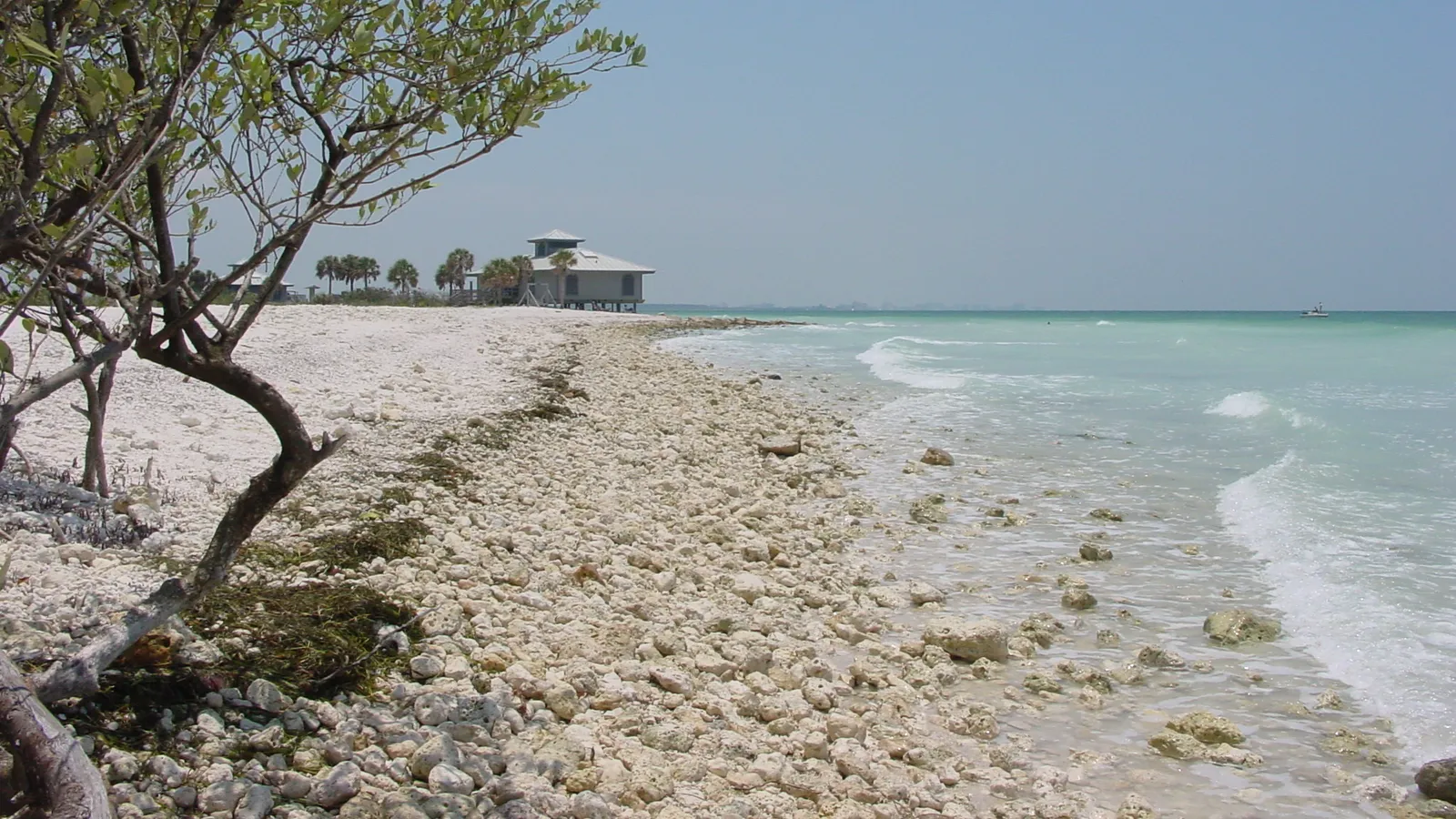
Best for: Gulf paddling on calm days, shelling, dogs. Open water on the Gulf side; calmer behind the island.
Honeymoon Island sits at the end of the causeway, with Gulf beaches on the west side and seagrass and mangroves on the east. The park is a nesting site for sea turtles and shorebirds such as least terns and oystercatchers, and rangers may rope off nesting areas.
Where to launch: From the park beaches. You’ll pay the state park vehicle fee at the gate. The Gulf side is fine on a calm morning; the east side, facing St. Joseph Sound, is calmer when there’s a west wind.
What to avoid: Pinellas County warns of rough water on the Gulf side and strong currents in the passes. Hurricane Pass, between Honeymoon and Caladesi, is busy with fishing boats and has strong tidal currents. Don’t try to circle the island unless you’re experienced.
Good to know: The park’s pet beach is at the south end, and dogs must be on a 6-foot handheld leash.
Clearwater Beach bay side (Clearwater Harbor)
Directions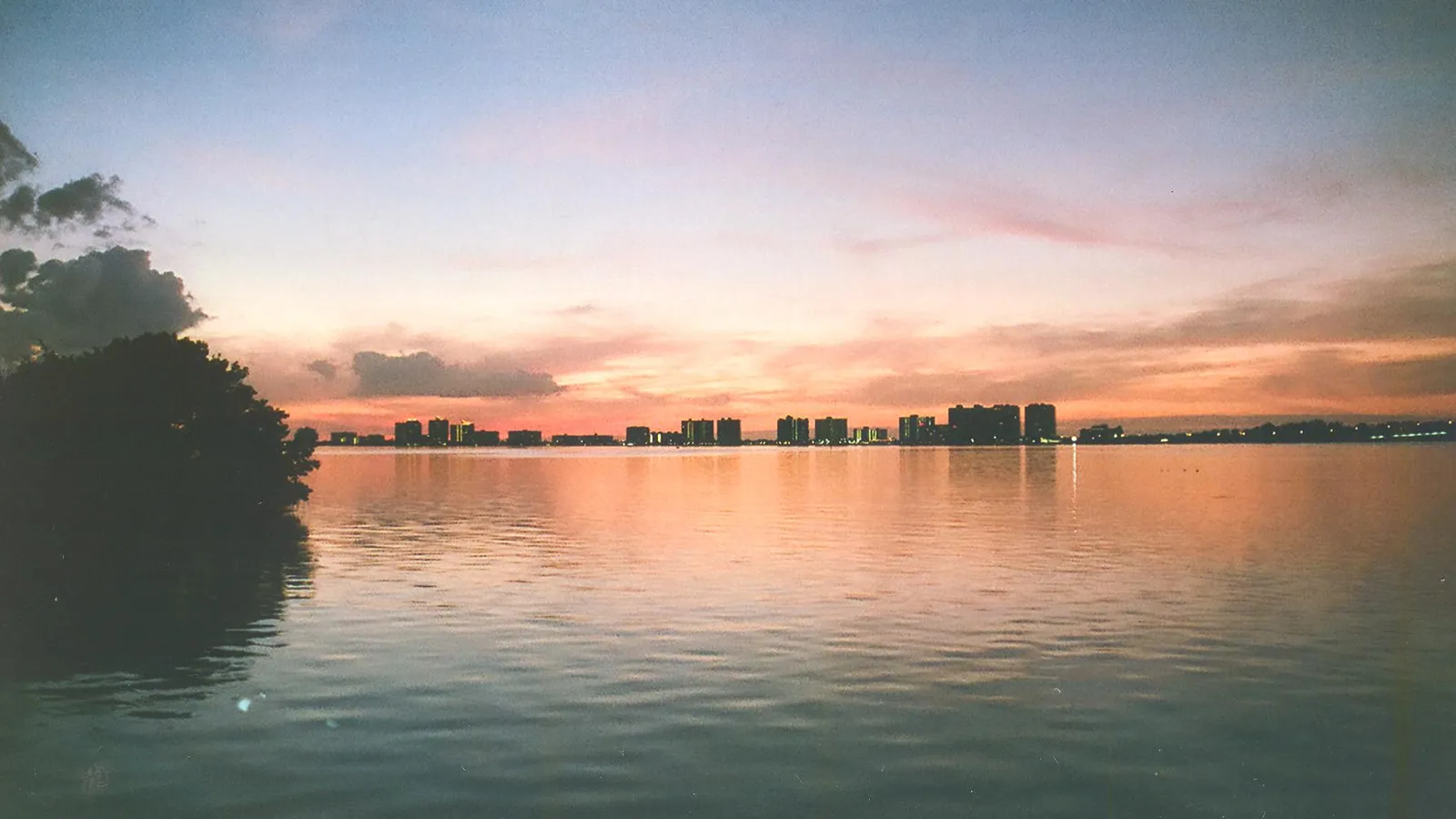
Best for: paddlers staying on Clearwater Beach. Flat water with boat traffic.
The Gulf side of Clearwater Beach is crowded with swimmers. The bay side, facing Clearwater Harbor, is where to paddle. Head north along the back of Clearwater Beach toward Caladesi Island and the mangrove-lined spoil islands. The pass that once separated them was closed by a hurricane, so Caladesi is now joined to the north end of Clearwater Beach.
Where to launch: The City of Clearwater’s ramp at the Clearwater Beach Recreation Center, 69 Bay Esplanade. There’s no ramp fee, but parking is paid and limited. Pinellas County’s guide also lists a sandy launch on the south side of the Memorial Causeway, with free roadside parking.
What to avoid: The Intracoastal Waterway channel and the marina near the Memorial Causeway are busy, especially on weekends. Some spoil islands are bird rookeries where landing isn’t allowed. Don’t paddle through Clearwater Pass to the south; the county warns of strong currents and heavy boat traffic.
Sand Key Park
Directions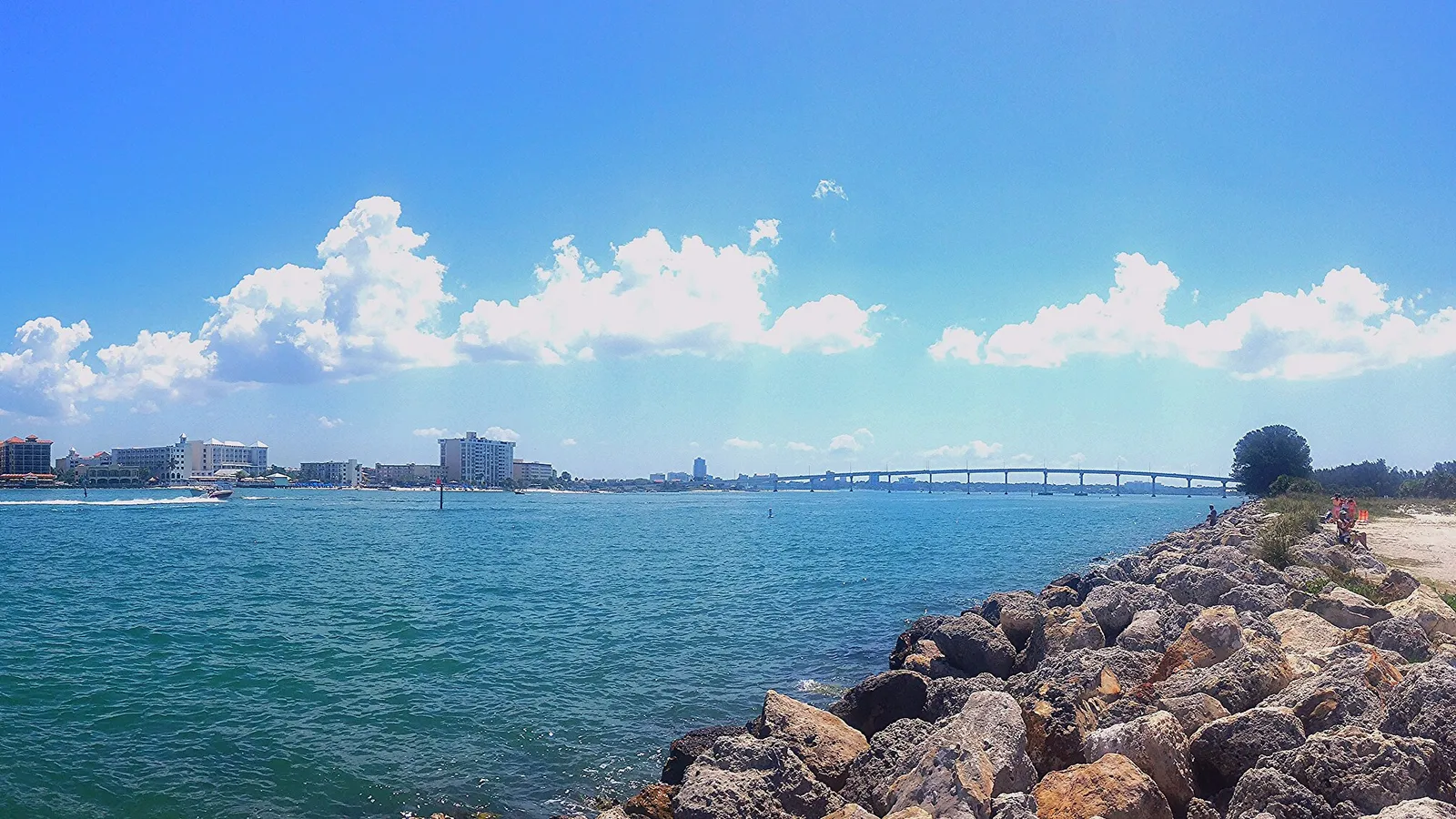
Best for: Gulf beach paddling, with lifeguards nearby. Open water.
Sand Key Park is a 95-acre Pinellas County park just south of Clearwater Pass. It has a white sand beach with seasonal lifeguards, a salt marsh with viewing benches, and views north to Clearwater Beach. Sea turtles nest on the beach from April to October.
Where to launch: From the Gulf beach, but you’ll carry your board from the parking lot. The county charges a daily parking fee ($6 at the time of writing, card only). Stay well outside the guarded swim area.
What to avoid: Clearwater Pass, at the north end of the park, has strong currents and heavy boat traffic. Don’t use it as a shortcut into the bay.
Rentals: The Clearwater Community Sailing Center (1001 Gulf Boulevard), next to the park, has stand-up paddle boards in its fleet for public rental and for members. It’s open Tuesday to Sunday.
Good to know: Dogs aren’t allowed on the beach. There’s an off-leash dog park elsewhere in the park.
Philippe Park (Safety Harbor)
Directions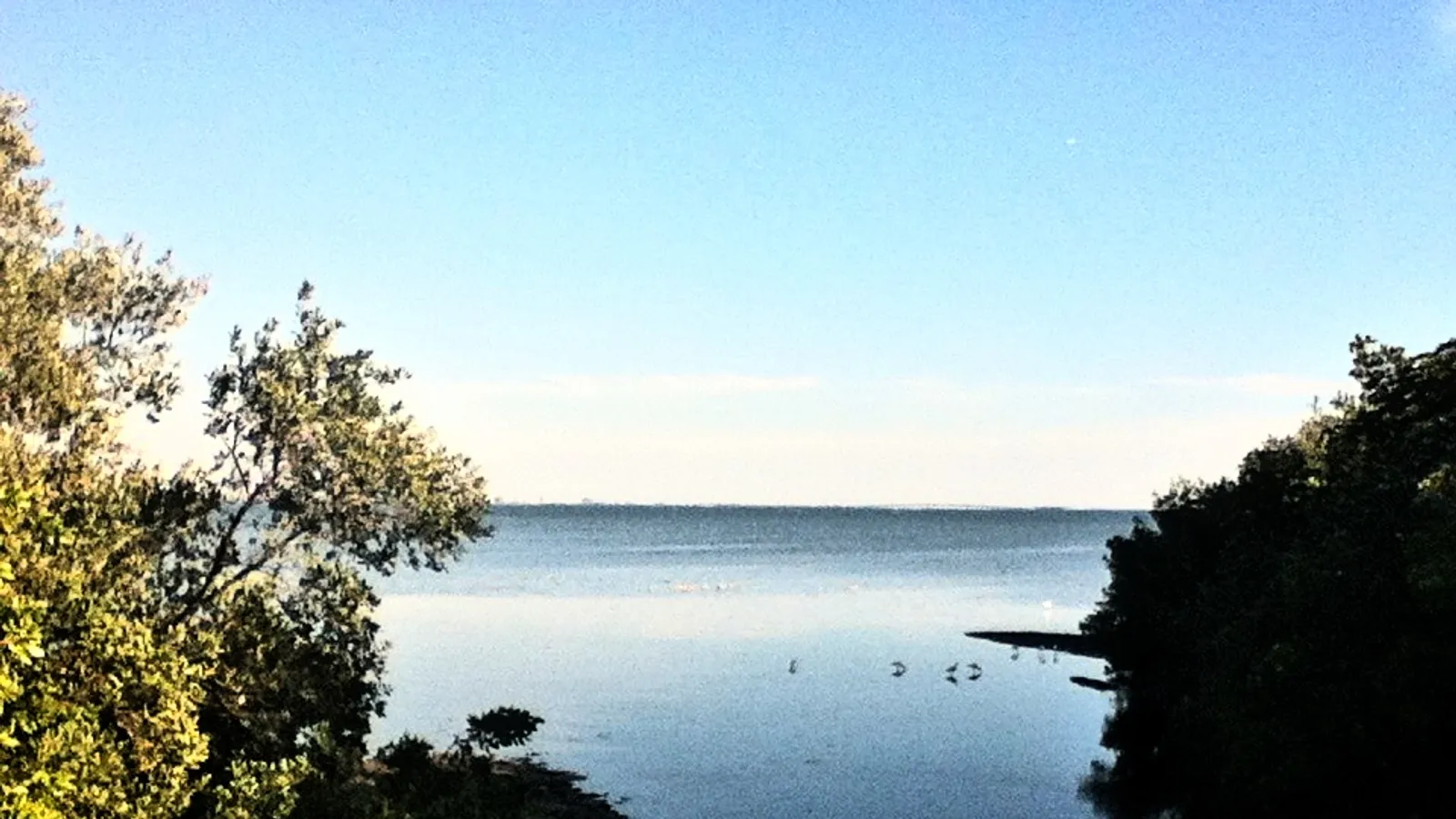
Best for: a quieter, shaded bay paddle. Flat water, exposed to wind across the bay.
Philippe Park is a 122-acre Pinellas County park on Old Tampa Bay, shaded by big oaks, with an ancient Native American mound near the water. The county’s paddling guide says manatees and dolphins are often seen in the bay here, and pelicans perch on the power-line towers just south of the park.
Where to launch: The sandy beach launch near the mound at the south end of the park, or the boat ramp. Parking is inside the park, during daylight hours only.
Good to know: Shuffle your feet when you step in. The county warns about stingrays and jellyfish near the shore. Across the bay, the City of Oldsmar’s Mobbly Bayou Preserve has mangrove-lined water to explore. If you want more of Tampa Bay, our Tampa guide covers Upper Tampa Bay and Weedon Island.
When to go
You can paddle Clearwater year-round. NOAA’s water temperature guide puts Clearwater Beach at about 62°F in January and 64°F in February, rising to about 88°F in July and August.
- Fall to spring (October–May): the best season for most paddlers, with less rain and calmer afternoons. Winter cold fronts bring a few days of strong north wind; skip the Gulf side on those.
- Summer (June–September): hot, with thunderstorms building most afternoons. Paddle early and get off the water at the first thunder. Hurricane season runs June through November.
- Tide: the bay side is shallow. Plan Caladesi’s mangrove trail and the spoil islands around mid to high tide.
On winter mornings, our wetsuit check can tell you whether you need more than a rash guard. For the causeway-to-Caladesi loop, our Trip time calculator estimates how long you’ll be out.
Rules and safety in Clearwater
In Florida a paddle board counts as a vessel when you’re outside a swimming, surfing or bathing area. According to the Florida Fish and Wildlife Conservation Commission (FWC):
- Life jacket: carry a US Coast Guard–approved wearable life jacket for each person. Children under 6 must wear one. See our pick of the best PFDs for SUP.
- Sound device: carry a whistle, horn or bell.
- After dark or in poor visibility: have a white light, such as a flashlight, ready to show.
Local rules and habits on top of that:
- Keep out of the passes. Hurricane Pass and Clearwater Pass both have strong currents and heavy boat traffic.
- Respect bird rookeries and roped-off nesting areas on Honeymoon Island and the spoil islands.
- Give manatees and dolphins space. Don’t chase, touch or feed them.
- Stay out of guarded swim areas on the Gulf beaches.
- Check for red tide on FWC’s status map before a Gulf paddle, and check the weather. Small craft advisories mean the Gulf is too rough for a board.
FAQ
Where can beginners paddle board in Clearwater?
The Dunedin Causeway. The water is shallow and protected, parking is free, and Sail Honeymoon rents boards right on the beach. Paddle along the shoreline, away from the drawbridge.
Can you paddle board to Caladesi Island?
Yes. Launch from the south side of the Dunedin Causeway and paddle across St. Joseph Sound to the park marina, then follow the marked trail through the mangroves. Go on a rising tide and pay the small boat-landing fee.
Can you see dolphins and manatees paddle boarding in Clearwater?
Often, yes. Both turn up on the seagrass flats behind the barrier islands and in Old Tampa Bay off Philippe Park. Watch quietly from a distance.
Can I bring my dog paddle boarding in Clearwater?
Honeymoon Island has a pet beach at its south end, with dogs on a 6-foot leash. Dogs aren’t allowed on the beach at Sand Key Park. Read how to paddle board with a dog before your first trip together.
Is there anywhere similar nearby?
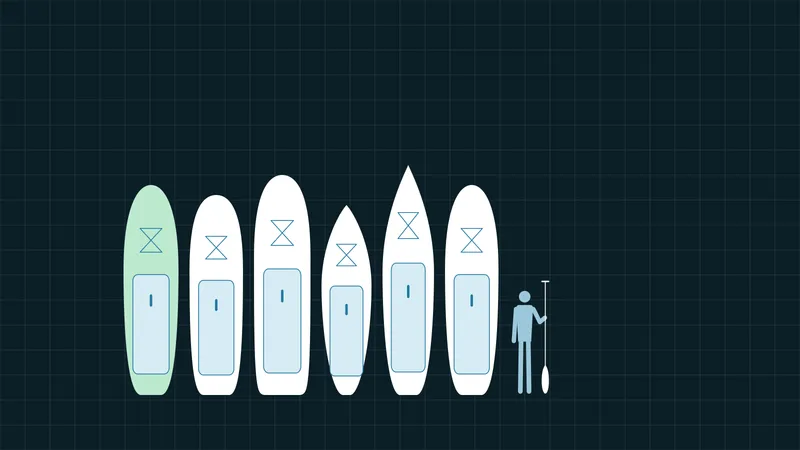
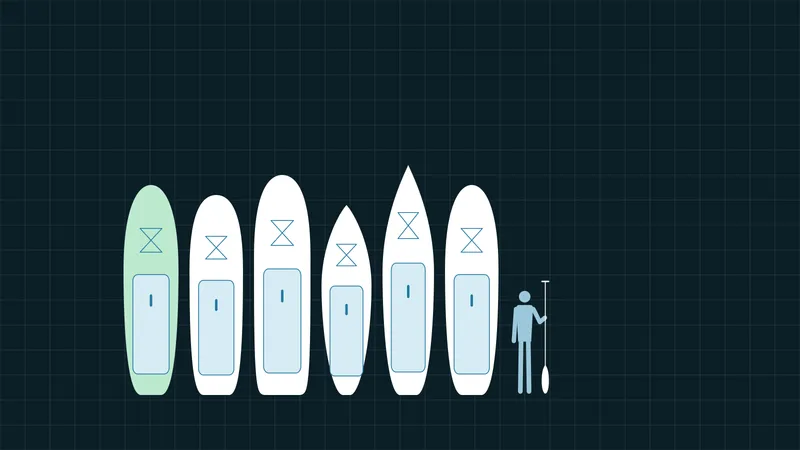
Tampa is across the bay, with the Hillsborough River and more Tampa Bay preserves; see where to paddle board in Tampa. Choosing a board for shallow bay paddling? Try the Board Fitter.