

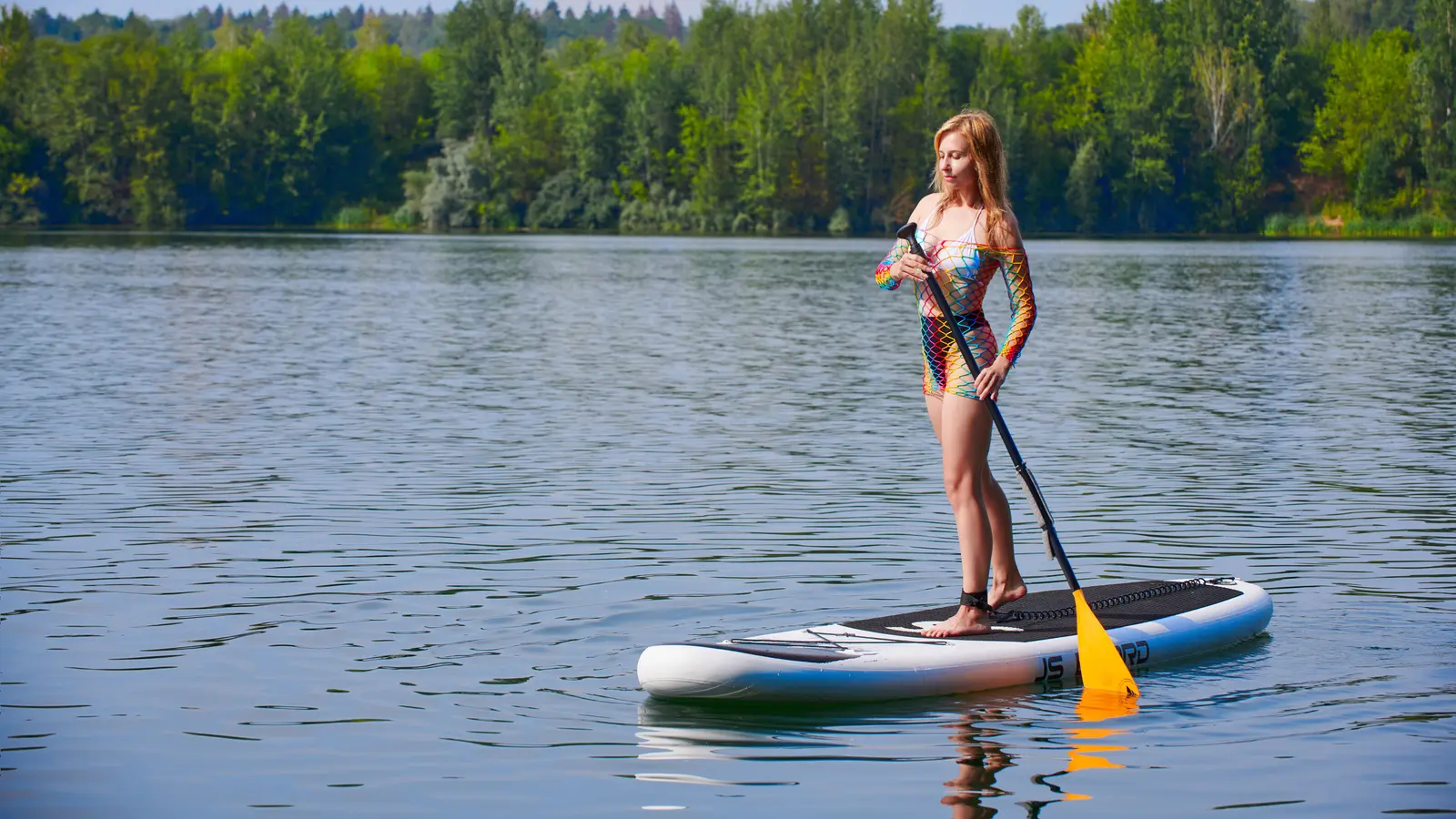
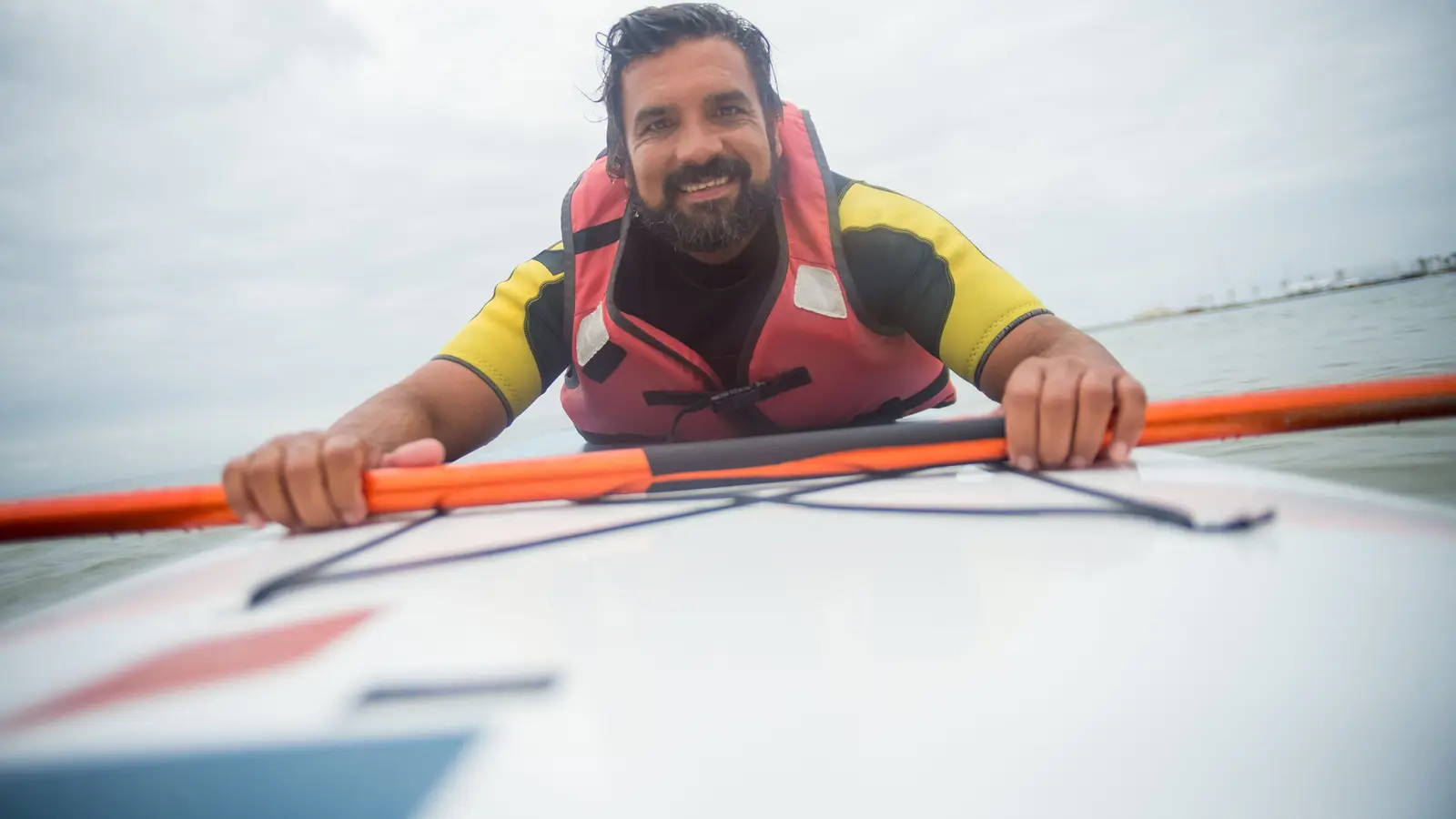
Paddle boarding is a low-impact way to build cardio fitness and core strength, and time on the water is linked to a better mood. The research on SUP itself is small, so we’ll say plainly which benefits are well supported and which are still early.
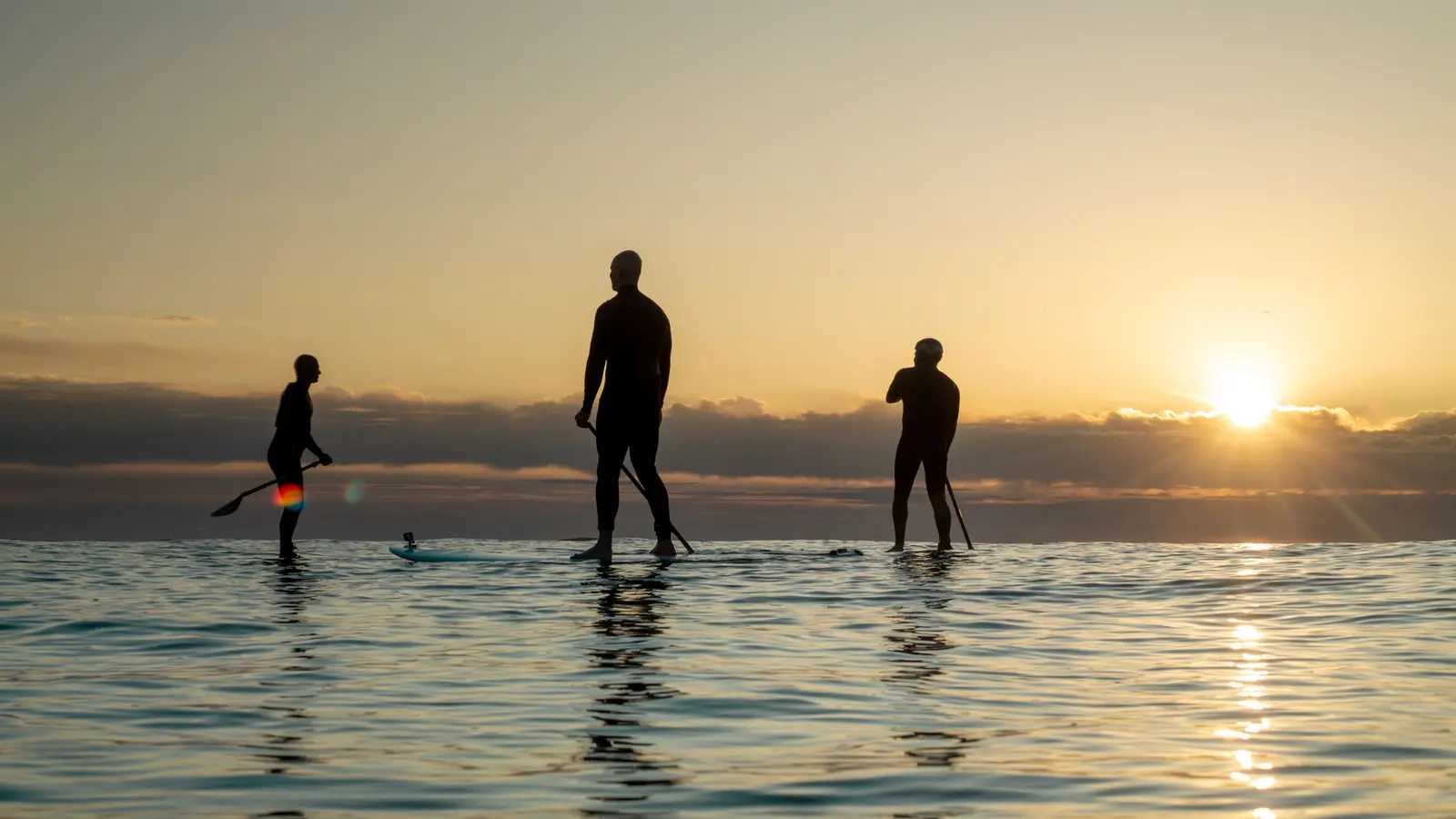
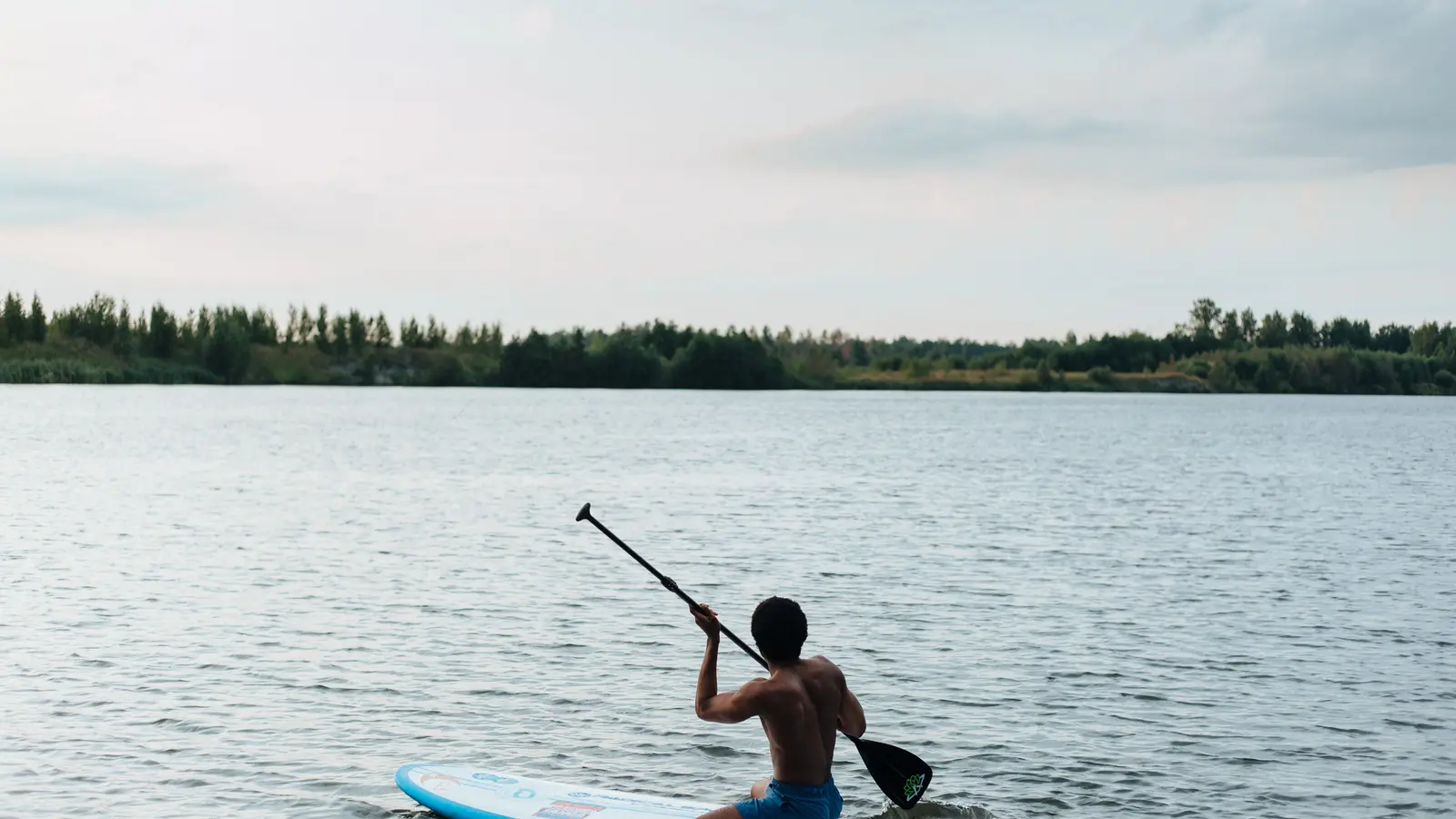
Photo: Macourt Media, Pexels License
Quick answer
- Body: cardio fitness, a stronger core, and a full-body workout without pounding your joints.
- Mind: time on the water is linked to lower stress and better well-being, and one small study saw less tension and anxiety after a single session.
- Honest caveat: studies of paddle boarding are small. Treat the benefits below as promising, not proven for everyone.
- New to it? Wear a life jacket (PFD) and a leash, and pick calm water. Our Board Fitter helps you choose a stable board.
1. Better cardio fitness
In a 2016 study from Bond University in Australia, 13 untrained adults paddled three one-hour sessions a week for six weeks. Their aerobic fitness rose by about 24% and their anaerobic fitness by about 42%. A separate comparison found that regular paddlers had much higher aerobic fitness than sedentary people.
The catch is that these were small groups, so it is evidence, not a guarantee. How hard you work matters too: a slow cruise is gentle exercise, and a faster pace is a real workout. Our guide on how many calories paddle boarding burns has numbers, or try the calorie calculator.
2. A stronger core
Staying upright on a moving board keeps your trunk muscles working, and every stroke twists through your torso. In the same six-week study, core endurance tests (front and side planks and a back-extension hold) improved by roughly 20–28%.
See what muscles paddle boarding works for the full breakdown.
3. A full-body, low-impact workout
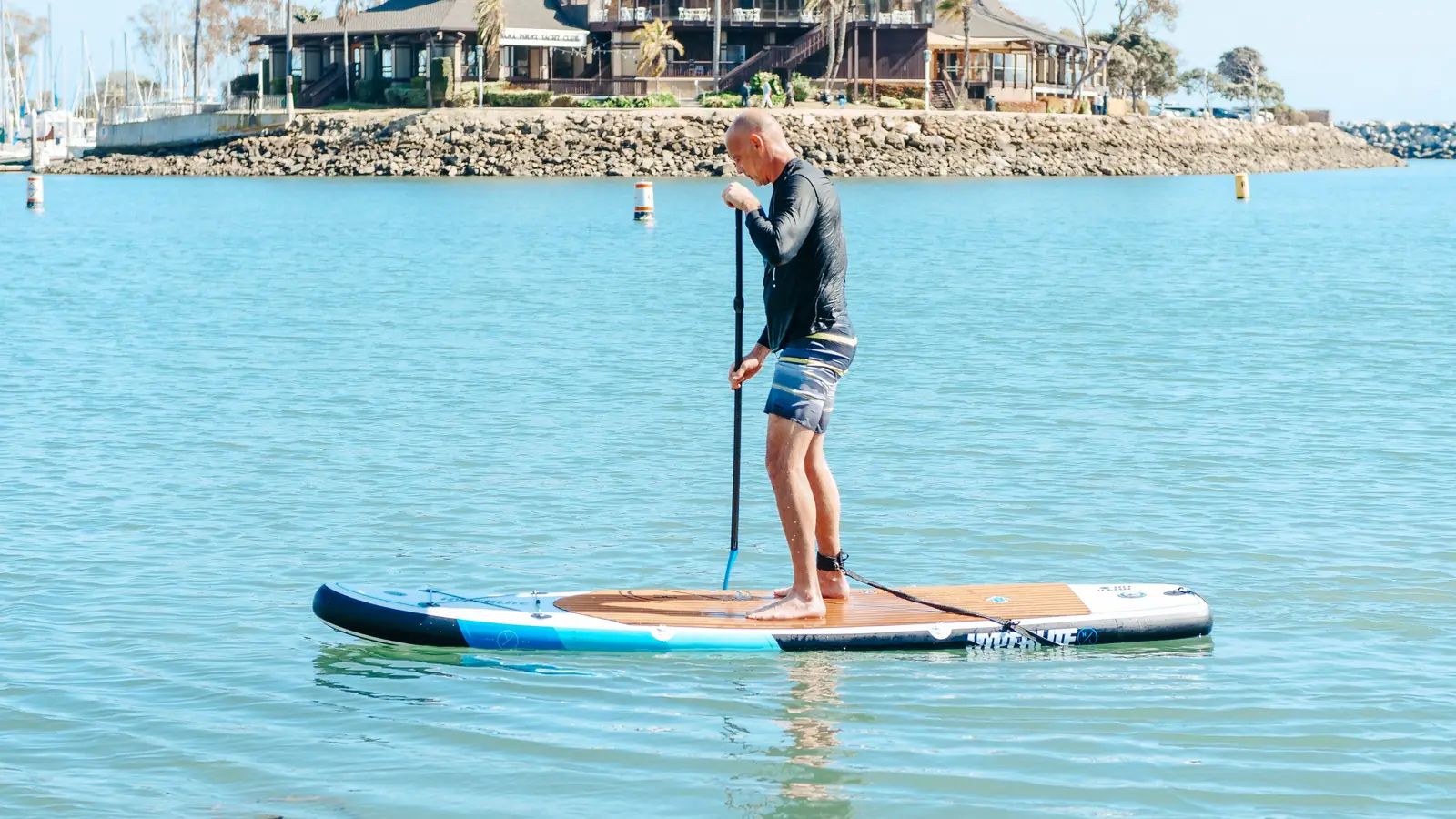
Paddling uses your back, shoulders, arms and core, while your legs and feet make constant small adjustments to balance. The water is forgiving when you fall, and standing on a board doesn’t jar your knees and hips the way running does. That makes it appealing if you want exercise that is easier on your joints.
Low impact isn’t no risk, though. Check with your doctor first if you have an injury or a health condition, and if you are pregnant read is paddle boarding safe while pregnant.
4. Balance (with a caveat)
Experienced paddlers in the 2016 Bond University comparison had better balance than sedentary people. But the six-week beginner study found no significant change in balance. The honest reading: paddling is probably good balance practice over the long run, and six weeks of beginner sessions didn’t show a measurable gain.
If balance is your goal, our tips on how to improve balance for paddle boarding will help.
5. Less stress and a better mood
Researchers who study time in nature report links with more positive emotion and less mental distress, and water settings appear to support well-being too. Much of that evidence is correlational, meaning people who spend time outdoors feel better, but it doesn’t prove the outdoors is the cause.
For paddle boarding specifically, a small Japanese study of eight people new to SUP found lower “tension-anxiety” scores after one session, with no change in other mood measures. With so few people and no control group, it is a hint, not a finding. In the Bond University study, participants also rated their quality of life higher in the physical and psychological areas after six weeks.

6. A way to get your weekly activity
The CDC suggests adults get at least 150 minutes of moderate activity a week plus muscle-strengthening work on two days. Paddling at a steady pace can count toward the aerobic part. Two or three outings of an hour or so add up, and it feels less like a chore than a gym session.
7. Company, outdoors time and a hobby you stick with
Paddle boarding is easy to do with friends, family or a dog, and you can pick the pace. A UK survey of nearly 20,000 adults found that people who spent at least two hours a week in nature reported better health and well-being. An activity you enjoy is one you’ll repeat, and that may be the biggest benefit of all. Try paddle board games with a group, or paddle with a dog.
How to get the benefits safely
- Wear a PFD and a leash on your board, especially in open water. Read do you need a life jacket on a paddle board.
- Start on calm water with little wind and a stable board.
- Build up gradually. Begin with 30–60 minutes and add time as you get comfortable.
- Dress for the water temperature, not the air. Our wetsuit check can help.
Brand new? Our tips for beginners cover the basics.
FAQ
Is paddle boarding good for weight loss?
It can help, because it burns calories and builds muscle. But no single activity guarantees weight loss. It depends on how often and how hard you paddle and on the rest of your routine. We don’t have a reliable figure to promise, so use the calorie calculator for an estimate.
Is paddle boarding good for your back?
Paddling works your back and core muscles, and the studies above found better core endurance. But if you already have back pain, talk to your doctor or physical therapist before you start.
Is paddle boarding good for anxiety or depression?
Time on the water and outdoors is linked with better mood, and one small study saw less tension and anxiety after one session. It isn’t a treatment for anxiety or depression. If you are struggling, talk to a health professional.
How often should I paddle board to see benefits?
The Bond University study used three one-hour sessions a week for six weeks. You don’t have to match that, but regular sessions matter more than one big outing. The CDC says some activity is better than none.
Is paddle boarding better than walking?
Not necessarily. Walking is easier to fit in and needs no gear. Paddling uses more upper body and core muscles and is more fun for many people. Either counts as activity, and the best one is the one you will keep doing.