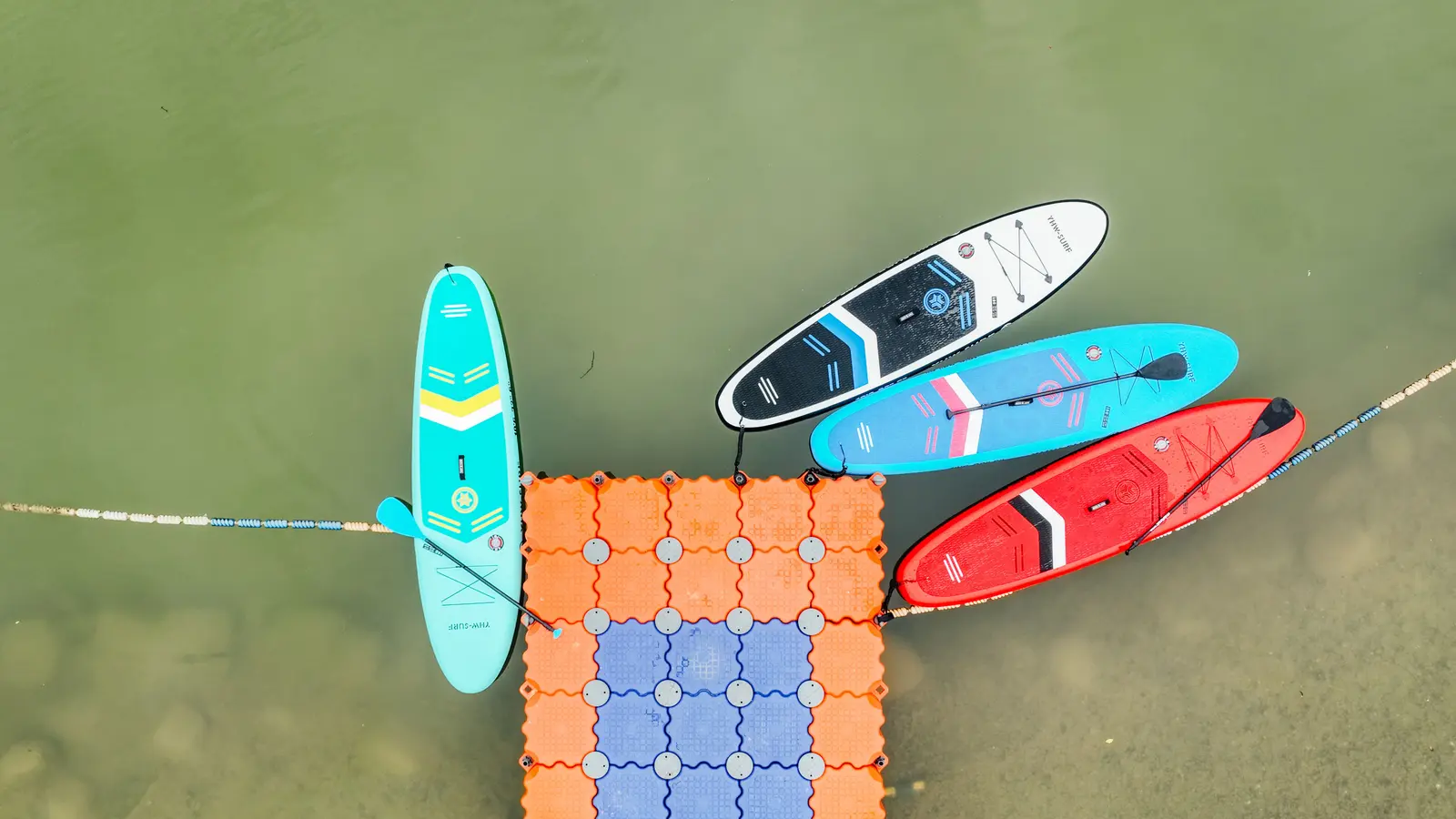
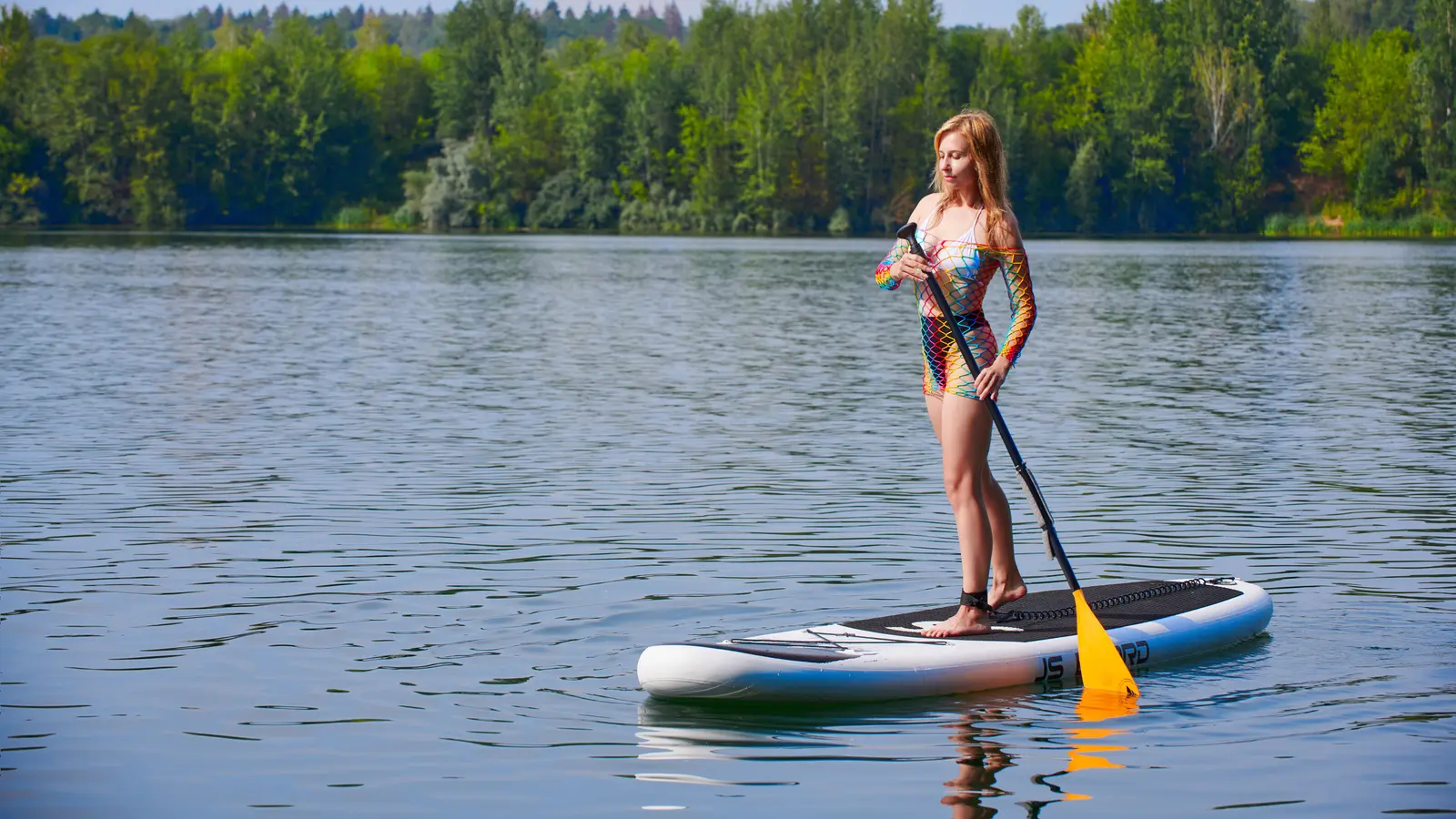
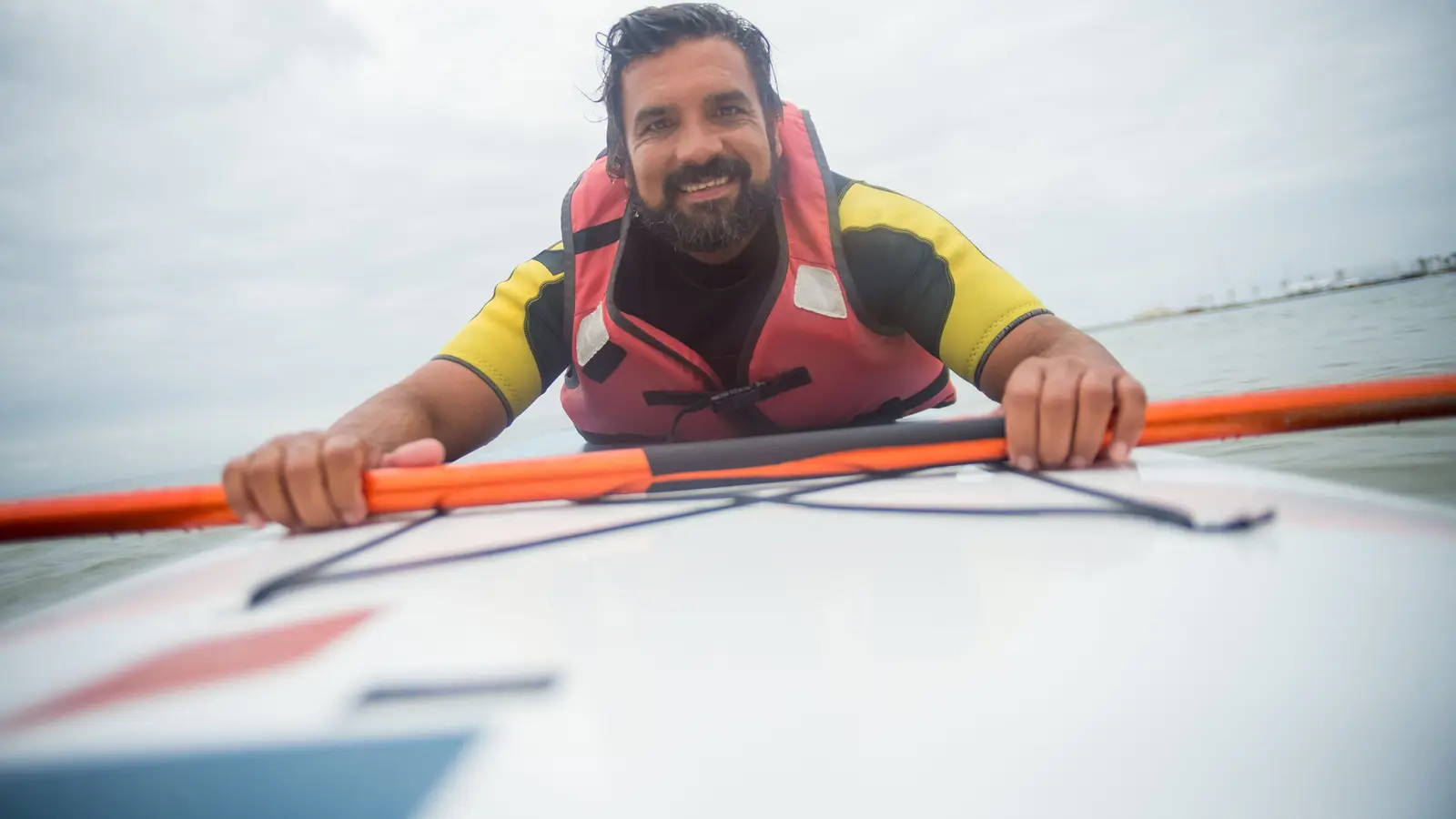
The easiest paddle board games to start with are Simon Says, water tag and a simple buoy relay. They need no special gear, they work on calm water, and they quietly teach balance and board control. Everything below is a game you can play with a few boards, some floats and a group of friends or family.
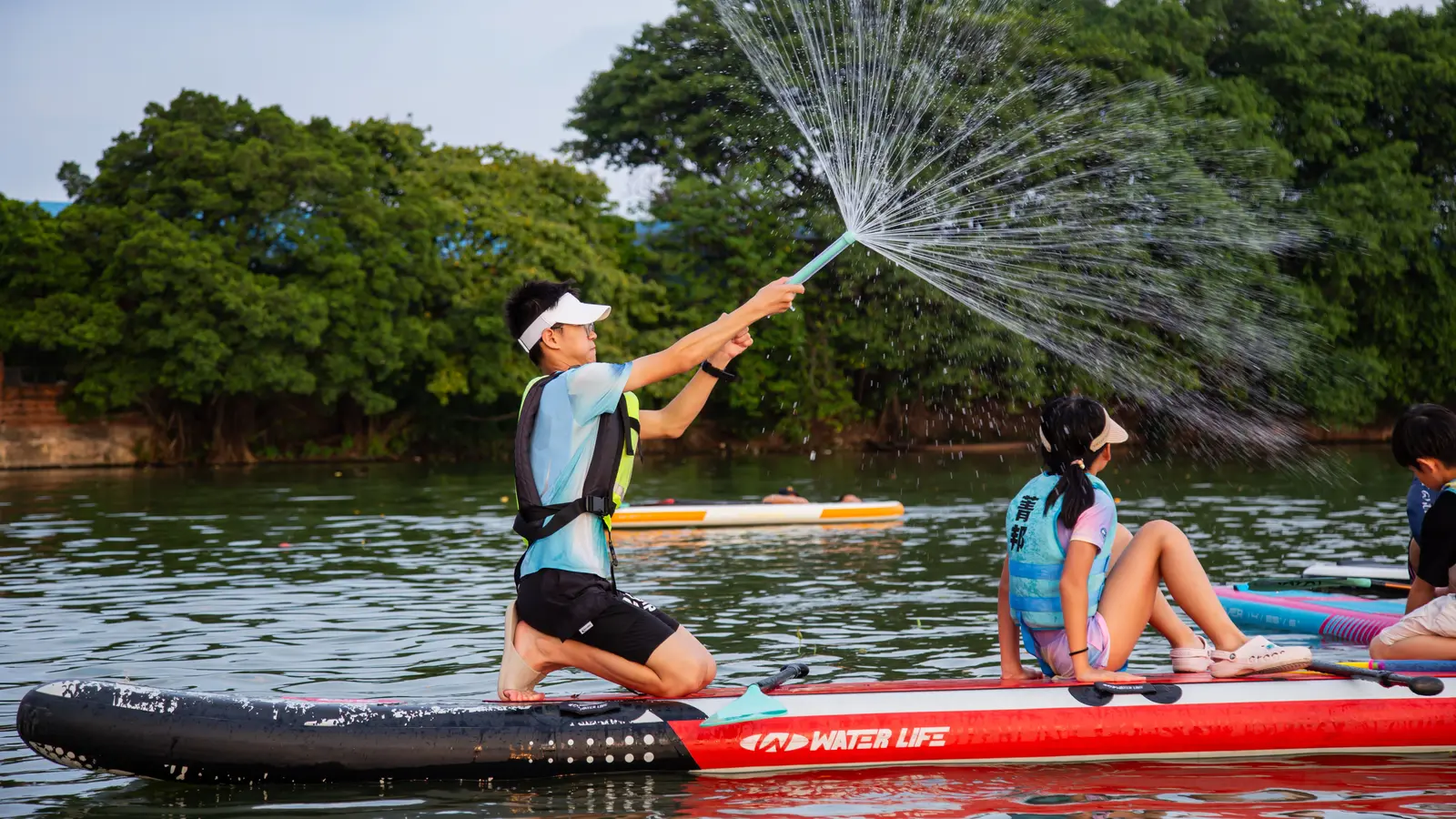
Photo: yuyang wen, Pexels License
Every game here assumes calm, flat water, life jackets on everyone, and an adult watching. Read the safety section before you start.
Quick answer
- Best for young kids: Simon Says, red light/green light, animal walks.
- Best for teens and adults: paddle joust, relays, obstacle course.
- Best for big groups: relay races and a station-based obstacle course, so everyone plays at once.
- Always: life jackets, calm water, one adult for every few children.
1. Simon Says
Simon Says works well on a board because every command is also a balance exercise. Call out “Simon says kneel,” “Simon says touch the water” or “Simon says wave with one hand.” iRocker’s kids’ games guide suggests simple commands for little ones and adding a few paddle strokes between commands for older kids.
Younger children can stay seated or kneeling. If you are new to standing, our guide to how to stand up on a paddle board covers the steps.
2. Red light, green light
One person at the shore or on a board calls “green light” and everyone paddles toward them. On “red light” everyone has to stop. It is a playful way to practice starting, stopping and holding position on a wobbly surface, which iRocker also lists among its kid-friendly board games.
3. Water tag
Whoever is “it” tries to tag another player, who then becomes “it”. Keep the play area small and marked with buoys, and tag with a hand or a pool noodle, not a paddle. It is a good test of turning, and you can brush up first with how to turn a paddle board.
4. Paddle joust
Two players sit or kneel facing each other and gently tap blades together. The aim is to practice paddle control, not to knock anyone in, so keep it light. Kneeling is the safer way to start, and you should never swing a paddle at someone’s head. iRocker lists it among its kid-friendly games.
5. Limbo
Float a pool noodle or stick just above the water, held at both ends by two helpers, and have players paddle or glide beneath it while kneeling. Thursosurf suggests paddle board limbo with a floating stick or pool noodle. Make sure the stick is soft and light.
6. Balance challenges and animal walks
Ask kids to walk like a crab, waddle like a penguin or stand on one foot. iRocker suggests animal walks and timed balance challenges, with younger kids starting on their knees. For more ways to practice, see how to improve balance for paddle boarding.
7. Passenger relay
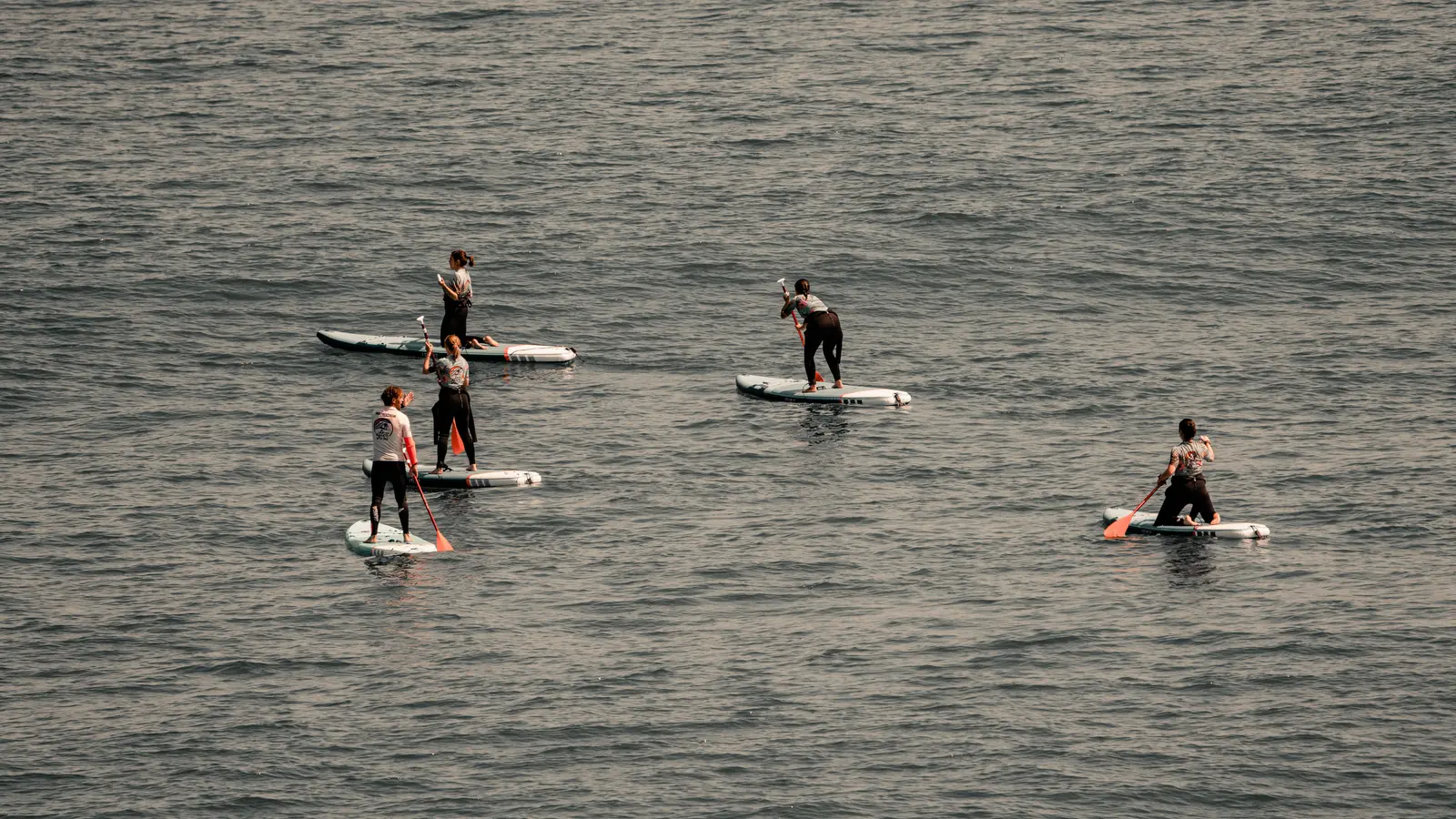
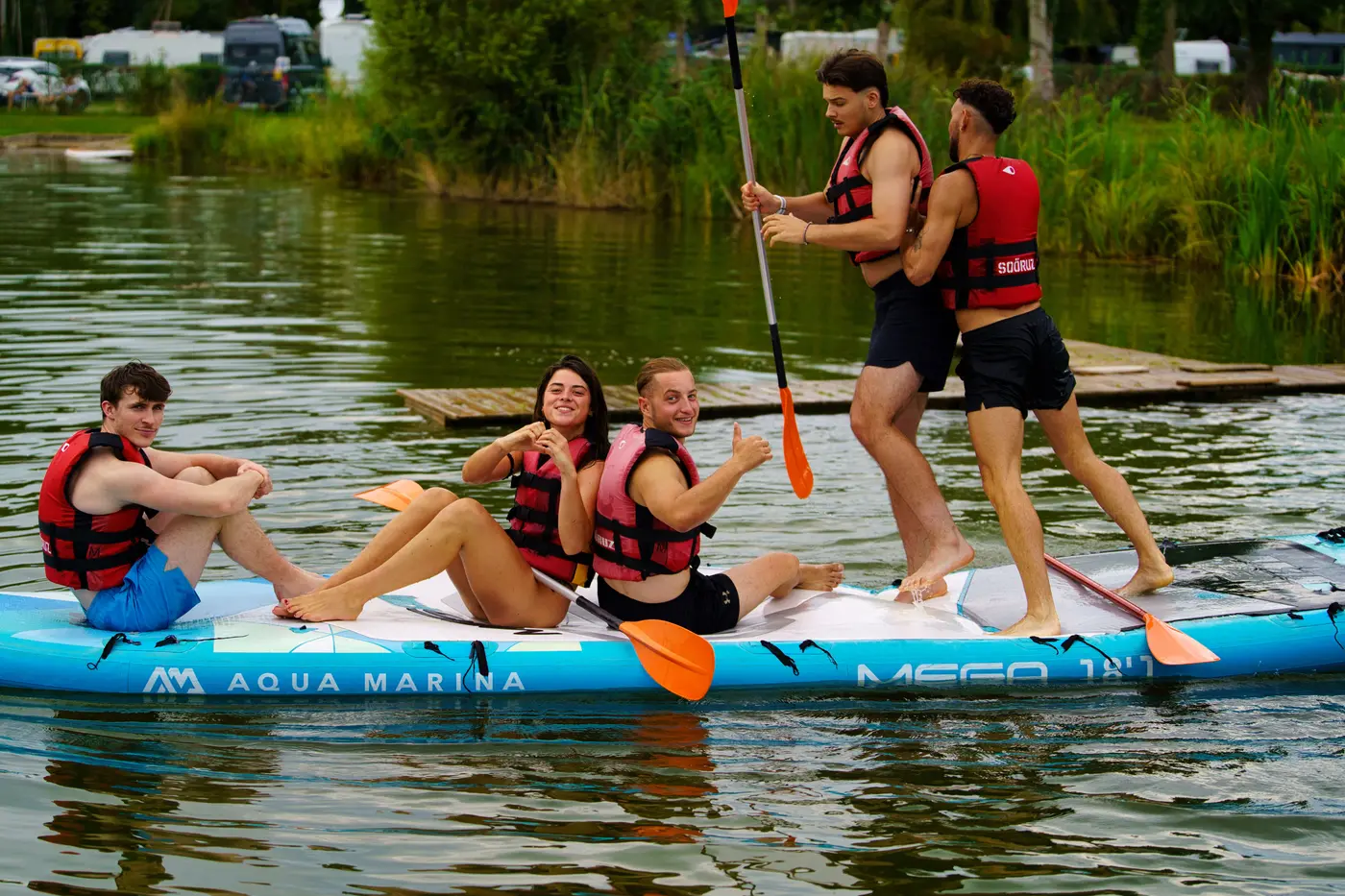
Split into teams with two players per board. One person stands and paddles while the other lies on their back on the board. The pair paddles around a buoy and back, then swaps over to the next two. The Games4YouthGroups site recommends this game for ages 12 and up, and notes the extra weight makes turning around the buoy harder. Use a board with enough capacity for both people, and check the weight limit first.
8. Figure-eight relay
Set two floats or buoys a short distance apart and have each player paddle a figure eight around them. Teams hand off to the next paddler at the start. It tests turning and paddle strokes at the same time. If a child doesn’t want to paddle, they can be the human buoy.
9. SUP obstacle course
Games4YouthGroups describes a five-station course for ages 12 and up:
- a slalom between buoys
- a gate made with two hanging rods that players must pass without touching
- a gate made with two anchored containers
- a low bar players must clear by jumping over
- a target throw with tennis balls
Players earn a point for each completed task and extra points for speed, and the highest total wins. Setting up several stations means everyone can play at once. The jump and the overhead rods need an adult to check them, and we would skip the jump entirely on a board you are not confident on. You can build an easier version with only the slalom and a target.
10. Raft up for a floating picnic or yoga
Not a competition, but a great way to finish. Thursosurf suggests tying boards together in calm water for a short yoga session or a picnic. Only do this in very still water and keep life jackets on. Our guide to what paddle board yoga is has more ideas.
Safety rules for paddle board games
- Life jackets: the under-13 rule is common: North Carolina’s wildlife agency, for example, requires anyone younger than 13 to wear a life vest on a recreational vessel that is underway, and some states go further. Florida’s FWC says paddleboards count as vessels outside swimming, surfing and bathing areas, and that children under 6 must wear a life jacket there. Rules vary by state and park, so check yours. We recommend everyone wears one for games. See do you need a life jacket on a paddle board?
- Supervision: iRocker suggests at least one adult for every three children, and that everyone can climb back on their board.
- Water and weather: pick calm, flat, shallow water. iRocker’s advice is to avoid wind above about 10 mph, thunderstorms and whitecaps.
- Set limits: agree on boundaries and signals, and stop if someone is tired or conditions change.
- Know how to get back on: practice getting back on a paddle board after falling before playing.
- Boards: wide, stable boards work best. Our best kids paddle boards list covers options, and the Board Fitter helps match a board to the heaviest rider. For more, see paddle board safety tips.
FAQ
What paddle board games can toddlers or young kids play?
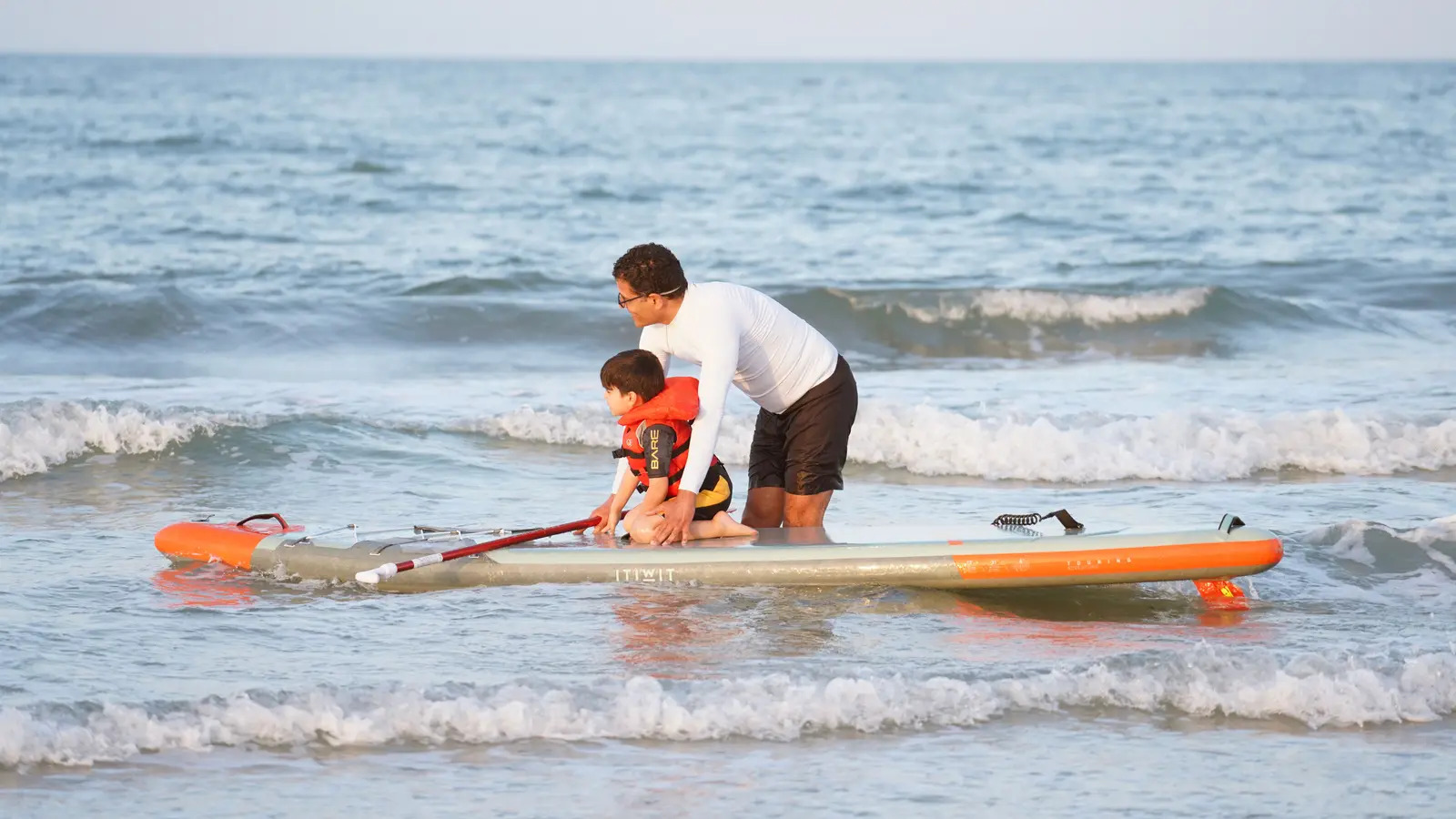
Simple ones that keep them seated or kneeling: Simon Says, animal walks on their knees, and following the leader. Keep sessions short, stay in calm shallow water, and keep an adult within arm’s reach.
How many people can be on one paddle board?
It depends on the board’s weight limit. Check the maker’s stated capacity and stay well under it, since a board floating higher is steadier. A parent and a small child on one wide board is common, but two people paddling at once usually needs a bigger board or a second board.
Do kids need to wear life jackets for paddle board games?
Rules vary: North Carolina requires it under 13, Florida under 6, and some parks and states differ. A paddle board counts as a vessel outside swimming areas. Check your state’s rules, and have everyone wear one anyway.
What do we need for these games?
Mostly nothing: boards, paddles and life jackets. Add pool noodles, buoys or floats, tennis balls or sponges for targets, and a rope for markers.
Can adults play too?
Yes. Relays, the obstacle course and paddle joust work well for teens and adults, and they make a good workout, as covered in is paddle boarding good exercise?