
Start with the forward stroke, which moves you ahead, and the sweep stroke, which turns you. Add the reverse stroke to slow down, the J-stroke to stay straight, and the draw stroke to slide sideways. Together those cover almost everything you’ll do on flat water.
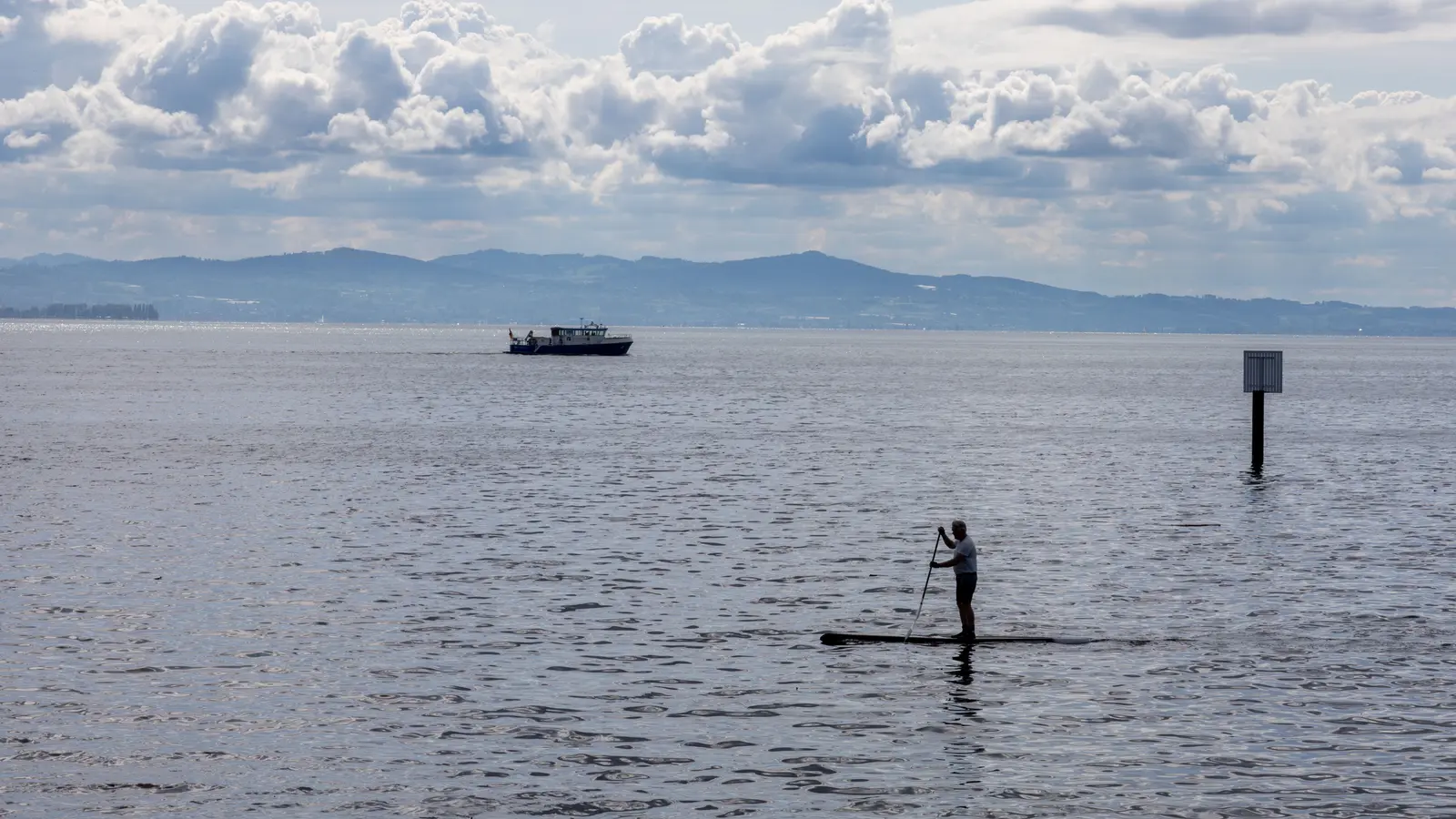
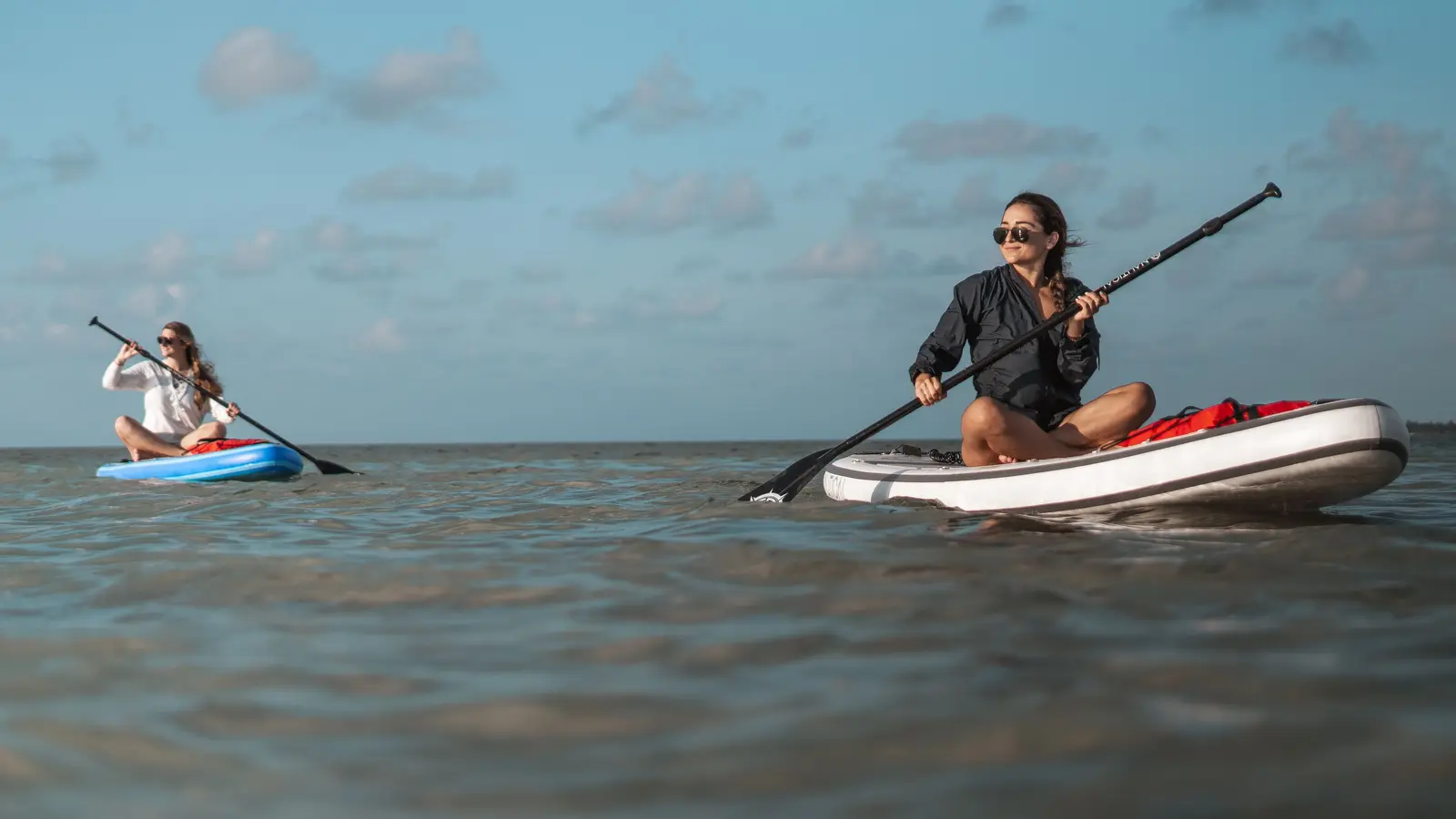
Photo: Danny Sdt, Pexels License
The C-stroke and cross bow are extras. They’re useful, but you can paddle happily for months without them.
Quick answer
| Stroke | What it does | Learn it |
|---|---|---|
| Forward | Moves you ahead | First |
| J-stroke | Keeps you straight on one side | Early |
| C-stroke | Straightens you with a wider arc | Later |
| Sweep | Turns the board | Early |
| Reverse | Slows, stops or backs up | Early |
| Draw | Moves the board sideways | Later |
| Cross bow | Quick turn without switching sides | Later |
Wear a leash and a life jacket while you practice, and pick flat, calm water. For why that matters, see do you need a life jacket on a paddle board.
1. The forward stroke
This is the stroke you’ll use most. Glide, a paddle board maker, describes it like this: plant the whole blade in the water near your toes with the shaft as vertical as you can, rotate your torso to pull, and lift the blade out near your feet rather than dragging it past your heels.
- Use your core. Turn your shoulders and hips instead of just pulling with your arms.
- Keep it steady. Glide recommends shorter, steady strokes over long, heavy pulls.
- Get your grip right first. See how to hold a paddle board paddle.
2. The J-stroke
The J-stroke is a forward stroke with a small correction at the end. SUP Boarder Magazine describes it as a flick: as the blade comes out, you rotate your wrists and knuckles downward so the blade kicks outward. That nudges the nose back toward the side you’re paddling on, which cancels the usual drift away from it.
It lets you stay on one side for longer instead of switching every few strokes. It’s subtle, and it takes a bit of practice to feel. Our guide to paddling a SUP straight covers the other tracking fixes.
3. The C-stroke
The C-stroke is a longer version of the J. SUP Boarder Magazine says you start the blade wide of the board, draw it in toward the nose and down along the rail, then finish with the same outward flick. The path looks like a letter C.
Consider it a next step once the J-stroke feels natural. The trade-off is that it’s a bigger movement, so it’s less tidy if you want a quick, efficient rhythm.
4. The sweep stroke
The sweep turns the board. NRS says to plant the blade near the nose and swing it in a wide arc away from the board. The nose then turns away from the side you’re paddling on, so a sweep on your right turns you left.
Bend your knees more than you would for a forward stroke and rotate your hips and shoulders. NRS adds that it works from a standstill and for small corrections on the move, and that it keeps more of your speed than a reverse stroke does.
Run it backward, from tail to nose, and you get a reverse sweep. That turns the board the other way and acts as a brake. We cover both in how to turn a paddle board.
5. The reverse stroke
Think of this as the forward stroke run backward. According to Glide, you plant the blade near the tail and push the water forward while keeping your body upright. SUP Boarder Magazine says to use it to slow down as you near an object or the shore.
- Slowing and stopping: the blade works as a brake.
- Backing up: a few strokes in a row will move you backward.
- Turning: it also swings the nose, and NRS says it works best at low speed or from a standstill.
Practice it in calm water first.
6. The draw stroke
The draw stroke slides the board sideways, which is what you want when you’re easing up to a dock. Star Board describes it like this:
- Turn your hips and toes toward the way you want to move.
- Reach out to the side and sink the blade deep, parallel to the board.
- Pull the blade in toward the rail, tilting it slightly toward the tail.
- Before it reaches the board, sweep it back toward the tail and lift it out.
- Repeat until you’re where you want to be.
Glide suggests practicing on both sides. Star Board has you finish the stroke before the blade reaches the rail, so the blade never bangs into the board.
7. The cross bow stroke
The cross bow is a quick turn. You cross the paddle over the nose, plant it and pull toward the nose. SUP Boarder Magazine says to then lift the paddle over the nose and finish with a wide sweep on the other side. Glide notes it lets you turn without switching sides.
It takes practice and a low, balanced stance, so learn the sweep first. You’ll find step-by-step instructions in how to turn a paddle board.
How to practice
- Pick one stroke per session. Don’t try all seven in a single outing.
- Stay on flat, calm water, away from boat traffic, with a leash and a life jacket.
- Kneel if you’re wobbly. Our guide on how to stand up on a paddle board helps with standing up later.
- Match the board to the paddler. A board that’s too small or too narrow makes every stroke harder. The Board Fitter shows sizes for your weight and style.
FAQ
What is the most important paddle board stroke?
The forward stroke. It moves you ahead, and all the other strokes are variations of it.
Which stroke do I use to turn?
The sweep. A forward sweep on your right turns the board left, and a reverse sweep on the same side turns it right.
What is a J-stroke on a paddle board?
A forward stroke that finishes with a small outward flick of the blade. It keeps you tracking straight while you stay on one side.
How do I stop a paddle board?
Plant the blade near the tail and push the water forward, using the reverse stroke. It slows you and can stop you.
How do I move a paddle board sideways?
Use the draw stroke. Reach out to the side, pull the blade toward the rail, and finish before it hits the board.