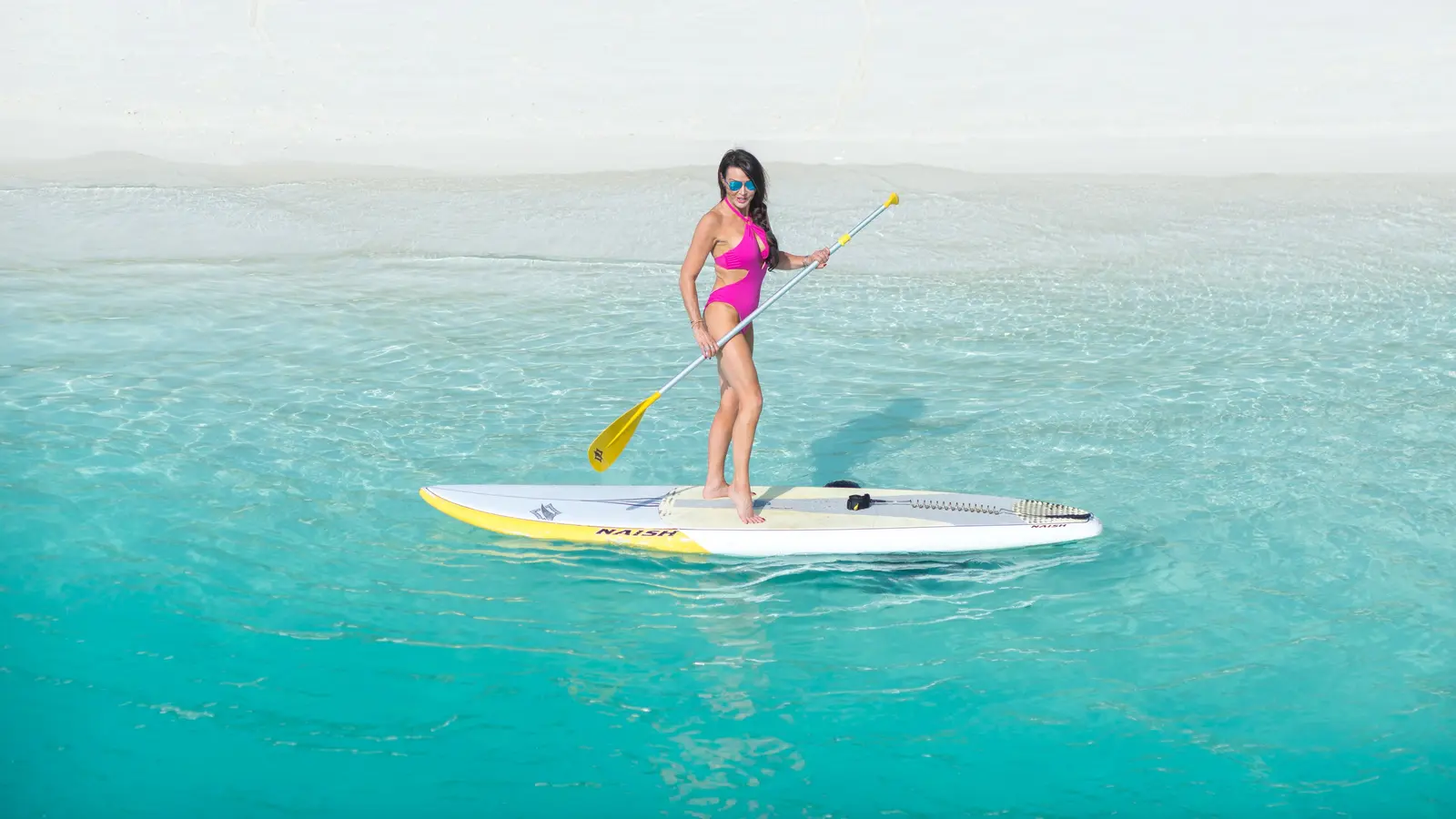

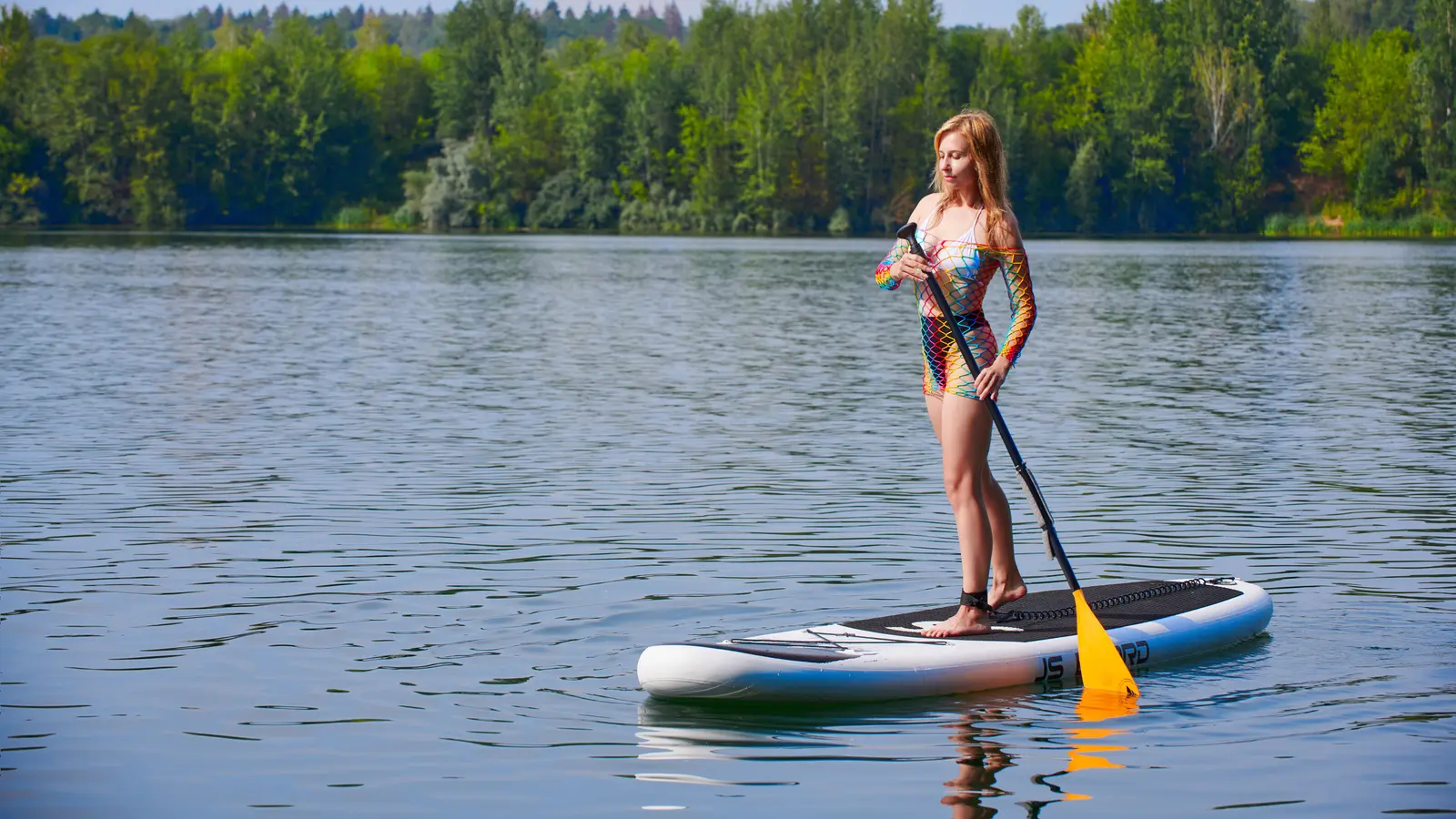
To turn a paddle board, take a sweep stroke: plant the blade near the nose and draw a wide arc out and back toward the tail. The board turns away from the side you paddle on, so a sweep on your right turns you left.
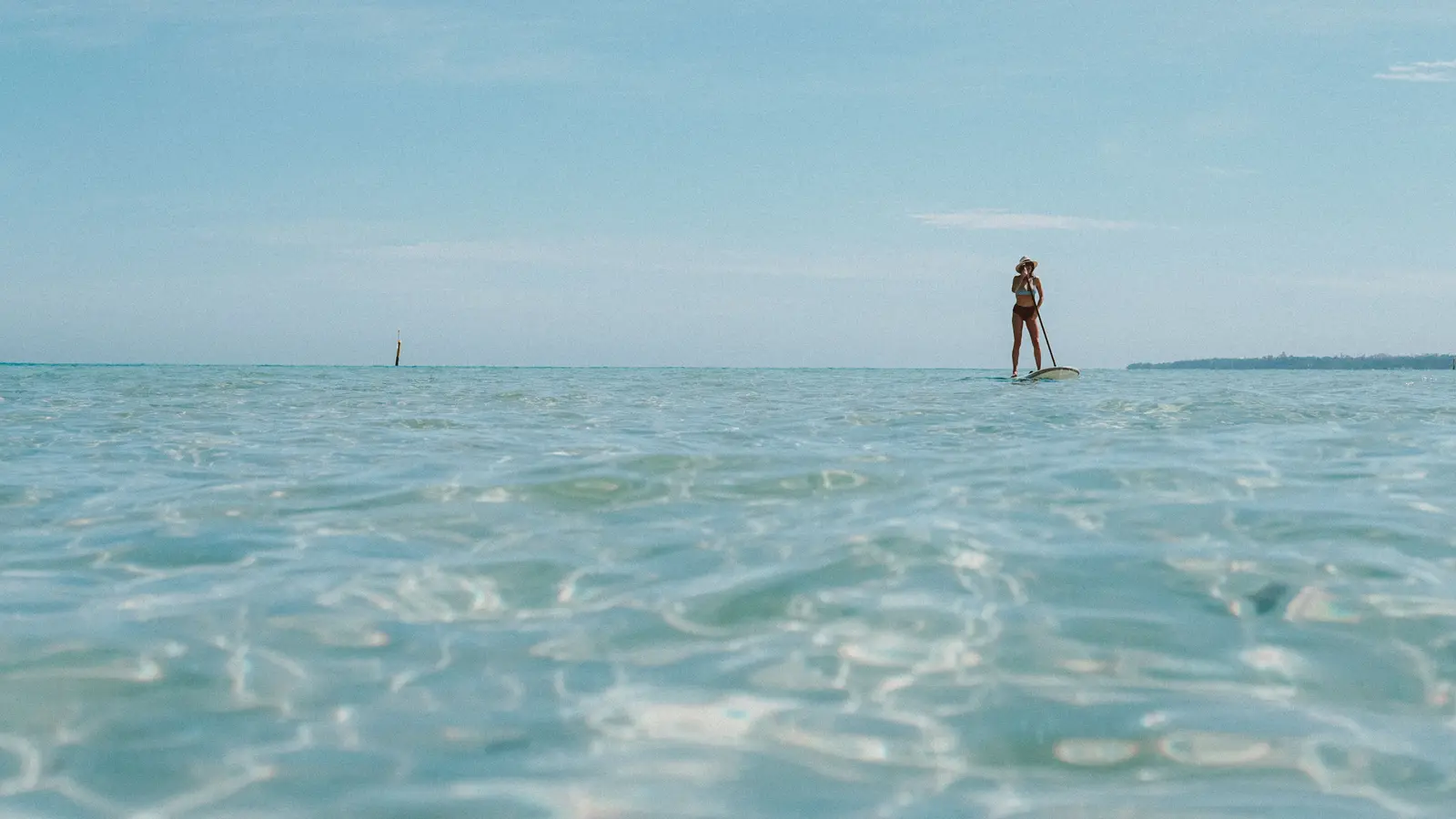
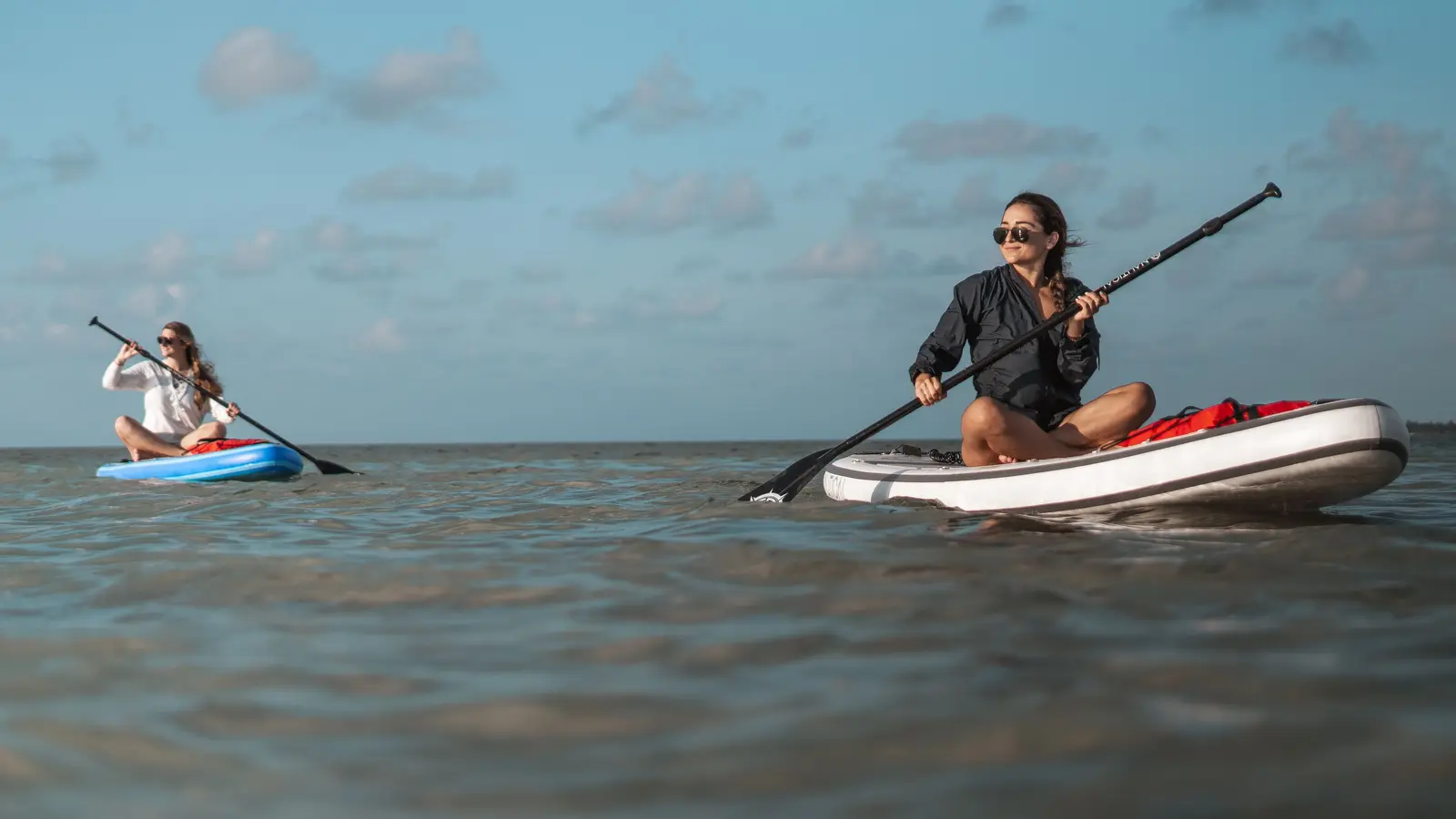
Photo: Elle Hughes, Pexels License
That one stroke handles most turns. The other three below are quicker or tighter, and they’re worth learning once you’re steady on the board.
Quick answer
- Forward sweep: the everyday turn. Nose to tail, wide arc. Good from a standstill or while moving.
- Reverse sweep: tail to nose. It also slows you down, so it’s the one for stopping and turning at low speed.
- Cross bow turn: a faster turn from the middle of the board, with the blade reaching across the nose.
- Step-back pivot turn: step back so the nose lifts, then sweep. The tightest turn, but the easiest one to fall on.
- Wear a leash and a life jacket while you practice. See do you need a life jacket on a paddle board.
Before you start
Turning is easiest when you’re slow or stopped, because the fins resist quick direction changes. NRS notes that a shorter fin turns more readily, and that every board responds a little differently, so try a new board’s turning before you need it.
Practice on flat, calm water, away from other people, with a leash on. If you’re still working on staying upright, read how to stand up on a paddle board and how to improve balance for paddle boarding first. Longer boards turn more slowly than short ones, which is a trade-off for how well they track. If you are choosing a board, the Board Fitter shows which sizes suit your weight and the kind of paddling you want.
1. The forward sweep
This is the turn to learn first. Star Board calls it the beginner turn, and NRS says it works from a standstill and for small corrections while you’re moving.
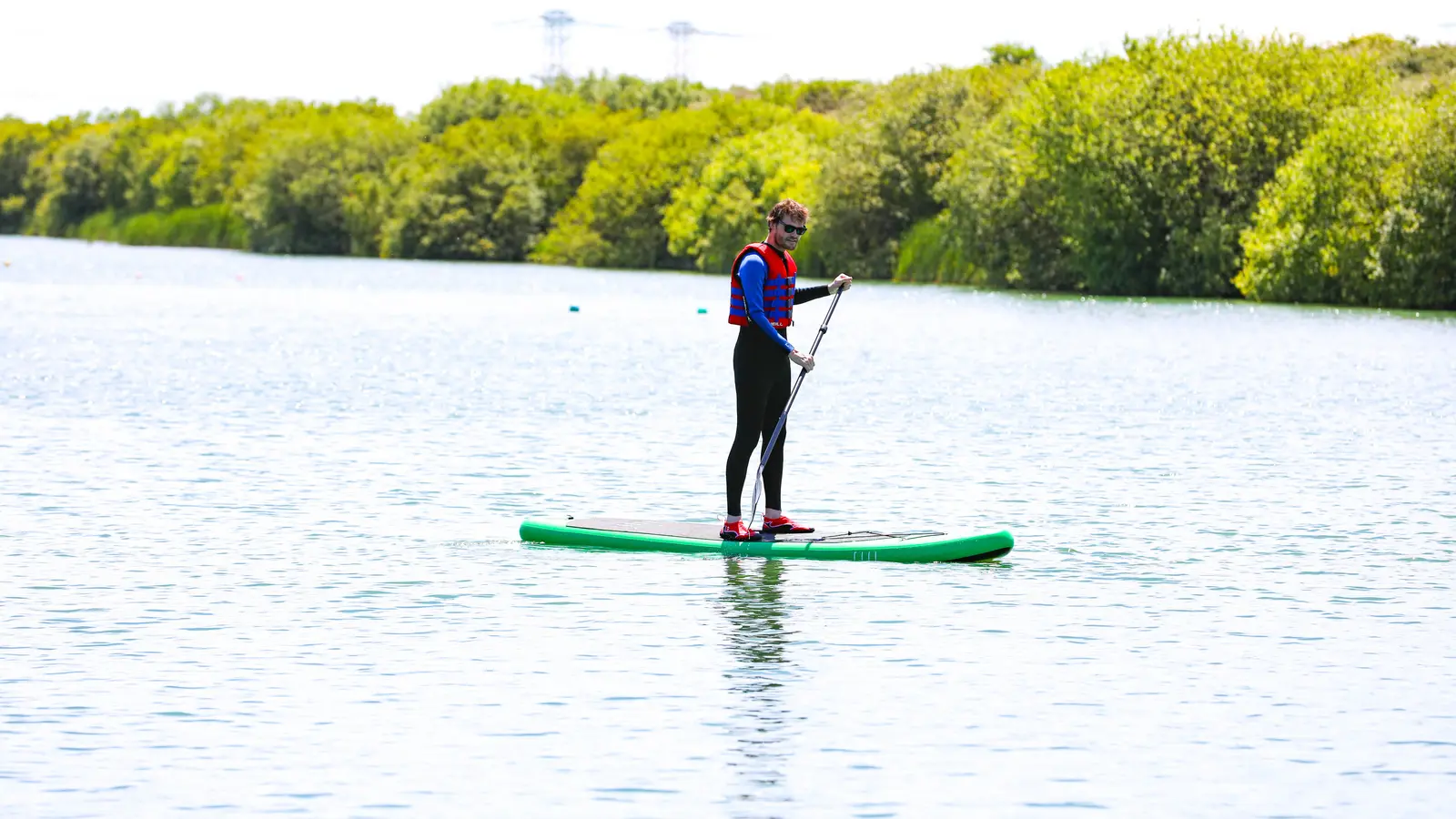
- Stand with your feet wide and bend your knees a bit more than you would for a normal forward stroke.
- Twist your torso and reach forward, planting the whole blade in the water near the nose.
- Keep the blade fully in the water and draw a wide arc out from the board and back toward the tail. Let your hips and shoulders do the work, not just your arms.
- The nose swings away from the paddle side. To turn left, sweep on your right.
Glide notes that a wider arc gives a gentler turn and a tighter arc turns the board faster. Don’t lift the blade out early. The stroke only turns the board while the blade is in the water.
If you’re moving and want to keep your speed, NRS suggests simply taking forward sweeps on alternating sides to steer. To get the grip right first, see how to hold a paddle board paddle.
2. The reverse sweep
The reverse sweep is the same arc run backward: plant the blade near the tail and push it out and forward toward the nose. Paddling.com’s instructor calls it “putting on the brakes”, because it slows you down as it turns the nose.
- Turn the other way from the same side. A reverse sweep on your right turns the board right, the opposite of a forward sweep on that side.
- Spin on the spot. Take a forward sweep on one side and a reverse sweep on the other, and the board turns in place. Paddling.com says to go slowly, as it works better that way.
- Use it at low speed. NRS says the blade acts like a brake, so it’s best when you’re slow or stopped. If you want to keep your momentum, use forward sweeps instead.
3. The cross bow turn
The cross bow is an intermediate turn that lets you turn quickly while standing in the middle of the board. Paddling.com’s instructor calls it a favorite.
- Paddle on the side opposite to the way you want to turn. To turn right, hold the paddle on your left.
- Twist your body toward the turn and reach the blade across the nose of the board.
- Plant the blade and pull toward the nose with the power face.
- Repeat until you’re facing the right way, then finish with a big sweep on the other side.
Keep your stance low and your knees bent. It feels awkward at first, so practice it until it’s second nature.
4. The step-back pivot turn
This is the tightest turn, and the advanced one. You move your feet back so the nose rises out of the water, which leaves less board in the water to resist turning. Star Board says it’s common in racing, especially around buoys. Paddling.com adds that it’s not always the best way around a buoy, so don’t overuse it.
- Get the feel sitting down. NRS suggests sitting and sliding back until the nose lifts, then trying a few sweeps to feel how the board reacts.
- Stand in the middle with your feet parallel. Paddling.com has you rest the blade flat on the water beside you for stability.
- Step back in small steps. Paddling.com suggests about 6 inches per foot. Star Board says a longer step gives a tighter, faster turn, so start small. Longer boards need you to walk back further.
- Bend your knees and sweep. Use a forward or reverse sweep to swing the nose around.
- Return to the center. Walk back forward while still paddling or turning. Paddling.com warns that stalling means falling.
Two safety points. Keep the paddle in or just at the water so you can brace if you wobble, as NRS advises. And learn it while stationary before trying it on the move.
Expect some falls. That’s fine on flat water in a life jacket and with a leash, and not fine in wind, current or boat traffic.
Common turning mistakes
- Lifting the blade between strokes. Paddling.com lists taking the blade out after each stroke as a common pivot mistake. Keep it on the water.
- Stiff legs. Straight knees make you wobbly and limit the twist. Bend them.
- Small arcs. A short stroke barely turns the board. Reach and rotate.
- Hurrying. Turn slowly until you can feel how the board tilts and spins.
Turning is a close cousin of tracking. If your board keeps turning when you don’t want it to, read how to paddle a SUP straight.
FAQ
Which way does the board turn when I sweep on one side?
Away from that side. A sweep on your right turns the board left, and the reverse sweep does the opposite.
What is the easiest way to turn a paddle board?
The forward sweep. It’s stable, needs no fancy footwork and works at almost any speed.
How do I turn around quickly?
Sweep forward on one side and reverse-sweep on the other to spin on the spot, or learn the cross bow. The step-back pivot is faster still but harder to balance.
Do I need to step back to turn?
No. A sweep stroke from your normal stance is enough for most turns. Stepping back only helps you turn tighter.
Why does my board turn so slowly?
Long boards and big fins resist turning, and turning is slower at speed. Stop or slow down, take wider sweeps, and use the reverse sweep. A shorter fin makes a board easier to turn, according to NRS.