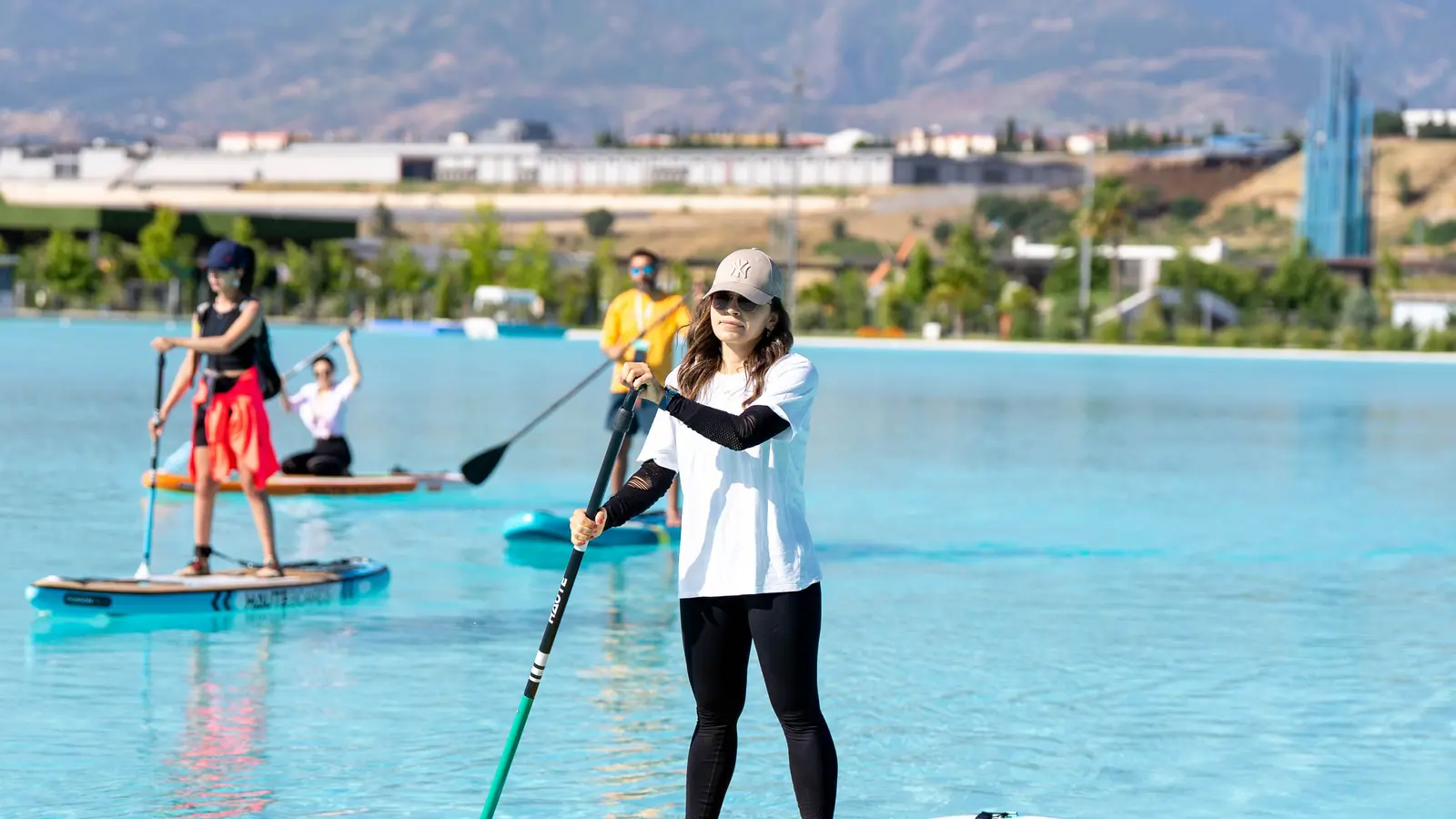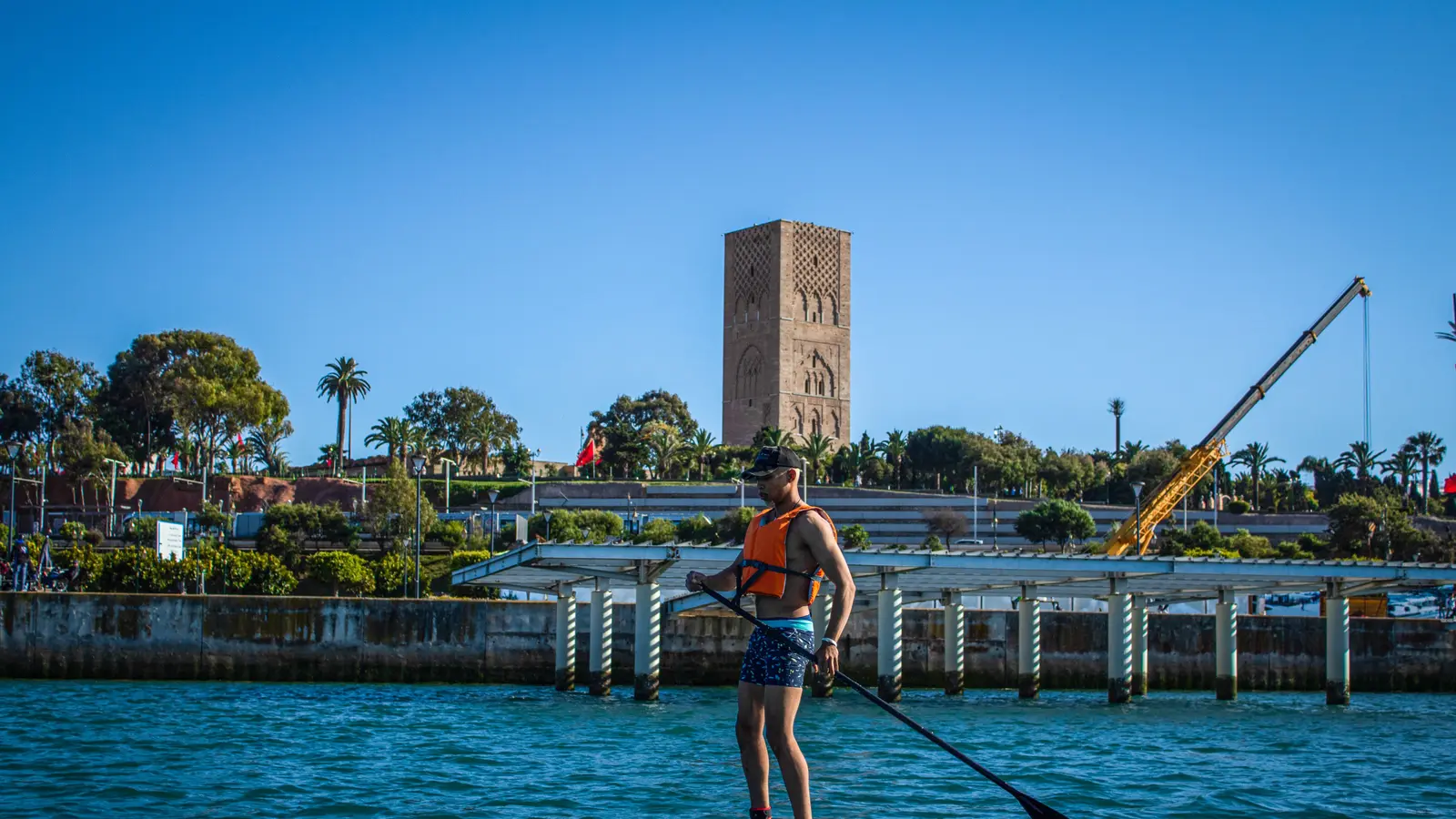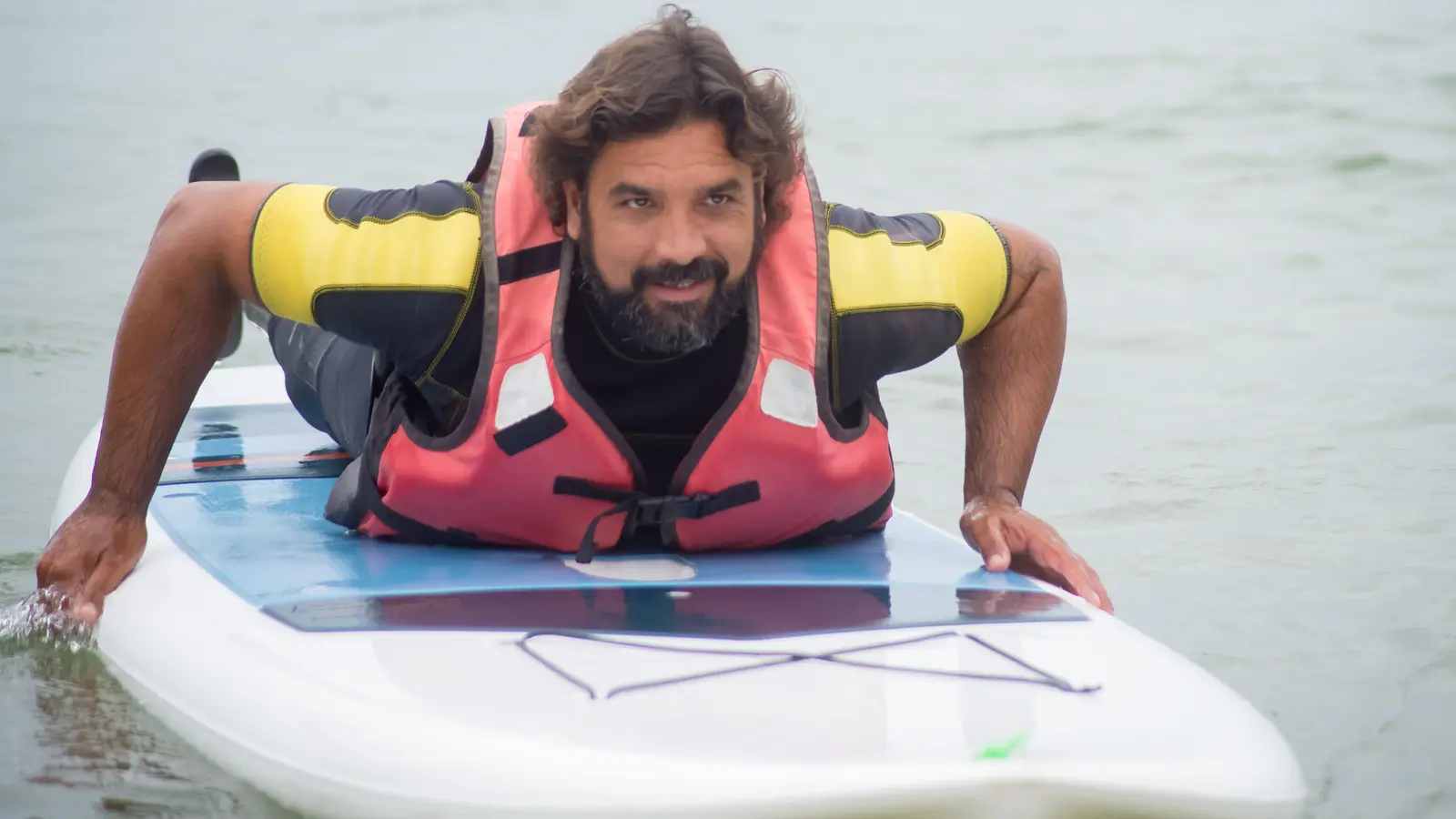
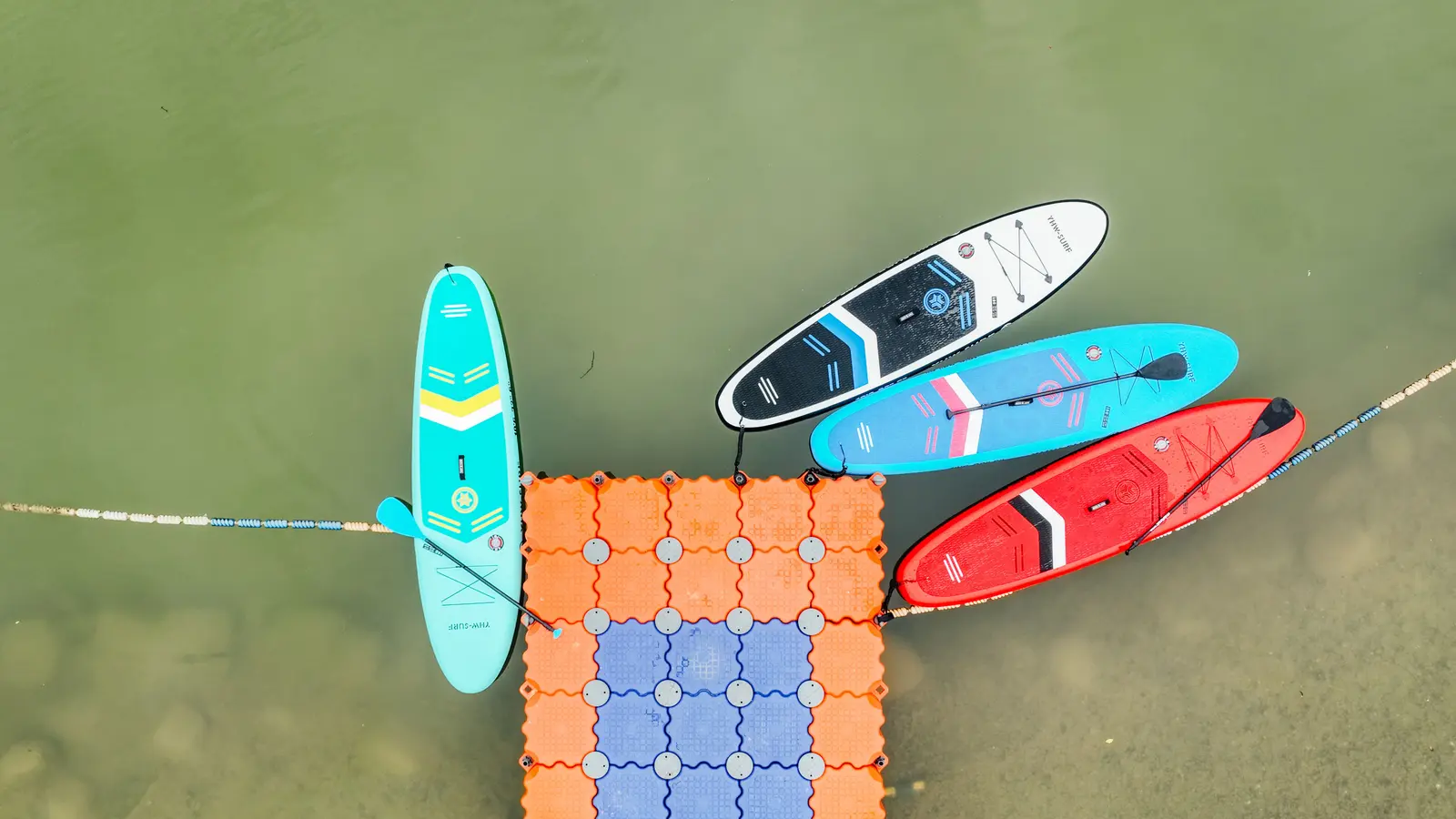

The most important paddle board safety rules are to wear a life jacket, stay attached to your board with the right leash, check the wind and weather before you go, and never paddle alone or after drinking. The other eleven below cover cold water, storms, night paddling, rivers and what to do before you leave the shore.
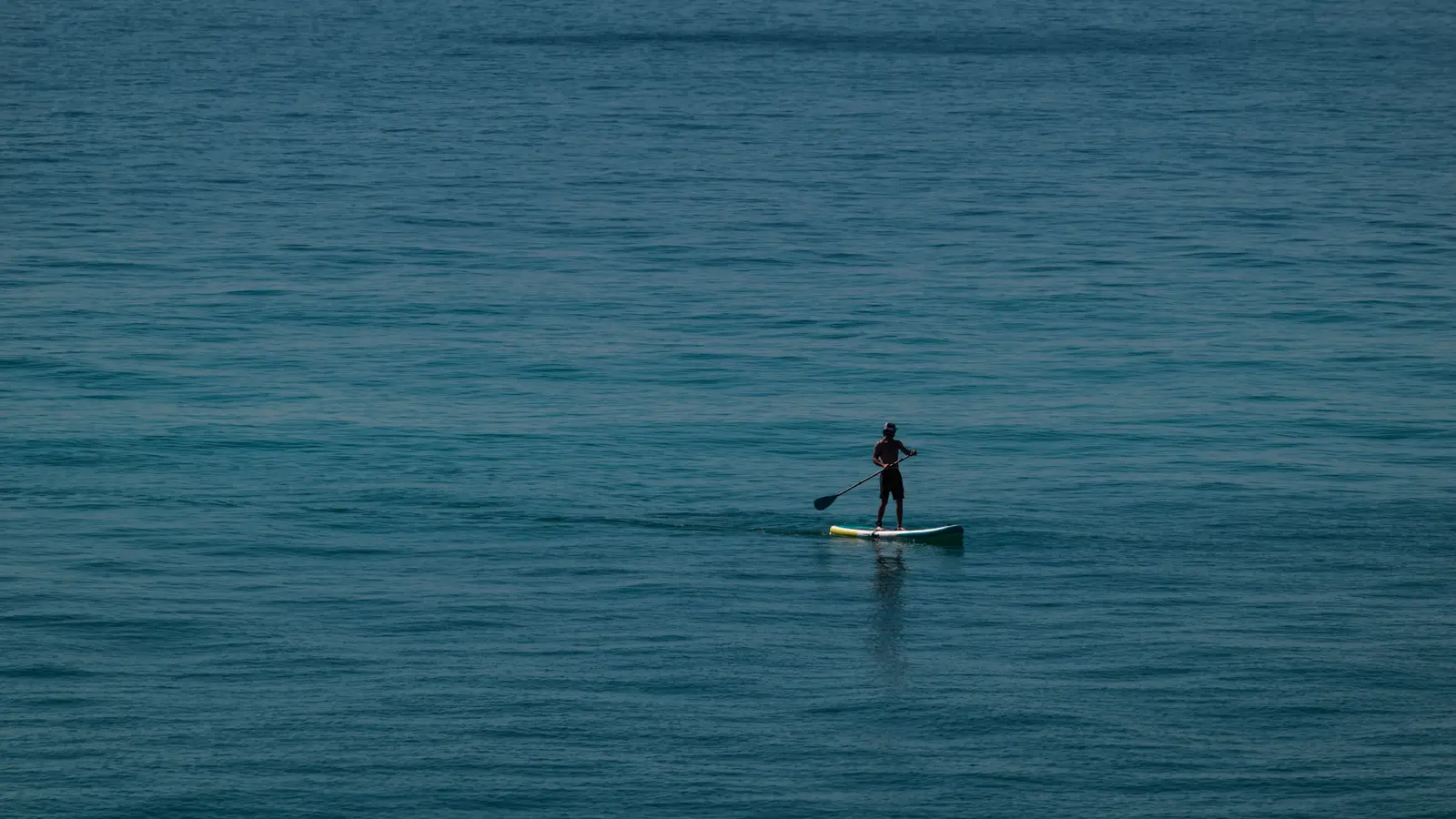
Photo: Chris F, Pexels License
Boating agencies treat a paddle board as a boat, so the same thinking applies: plan the trip, carry the basics and expect to end up in the water at some point. These rules come from state boating agencies, the National Weather Service, the US Coast Guard and a government transport agency, not from board makers.
Quick answer
- On you: a properly fitted life jacket, a leash that suits the water, and a whistle.
- Before you go: check the forecast and wind direction, tell someone your plan, and don’t go alone.
- Never: paddle into offshore wind, onto a river you can’t read, or into a storm.
- Also: don’t drink, dress for the water temperature, and practice getting back on your board.
1. Wear a life jacket
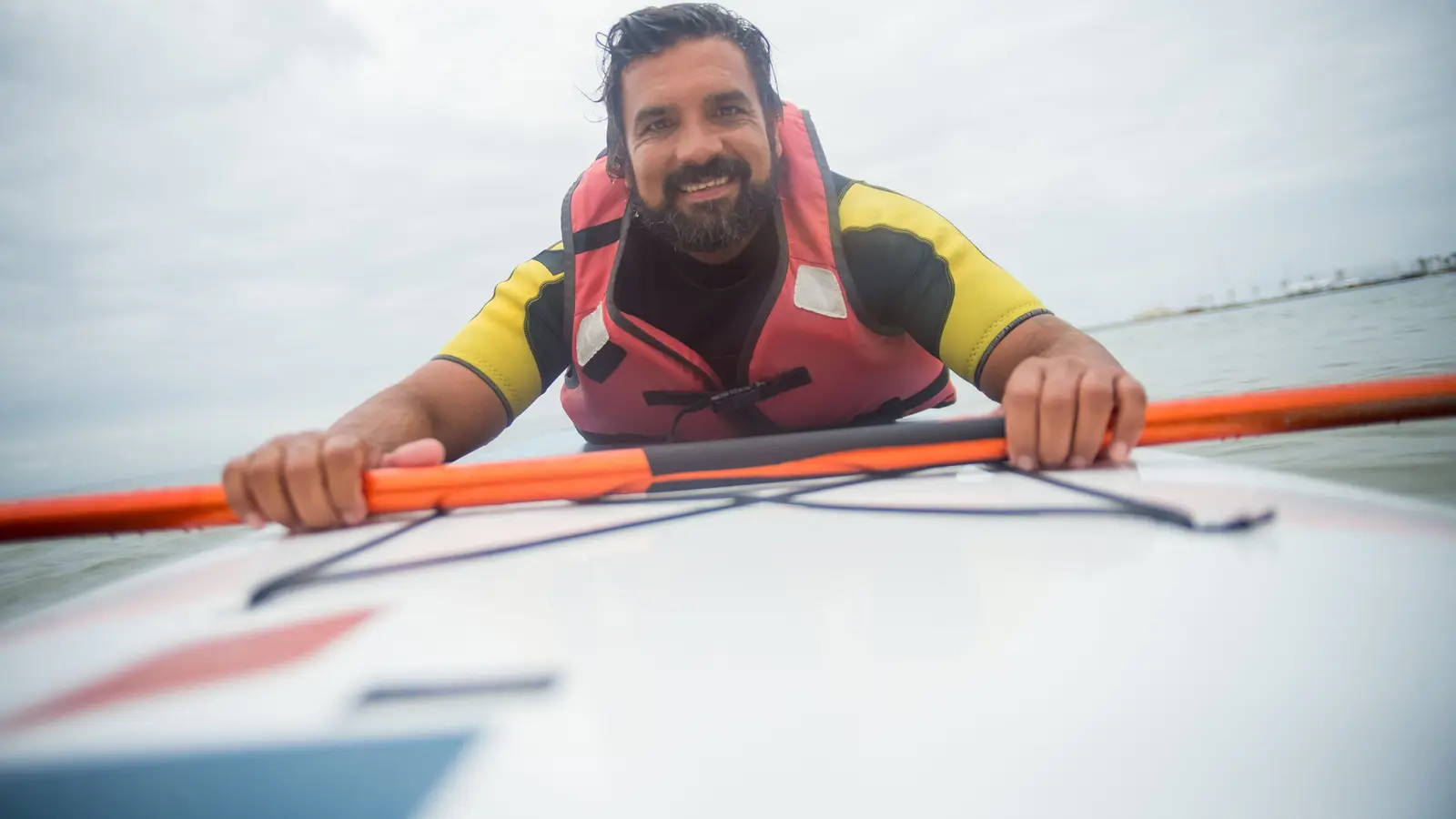
A life jacket does nothing if it’s strapped to the deck while you’re in the water. Maryland’s boating agency says every person on a paddle craft should have a Coast Guard-approved life jacket that fits, is in good condition and is easy to reach, and says the best place for it is on your body. Pennsylvania’s Fish and Boat Commission puts it plainly: paddle boarders should always wear a properly fitting one.
Federal carriage rules, kids’ age rules and the new label system are in our guide on whether you need a life jacket on a paddle board. If you’re choosing one, start with the best PFDs for SUP, and read should I wear a life jacket paddle boarding if you’re on the fence about wearing it.
2. Use a leash that suits the water
A leash keeps the board, your biggest flotation aid, within reach when you fall. Pennsylvania’s Fish and Boat Commission recommends a leash for paddle boarders and, on moving water, a quick-release waist leash so a rope can’t trap you if the board snags. The Victoria (Australia) transport agency adds a practical point: on an inflatable board in a breeze, a board without a leash can drift away fast and be hard to recover.
Rule of thumb from those sources: ankle leash for calm, still water, quick-release waist leash for rivers and tidal channels.
3. Carry a whistle and a way to call for help
Pennsylvania’s agency says paddle boarders should carry a whistle. A whistle on your life jacket is the easiest way to do it, and our life jacket guide explains the federal sound-signal requirement.
Add a phone in a waterproof pouch. Victoria’s transport agency recommends carrying a phone or other device this way so you can call for help. A phone that stays in the car is no help, and one that’s loose in a pocket dies the first time you fall in.
4. Check the forecast before every trip
Both Pennsylvania’s Fish and Boat Commission and the National Weather Service tell you to look at the forecast before you go, and the Weather Service adds that if severe weather is expected you should stay home or go earlier. For a paddle board, wind matters more than rain. Look at wind speed, wind direction and when it changes.
Our guide to the best conditions for paddle boarding explains what to look for. Choose a day when you could comfortably paddle the whole route back into the wind.
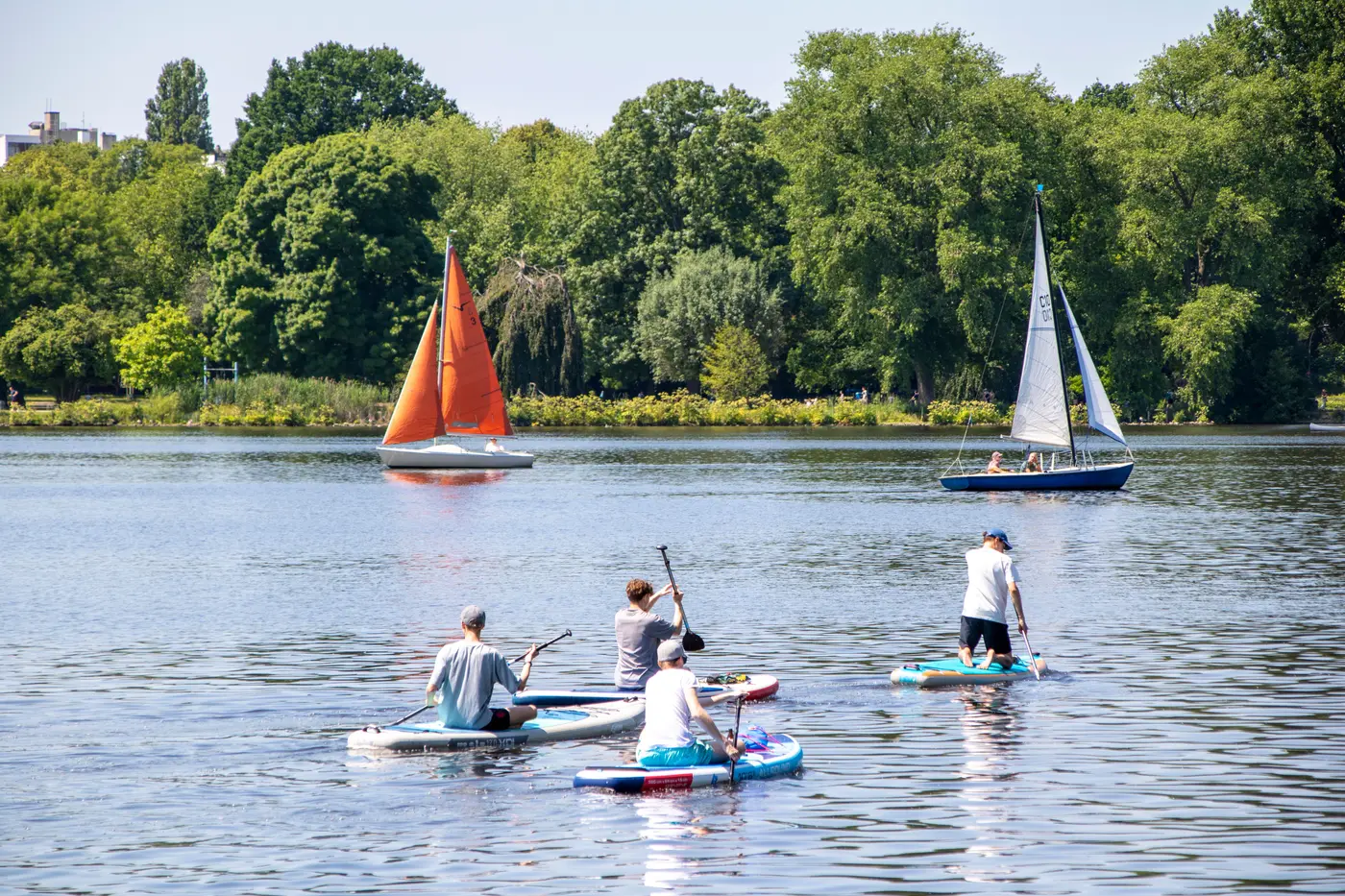
5. Stay out of offshore wind
Offshore wind blows from the land toward open water, and it’s the classic way for paddlers to end up far from where they planned. Victoria’s transport agency warns that offshore winds can make water choppy within roughly 500 metres (about 1,600 feet) of shore even when it looks calm from the beach, and can push boards into deeper water. Its advice is to stay off the water in offshore winds.
Wind is hard to paddle against on a board, especially an inflatable. If the wind is at your back on the way out, it’ll be in your face on the way home. See how to paddle board in the ocean for more on coastal conditions.
6. Respect cold water
Cold water is dangerous long before it feels like winter. Maryland’s boating agency notes that cold-water immersion can be a risk in water as warm as 77°F, so a warm day doesn’t make the water safe to fall into. Cold water can take your breath and your strength quickly, which is another reason to wear a life jacket and a leash.
Dress for the water temperature, not the air temperature, and keep your trips short and close to shore in cool months. Our what to wear paddle boarding and do you need a wetsuit guides cover the options, and the Wetsuit check tool suggests what to wear for a given water temperature.
7. Get off the water when thunder starts
The National Weather Service says to stop your outdoor activity at the first thunder or when the sky looks threatening, because lightning can strike from a clear sky many miles ahead of a storm. Waiting for rain is not a safe signal. Head for shore as soon as it’s safe.
Use a weather app with radar and lightning data, and have a plan for where you’d land. If a storm is forecast for the afternoon, paddle in the morning.

8. Don’t drink and paddle
Alcohol affects paddlers like it affects anyone on the water. The Coast Guard says federal boating-under-the-influence law covers every vessel, including small human-powered craft, and that every state bans it too. It adds that boating conditions such as sun, wind and motion can speed up impairment, and that alcohol hurts balance and judgment and can leave you disoriented after a fall into the water.
The Coast Guard says alcohol plays a role in roughly a third of recreational boating deaths. See can you get a DUI on a paddleboard for the legal side.
9. Don’t paddle alone
Pennsylvania’s Fish and Boat Commission says never to paddle alone. If you can’t find a partner, choose a busy, sheltered spot where people can see you, and still follow rule 10. Paddling with a friend also means there’s someone to help you back on the board, fetch help, or notice you’re in trouble.
10. Leave a float plan
A float plan is just a written note of where you’re going and when you’ll be back. Pennsylvania’s Fish and Boat Commission suggests giving a relative, friend, neighbor or marina operator a written plan covering your equipment, who’s with you and your departure and arrival times.
Keep it simple: launch point, route, what you’re paddling, the time you’ll be back, and who to call if you aren’t. Then tell that person when you’re off the water.
11. Stay within your skill level
Pennsylvania’s Fish and Boat Commission advises paddle boarders to know the water conditions and paddle within their ability. For a beginner that usually means flat, sheltered water, short distances and a route that never takes you far from a landing spot.
Matching your board to your size and experience helps too. A board that’s too narrow or short for you is harder to stay on. Our Board Fitter shows boards that suit your weight and skill level.
12. Show a light at night and in poor visibility
If you paddle at dusk, at night or in fog, carry a white light such as a torch or lantern and show it early enough to avoid a collision. That’s the guidance from Victoria’s transport agency, and it matches the US approach we describe in our life jacket guide. A dark board with a dark paddler is nearly invisible to a power boat.
Our best paddle board lights roundup compares clip-on and deck lights.
13. Treat rivers and dams with extra caution
Moving water is a different sport. Pennsylvania’s Fish and Boat Commission tells paddlers to scout ahead, never go over a low-head dam (carry your board around water you’re unsure of), and avoid strainers, such as fallen trees that let water through but trap people. If you fall in a current, keep your feet up near the surface and swim to shore.
It also warns never to tie a rope to yourself or another paddler, which is why a quick-release leash matters on rivers (see rule 2).
14. Practice falling and getting back on
You will fall off. Maryland’s boating agency tells paddlers to expect to capsize and swim, and to be ready for it. Practice in shallow, warm, calm water with your life jacket on so the first time isn’t a surprise, and so you know how to climb back up.
Our guide on how to get back on a paddleboard after falling walks you through it. If you capsize, Pennsylvania’s agency says to stay with your craft unless that puts you in danger.
15. Take a safety course
Maryland’s boating agency recommends on-water safety and rescue classes and points to the American Canoe Association’s listings. Pennsylvania’s agency also mentions free online safety courses from the ACA. A short class teaches self-rescue and reading conditions in a way an article can’t.
FAQ
What is the most important paddle board safety rule?
Wear a properly fitting life jacket. Boating agencies repeat it above all others because falling in is normal on a board, and a life jacket keeps you afloat when you’re tired, cold or hurt.
Do I need a leash on a paddle board?
A leash isn’t a federal requirement, but state agencies recommend one. Use an ankle leash on calm water and a quick-release waist leash on moving water.
Is it safe to paddle board alone?
It’s riskier. Pennsylvania’s boating agency says never to paddle alone. If you do, stay close to shore, wear your life jacket, carry a phone and whistle and leave a float plan.
What weather is too dangerous for paddle boarding?
Thunderstorms (leave the water at the first thunder), strong wind, and any offshore wind are the main ones. Check the forecast first, and stay in if you aren’t sure you could paddle back against the wind.
Are paddle boards safe for beginners?
Yes, on calm, sheltered water with a life jacket, a leash and a sensible plan. Read our paddle board tips for beginners and the common paddle boarding mistakes to avoid.