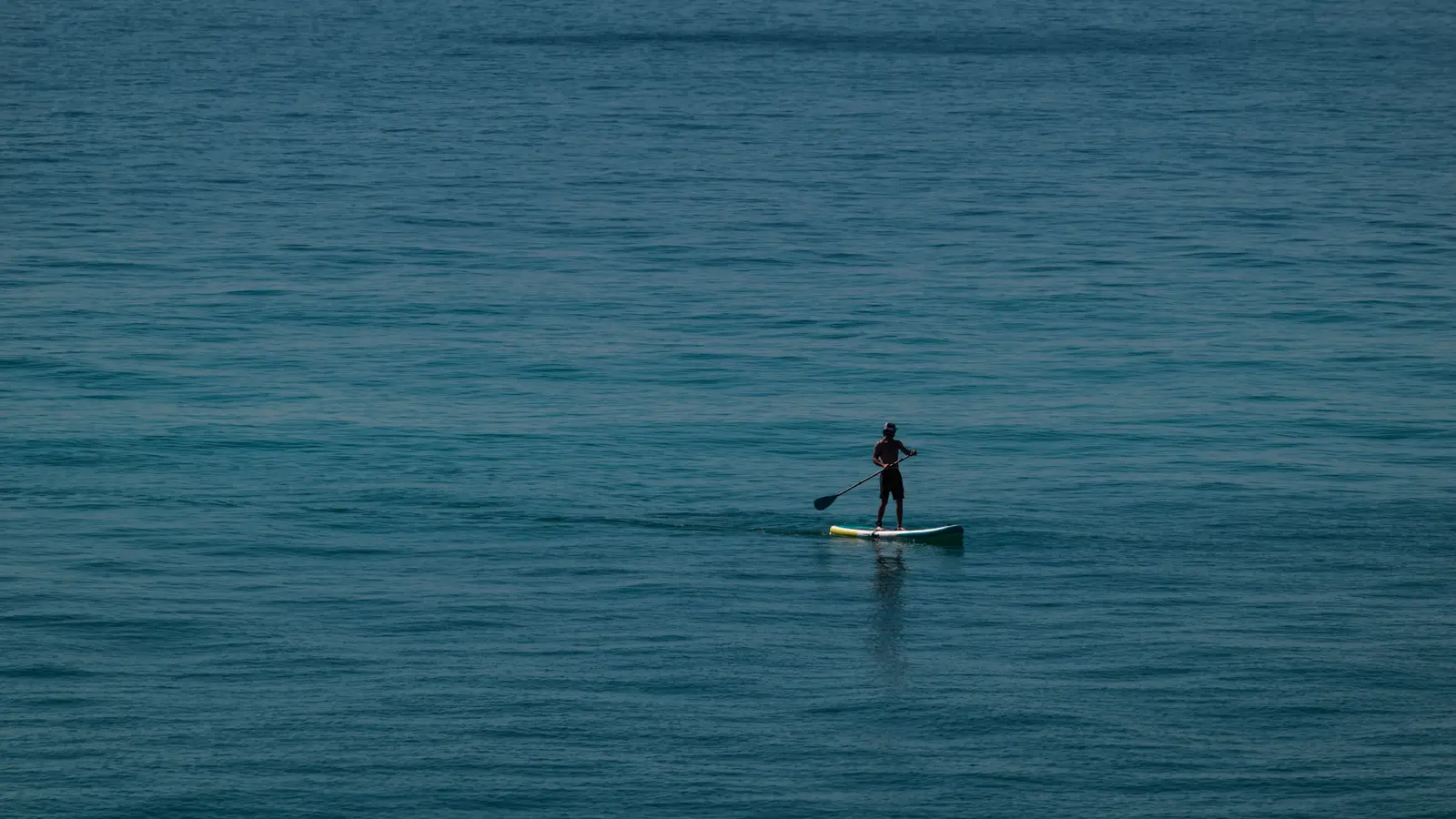
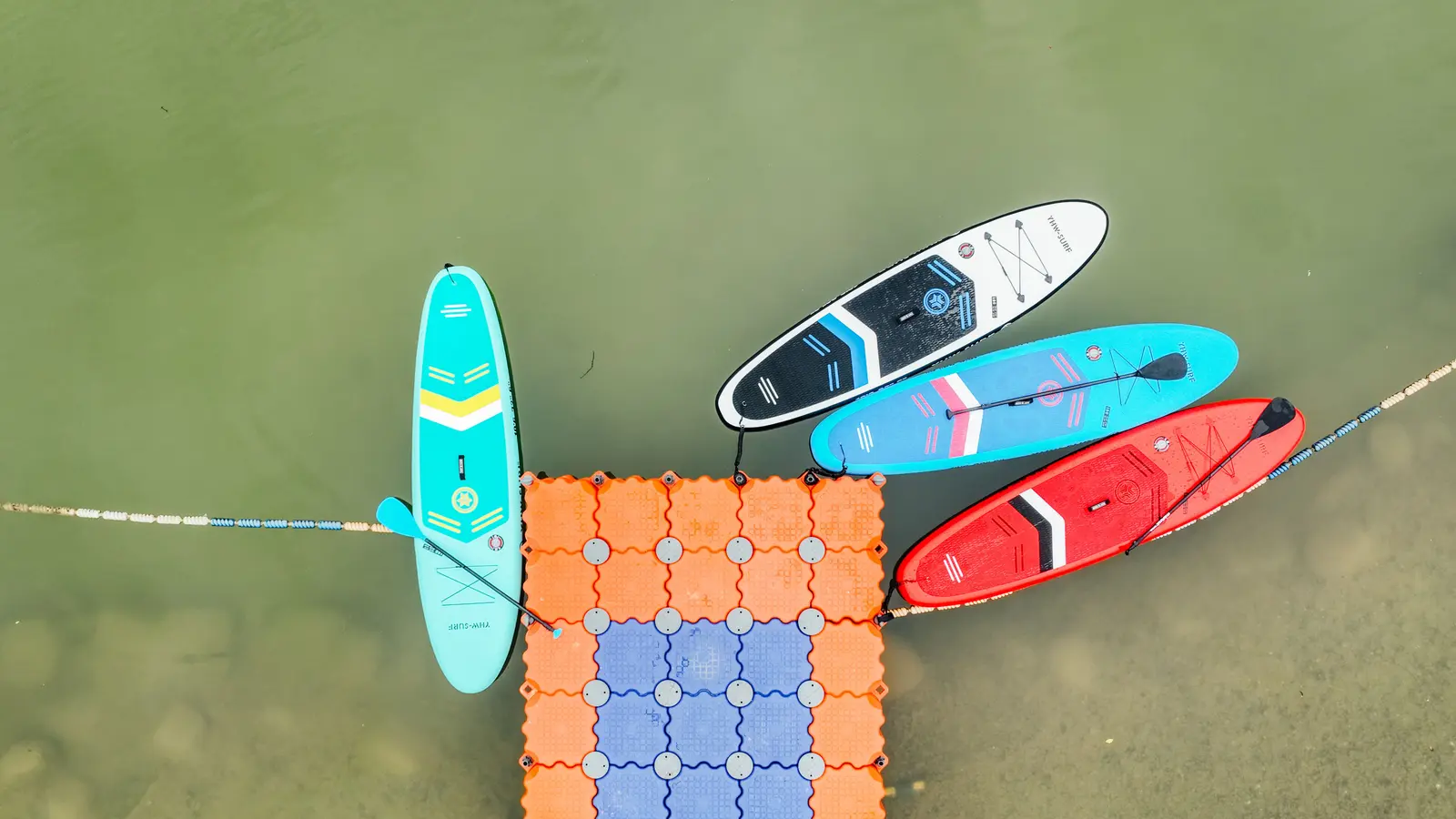

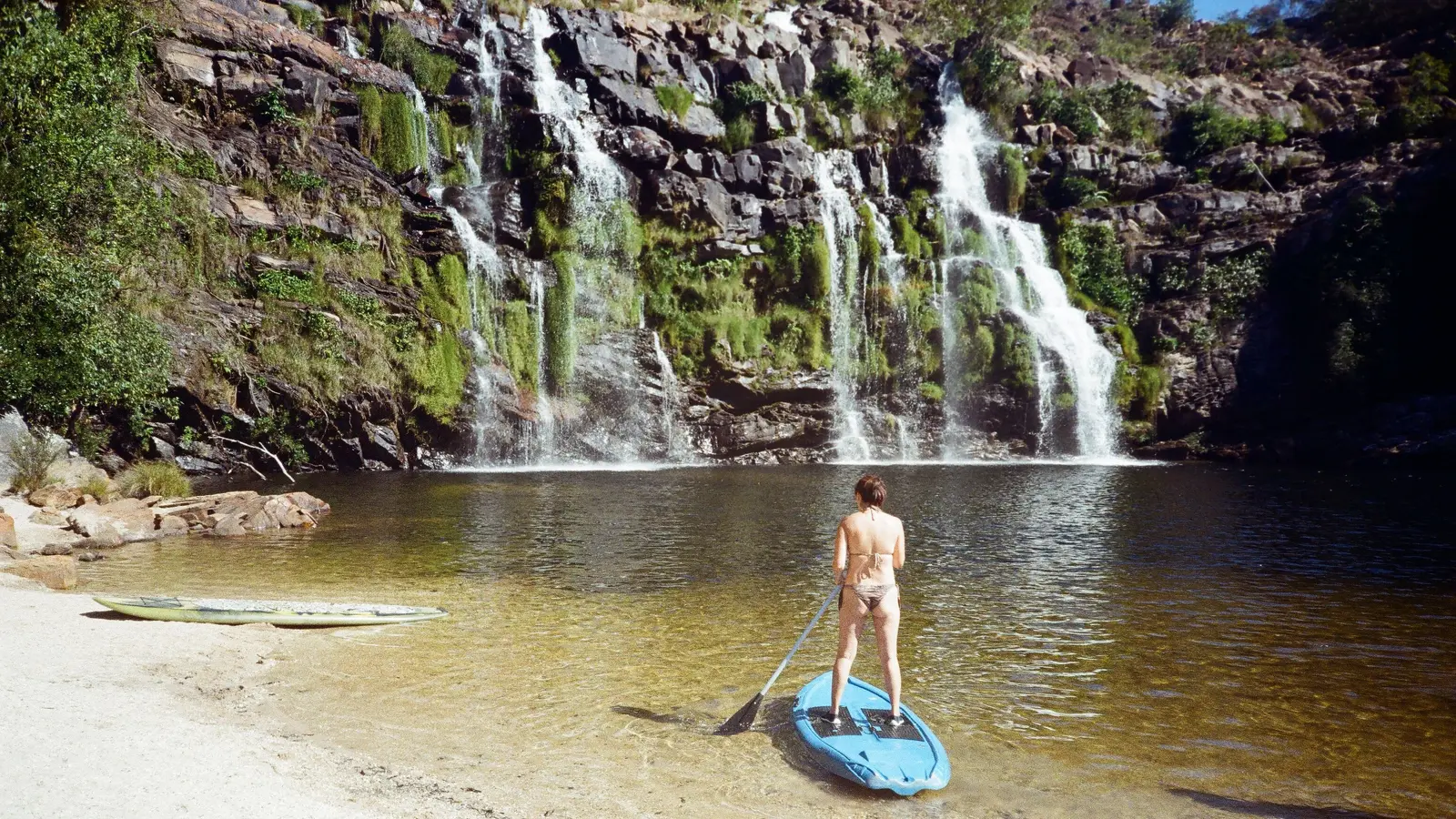
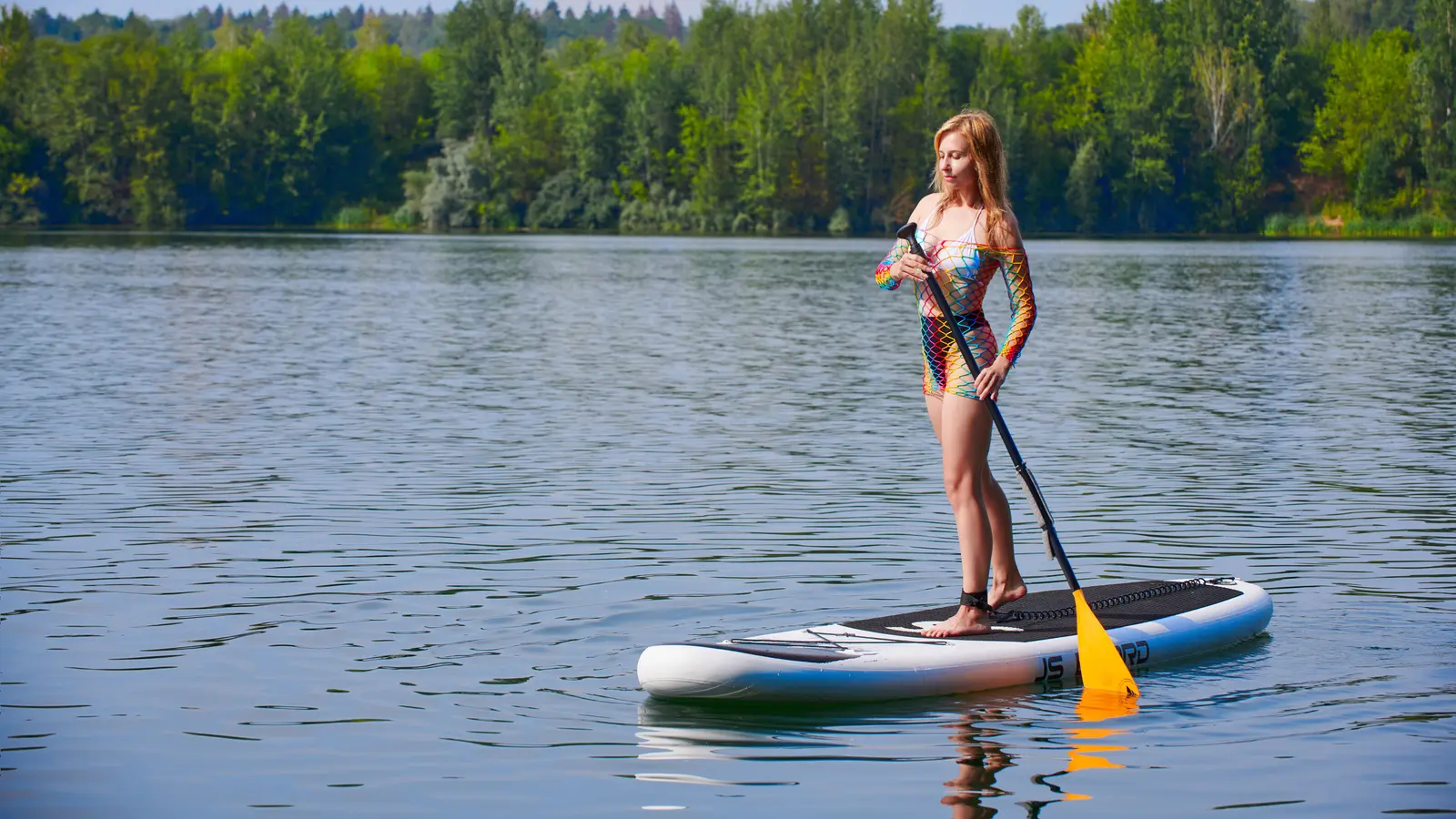
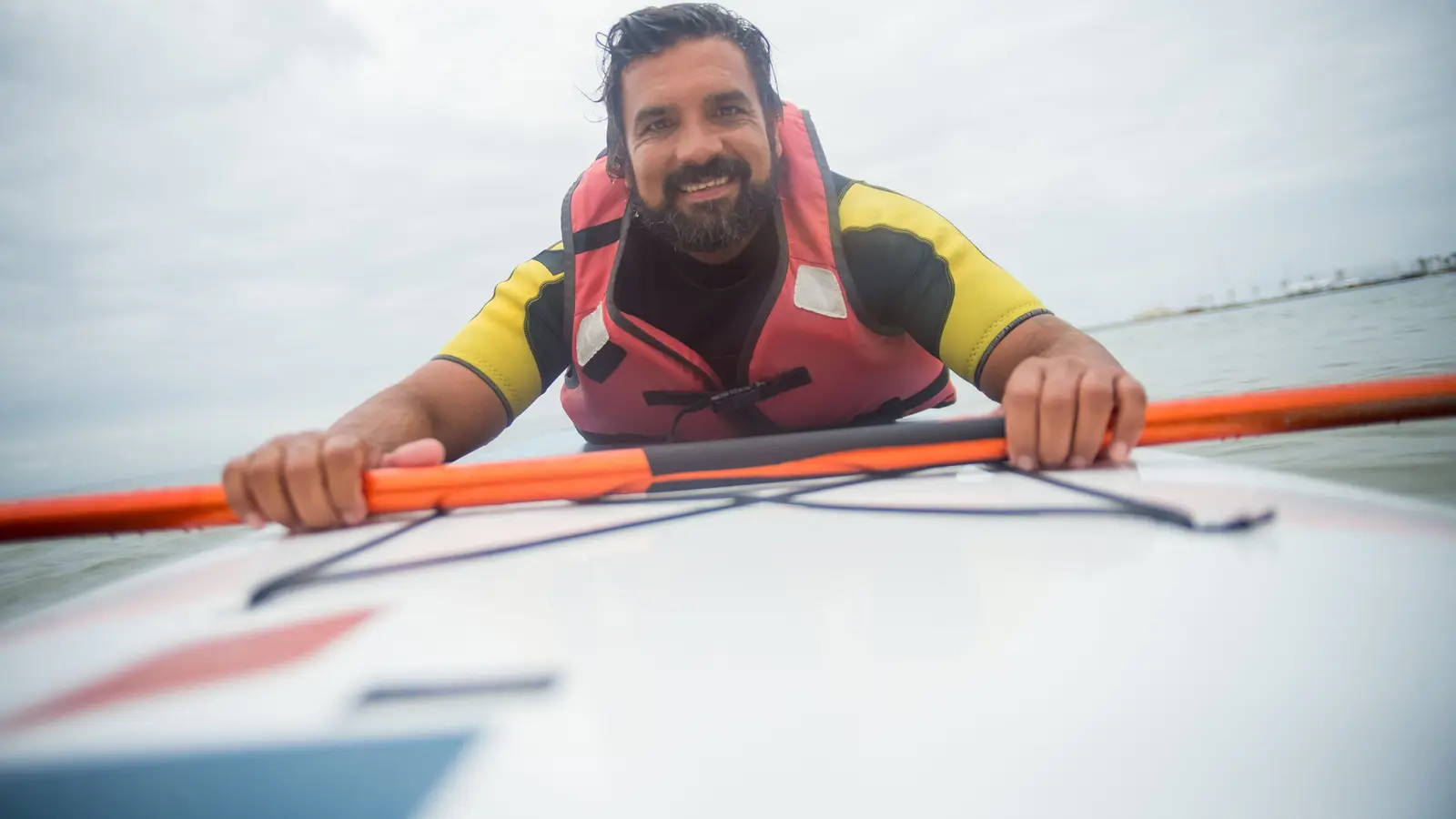
In most places you aren’t legally required to wear a paddle board leash, but you should wear one on lakes, bays and the ocean. It keeps your board next to you when you fall, and the board is the biggest flotation device you have. The exception is moving water: on a river, an ankle leash can be dangerous.

Photo: Luca Photo, Pexels License
This guide covers when a leash matters, which type to pick, and when to leave it off.
Quick answer
- Flat water (lakes, calm bays): wear a coiled leash on your ankle or calf.
- Open ocean, day paddling: a coiled leash is a sensible choice.
- Surf: use a straight leash, because a coiled one can snap the board back at you.
- Rivers and moving water: no ankle leash. If you use one at all, it needs a quick-release system worn at the waist.
- Always: a leash doesn’t replace a life jacket. Wear both where they apply.
Is a leash required by law?
We couldn’t find a federal rule that requires a leash. The US Coast Guard treats stand-up paddle boards as vessels, so the usual boating rules, such as carrying a life jacket, apply. A leash is a piece of safety kit and sits outside those rules. Local rules vary, so check with the park, lake or harbor you’re paddling at. Our guide on whether you need a life jacket on a paddle board covers the life jacket rules.
Why a leash matters
Falling off is normal. The problem is what happens next. Wind and current can carry a loose board away, and you’re left in the water with nothing to hold.
Boat-Ed’s paddlesports course says leashes matter most for beginners, because a leash stops the board drifting away after a fall and keeps it from striking someone nearby. If you want to practice the recovery itself, see how to get back on a paddle board after falling.
A leash is not a magic fix. It keeps you attached to the board, but it doesn’t keep your head above water. That’s the life jacket’s job. See paddle board safety tips for the full checklist.
Which leash for which water
The American Canoe Association’s guidance, as summarized by NRS, breaks it down by where you paddle.
Flat water: coiled
On a calm lake or slow bay, a coiled or hybrid leash worn at the ankle or calf is the usual choice. The coils stay compact instead of trailing in the water.
Ocean day paddling: coiled
For a day paddle on open ocean, the same guidance calls a coiled leash a smart choice.
Surf: straight
In surf, use a straight leash. A coiled leash stores stretch, and it can pull the board back toward you after a wave. A straight leash lets the board trail behind you instead. Don’t use a straight leash anywhere you could get tangled in obstructions.
Wide, slow rivers and tidal water
On wide rivers and tidal areas with no obstructions, the ACA guidance says a coiled leash worn at the calf or ankle is acceptable. A US military safety article suggests a coiled or hybrid leash for easy to class 1–3 river conditions. That second source is more permissive than others, so treat it as an upper limit for experienced paddlers rather than a starting point.
Moving water: be very careful
Moving water is where leashes cause real harm. If current pins the board against something, a leash attached at your ankle can hold you under it.
- Alberta Whitewater tells paddlers never to wear an ankle leash on a river, because the force of the water makes it hard or impossible to release.
- The ACA guidance, via NRS, says that if you use a leash on moving water it must have a quick release, be attached at the waist, and be reachable with both hands.
- Boat-Ed says to wear no leash on whitewater or other moving water unless you have specialized training.
- Paddling Magazine notes that quick-release leashes can be hard to release under tension, so they aren’t a guarantee.
If you’re a beginner heading onto a river, the simple answer is to take a swiftwater course first, or stick to flat water.
Choosing and fitting a leash
- Length: Boat-Ed gives a range of 6 to 12 feet, depending on your board’s length and whether you paddle flat water or surf. Check the leash maker’s sizing guide for your board.
- Where it attaches to the board: to the leash plug or cup at the tail.
- Where it goes on you: the cuff goes around your ankle or calf. On a river, it connects to a quick-release system on your life jacket or waist instead.
- Check it before every trip: look at the cuff, the swivel and the plug for wear. A leash that fails when you need it is worse than none, because you’ll trust it.
If you’re still choosing a board, the Board Fitter will narrow it down by your weight, skill and where you paddle. Our beginner board picks are a good place to start.
When you might skip it
Skipping a leash is a judgment call, not a free pass. The clearest reasons to leave it off are moving water and any spot where the leash could snag on something while you’re in the water. If you’re unsure, the safer default for flat water is to wear it. For anything else, learn the conditions first, or paddle with someone who has.
FAQ
Do I need a leash on a lake?
You don’t need one by law, as far as we could find, but it’s a good idea. On flat water a coiled ankle or calf leash is the standard setup, and it stops the board blowing away if you fall.
Should beginners wear a leash?
Yes, on flat water. Boat-Ed says leashes matter most for beginners. On a river, beginners should get proper training before using any leash.
What’s the difference between coiled and straight leashes?
A coiled leash shortens up so it doesn’t drag in the water, which suits flat water and day paddling. A straight leash doesn’t stretch and stays behind the board, which is why it’s the choice for surf.
Can a leash be dangerous?
Yes. In moving water, an ankle leash can trap you if the board gets pinned. That’s why river guidance calls for a quick release at the waist, or no leash for untrained paddlers.
Does a leash replace a life jacket?
No. A leash keeps your board close. A life jacket keeps you afloat. Read about choosing a PFD for SUP and wear both on open water.