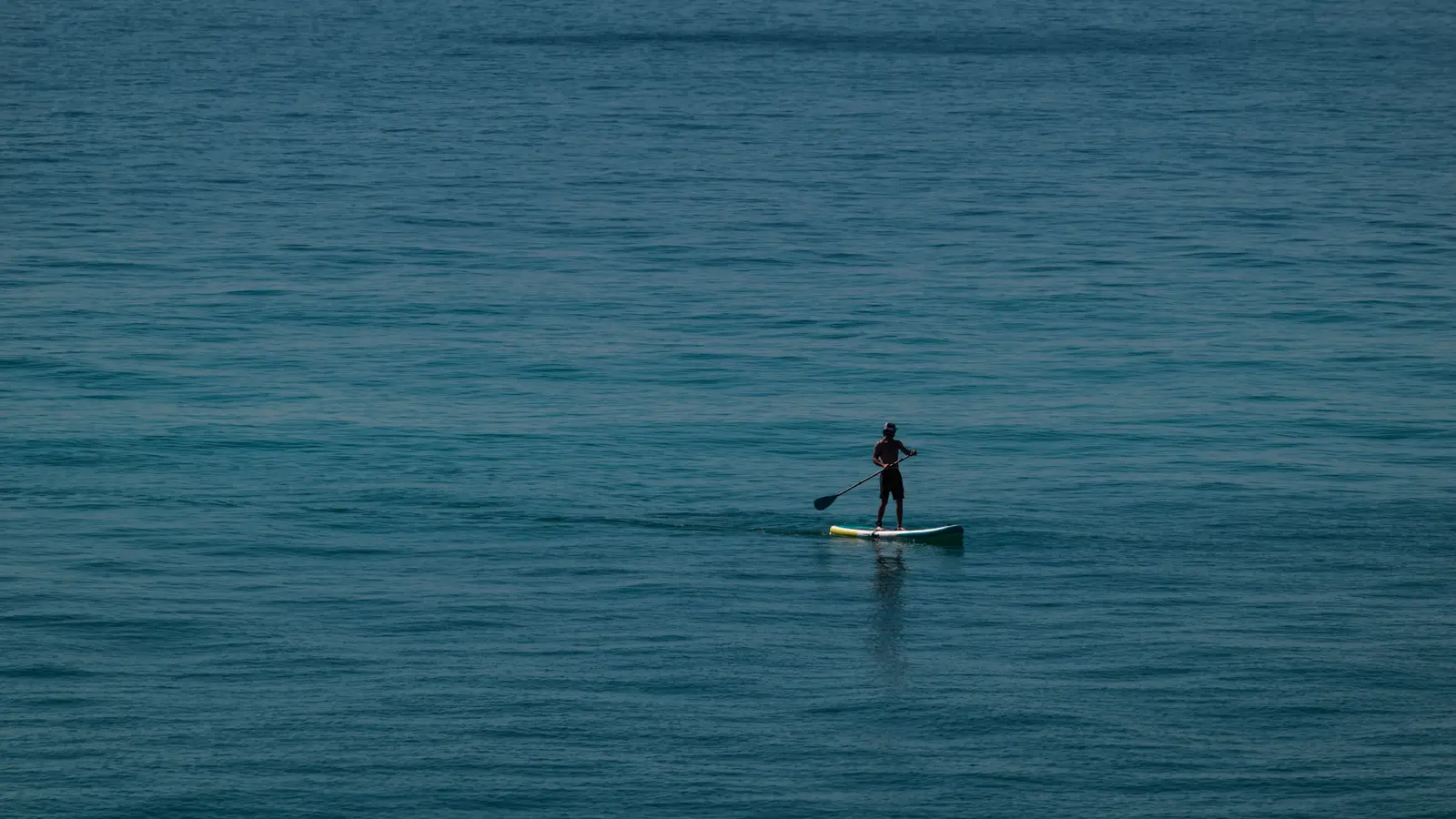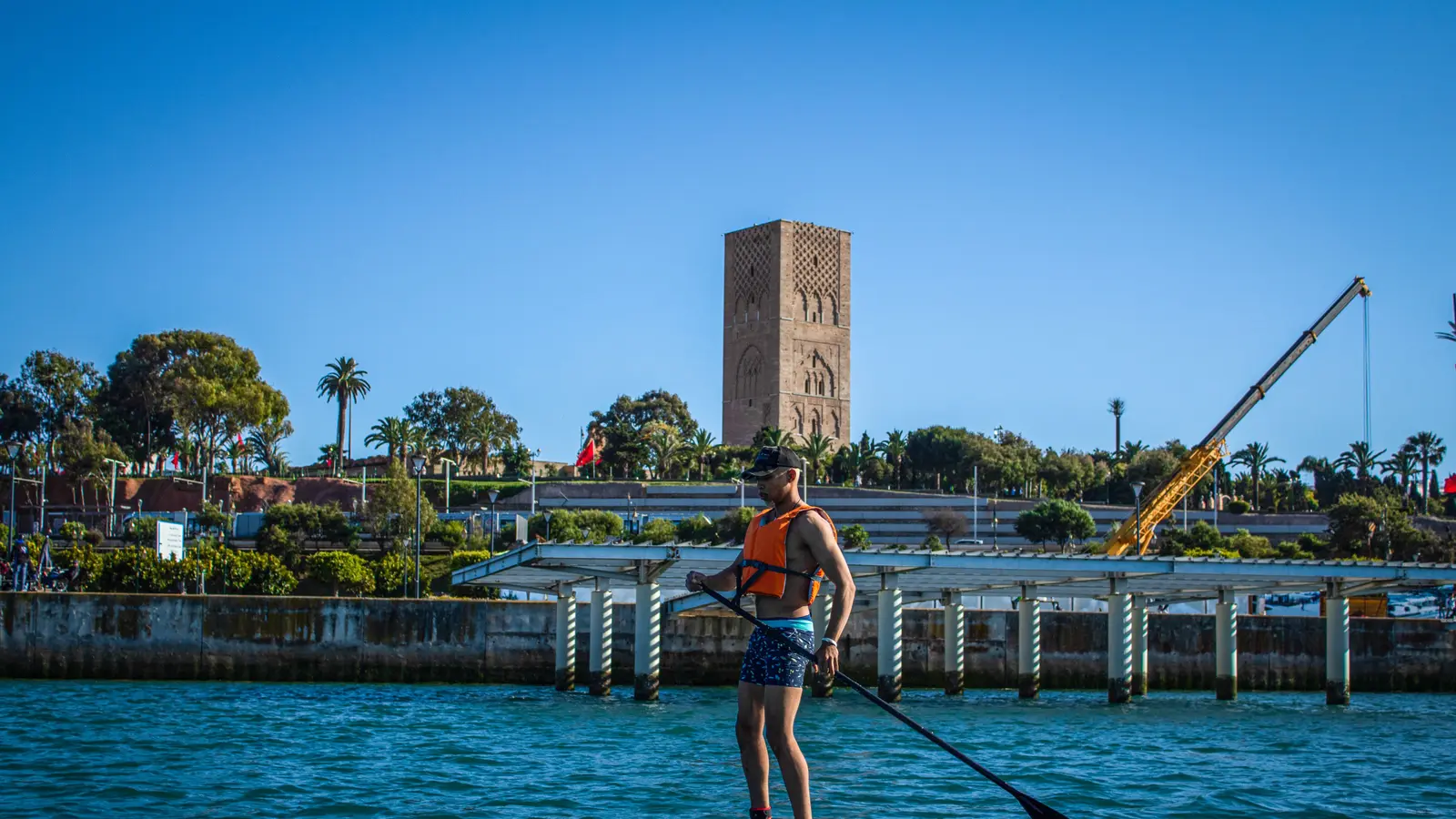
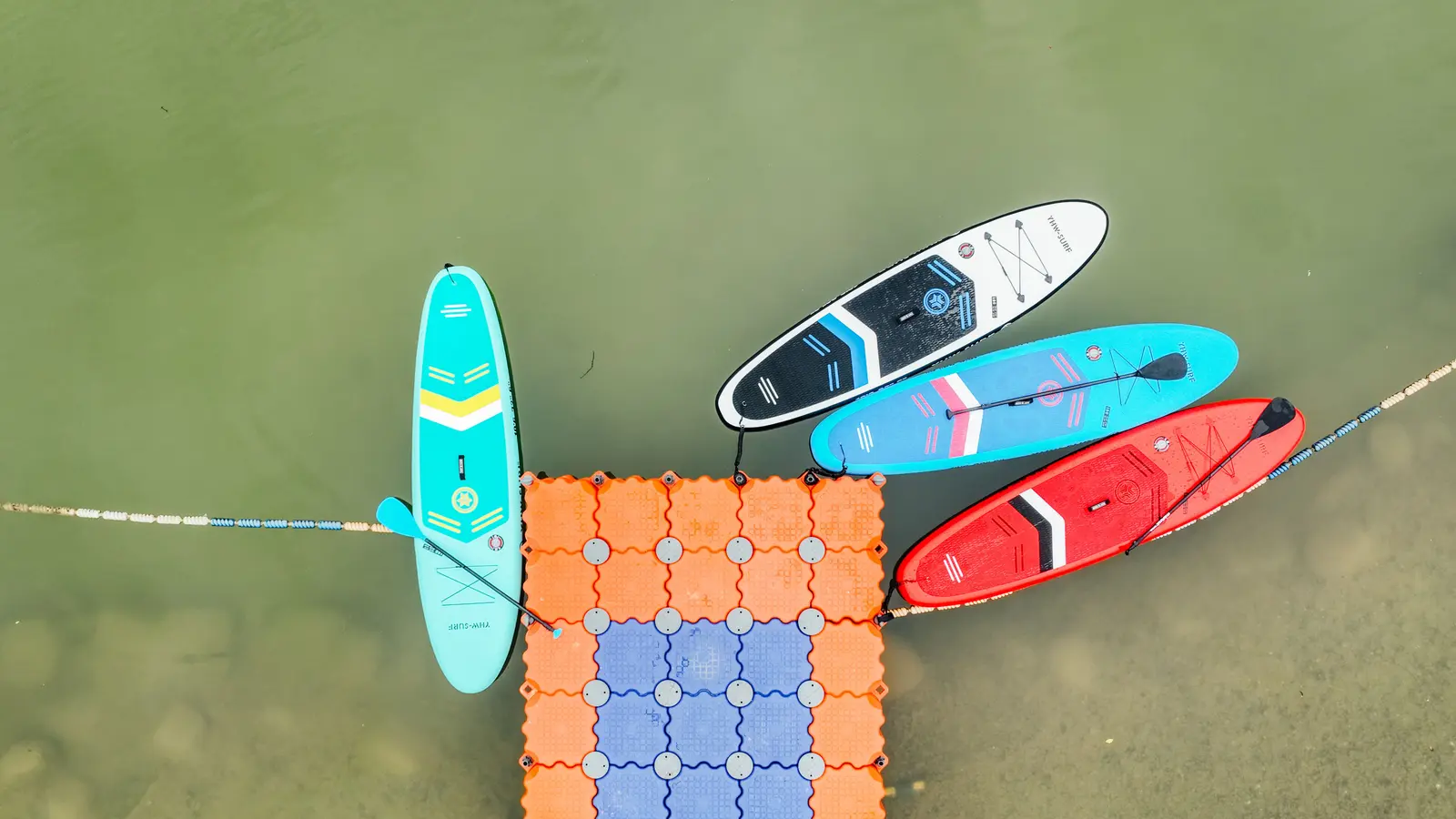

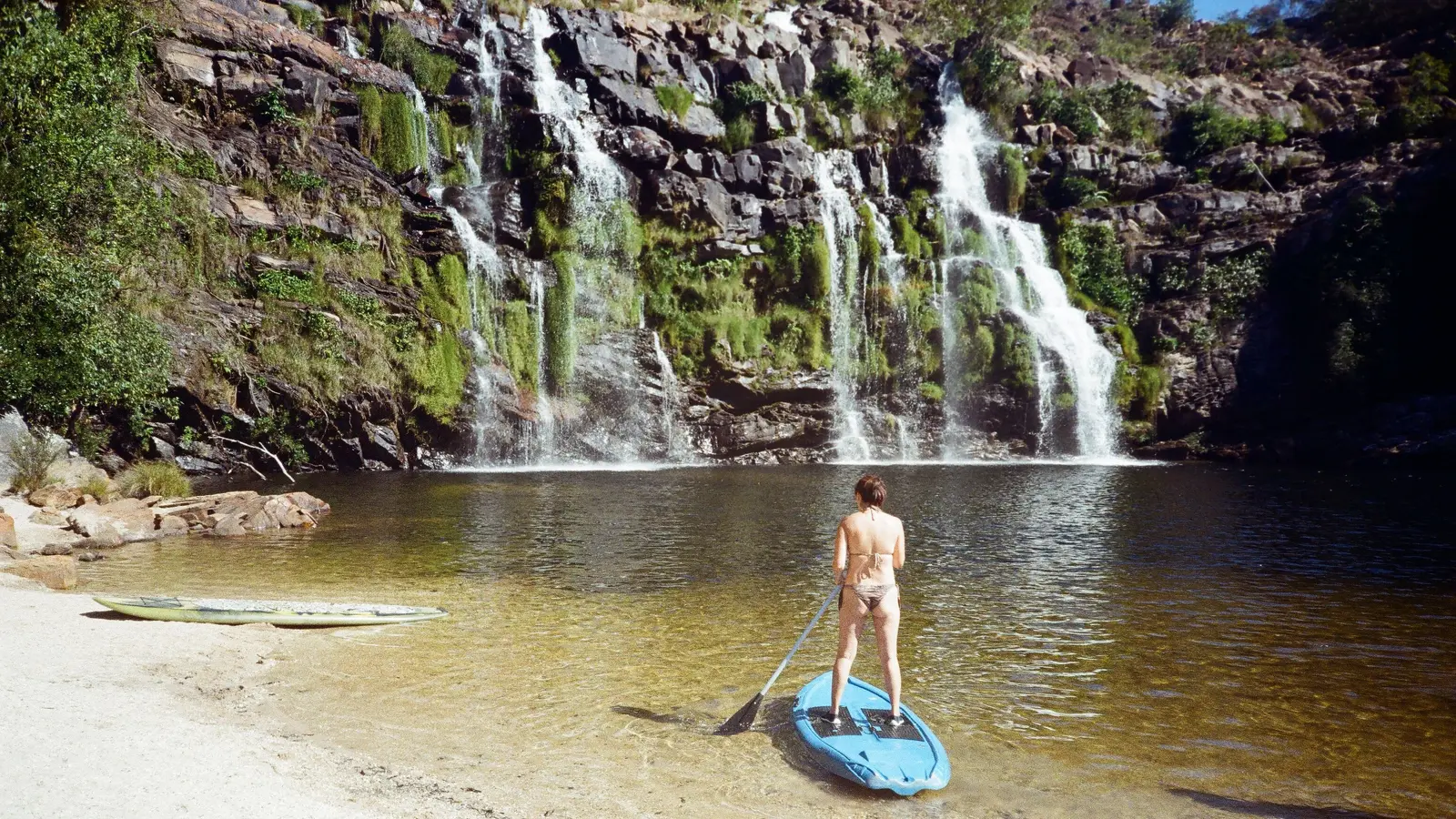
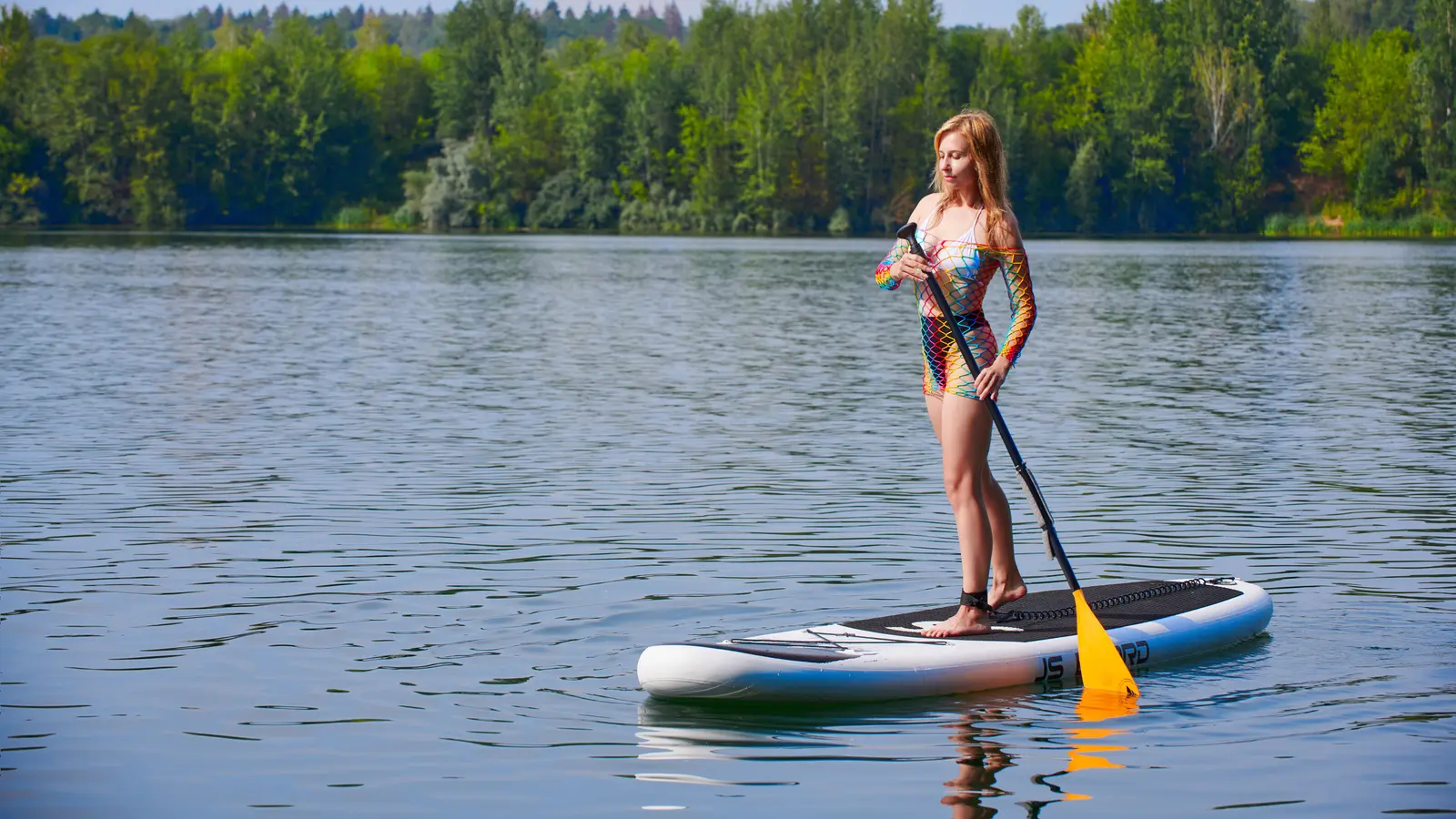
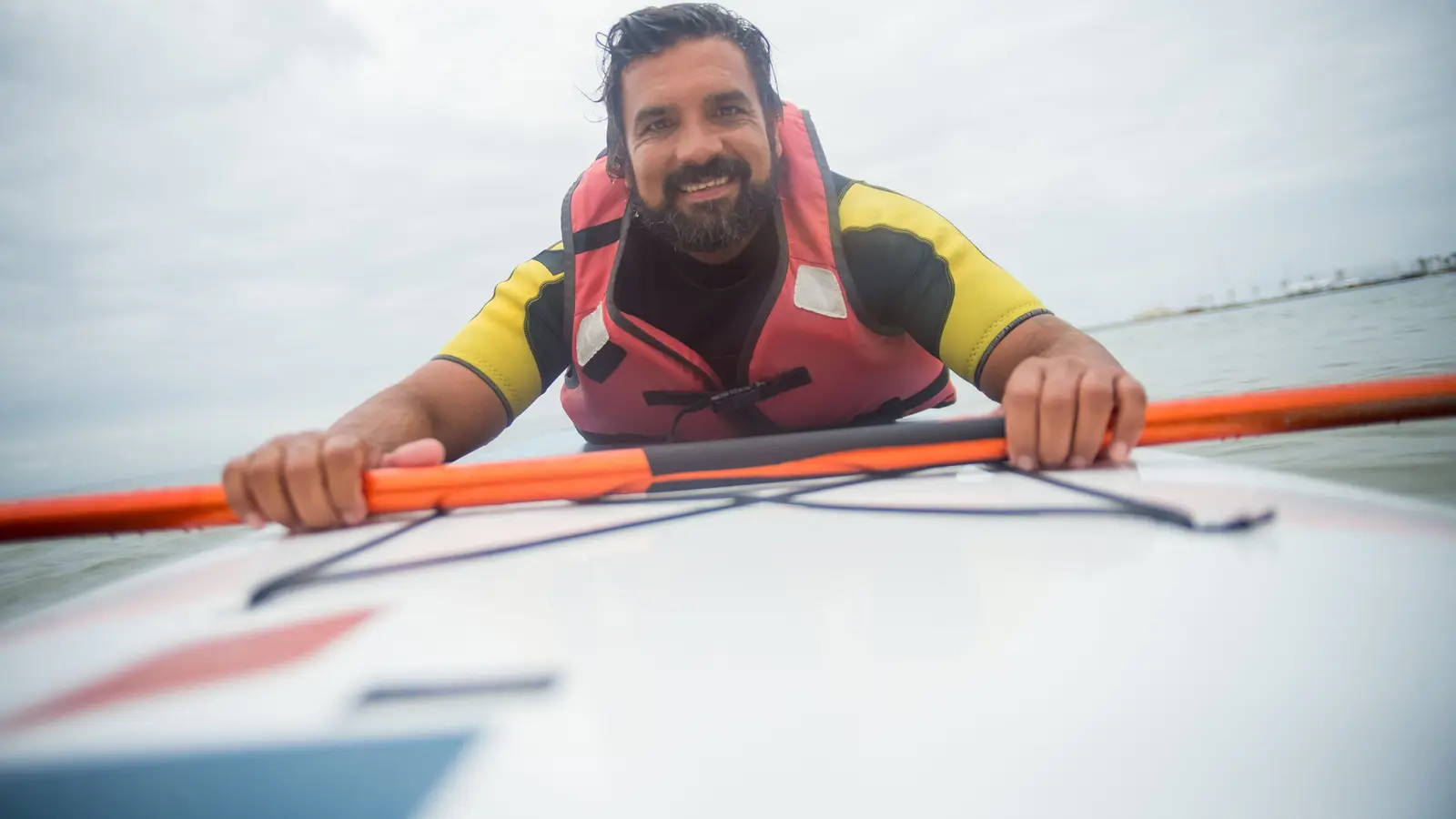
For a paddle boarding trip, bring a board, paddle, life jacket (PFD), leash, whistle, water, sun protection and a phone in a waterproof case. Add a light if you might still be out after sunset, and warmer layers if the water is cold.

Photo: George Zografidis, Pexels License
That is the short version. Below is the full list, with why each item earns its place and what changes by trip type.
Quick answer
- Always: board, paddle, PFD, leash, whistle, drinking water, sunscreen, phone in a waterproof case.
- Sometimes: a white light, a dry bag, a first aid kit, a hat, sunglasses with a strap, snacks, a towel and dry clothes.
- Inflatable board: pump, repair kit and a spare fin.
- Cold water: dress for the water, not the air.
1. Board, paddle and fin
Check the basics before you leave the house. The fin should be attached, the paddle should be set to the right height, and an inflatable board should be at full pressure. Our guide to choosing a paddle board size and the Board Fitter help if you’re still choosing a board.
If you paddle an inflatable, pack a pump and a patch kit too. See our notes on packing an inflatable paddle board and the best SUP patch kits.
2. A life jacket you will actually wear
A Coast Guard-approved life jacket is the most important item on the list. Outside surf, swimming and bathing areas, the Coast Guard treats a stand up paddle board as a vessel, so federal rules call for a wearable life jacket for each person on board. Rules differ by state, and states set their own age limits for children. Florida, for example, requires children under 6 to wear one. Check your state boating agency.
The law in most places only requires you to carry it. Wearing it is what helps in a fall. Virginia’s wildlife agency calls wearing a well-fitting, Coast Guard-approved jacket “absolutely necessary”. Read more in do you need a life jacket on a paddle board and see our PFD picks.
3. A leash
A leash keeps the board within reach if you fall off. Florida’s wildlife agency lists it as a recommendation, not a requirement. On a calm lake an ankle leash is the usual choice. On rivers or in moving water, a quick-release leash that you can detach in a hurry is safer than one fixed to your ankle. Our safety tips go into the difference.
4. A whistle
Paddle boards need a way to make a sound signal. State agencies describe it as a whistle, horn or similar device that can be heard from about half a mile away. A plastic whistle clipped to your life jacket does the job for a few dollars and weighs nothing.
5. Drinking water
Take more than you think you need. Minnesota’s natural resources agency suggests planning around three quarts of fluid for a full-day paddle, and says dehydration can impair your judgment. For a short outing you need less, but always bring some. Strap a bottle to the deck bungee or keep it in a dry bag.
6. Sun protection
There’s no shade on a board, and water reflects the sun. Bring water-resistant sunscreen, a hat and sunglasses with a strap so they float or stay on your neck if they fall. Connecticut’s environmental agency lists all three in its paddler checklist. Reapply sunscreen on longer trips.

7. A phone in a waterproof case
A phone is your camera, map and way to call for help. Keep it in a waterproof pouch or a dry bag, and charge it before you leave, as Virginia’s agency advises. Service can be patchy on rivers and remote shores, so don’t rely on it alone. Tell someone where you’re going and when you’ll be back, which is called a float plan.
8. A white light for dusk and dark
If you might be on the water between sunset and sunrise, carry a light. The Coast Guard’s rules for paddle craft, as summarized by state agencies, call for a flashlight or headlamp that can show a white light in time to avoid a collision. A headlamp is easy to wear. Our paddle board lights list covers options.
9. A dry bag
A dry bag keeps your phone, keys, snacks and a spare layer dry and gives you something to clip to the deck. Follow the maker’s instructions for sealing it. See our best dry bags for paddle boarding.
10. The right clothes, plus a spare layer
Dress for the water temperature, not the air. Virginia’s wildlife agency says to dress as if you may end up fully submerged, and warns about hypothermia risk below 60°F water. Minnesota’s agency adds that cold-water accidents are five times more likely to be fatal below 60°F. Avoid cotton, which stays wet and cold. Our guides on what to wear and whether you need a wetsuit cover the details, and the wetsuit tool gives a quick answer.
11. A small first aid kit
Minnesota’s agency lists a first aid kit among the gear to bring, along with knowing how to use it. A basic kit with plasters, antiseptic wipes and tape fits in a dry bag. If you don’t know how to use something, learn it before you go.
12. Snacks, a towel and dry clothes
These aren’t safety gear, but they make the trip better. A snack helps on a longer paddle, and dry clothes and a towel in the car make the trip home more comfortable, especially in cool weather.
What changes by trip type
- Short paddle on a warm, calm lake: PFD, leash, whistle, water, sunscreen, phone in a pouch.
- Longer touring trip: add more water, food, a first aid kit, a dry bag with spare layers and a paper or offline map. Check how long it will take with the trip time calculator.
- River or moving water: a quick-release leash and local advice first.
- Ocean or coast: check tides and wind, and note that visual distress signals are required on coastal waters at night under Florida’s rules. Check your state’s rules. See paddle boarding in the ocean.
- Sunrise or sunset: a white light and an extra layer.
Before you leave: a last check
- Forecast checked, including wind and storms.
- Someone knows where you’re going and when you’ll be back.
- PFD fits and buckles properly.
- Phone charged and sealed.
- Board, paddle and fin ready.
FAQ
What do I need to bring for my first paddle board trip?
A life jacket, leash, whistle, water, sunscreen and a phone in a waterproof case, plus the board and paddle. If you’re renting, ask the shop what’s included.
Is a whistle required on a paddle board?
In most US waters, yes. Outside surf, swimming and bathing areas, paddle boards count as vessels and need a sound-making device. A whistle meets it. State rules vary, so check your state’s boating agency.
Do I need a light to paddle at dusk?
If you’re out between sunset and sunrise, state agencies say you need a white light such as a flashlight or headlamp. Carry one even if you plan to be back before dark.
Should I bring my phone?
Yes, in a waterproof pouch or dry bag, and charged. Use it as a backup, not your only safety plan.
Do I need a leash?
It’s not usually a legal requirement, but it keeps the board close if you fall in. Use a quick-release leash on moving water.