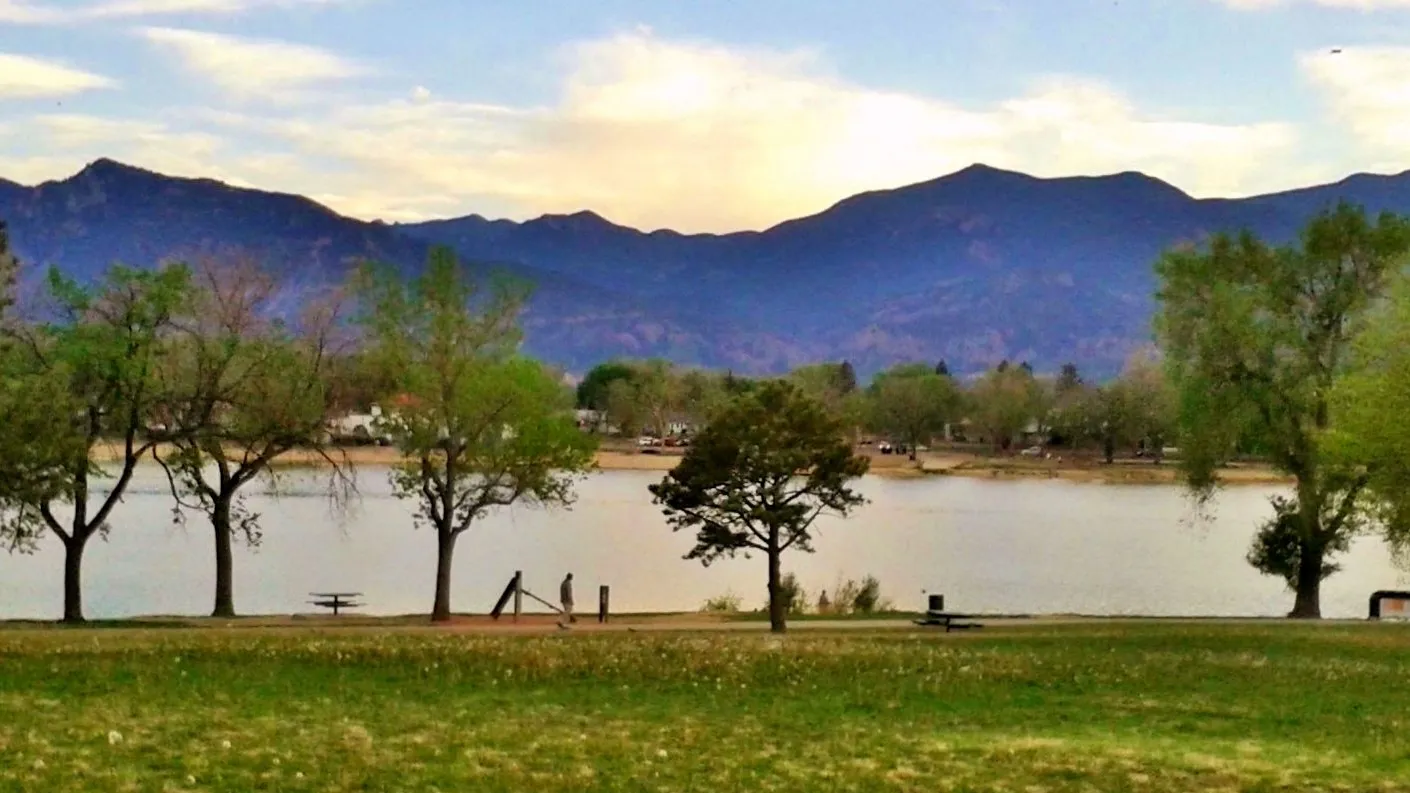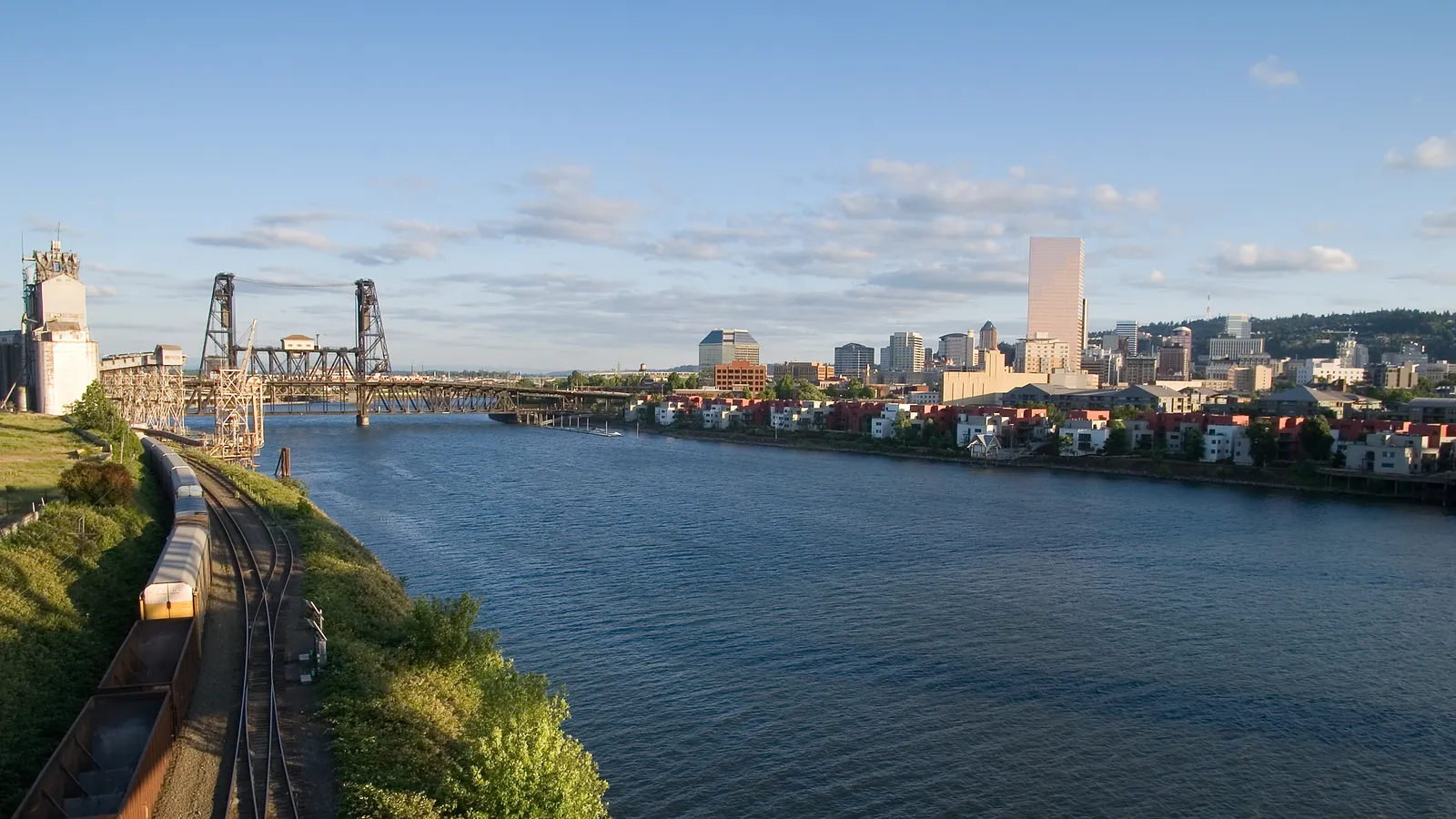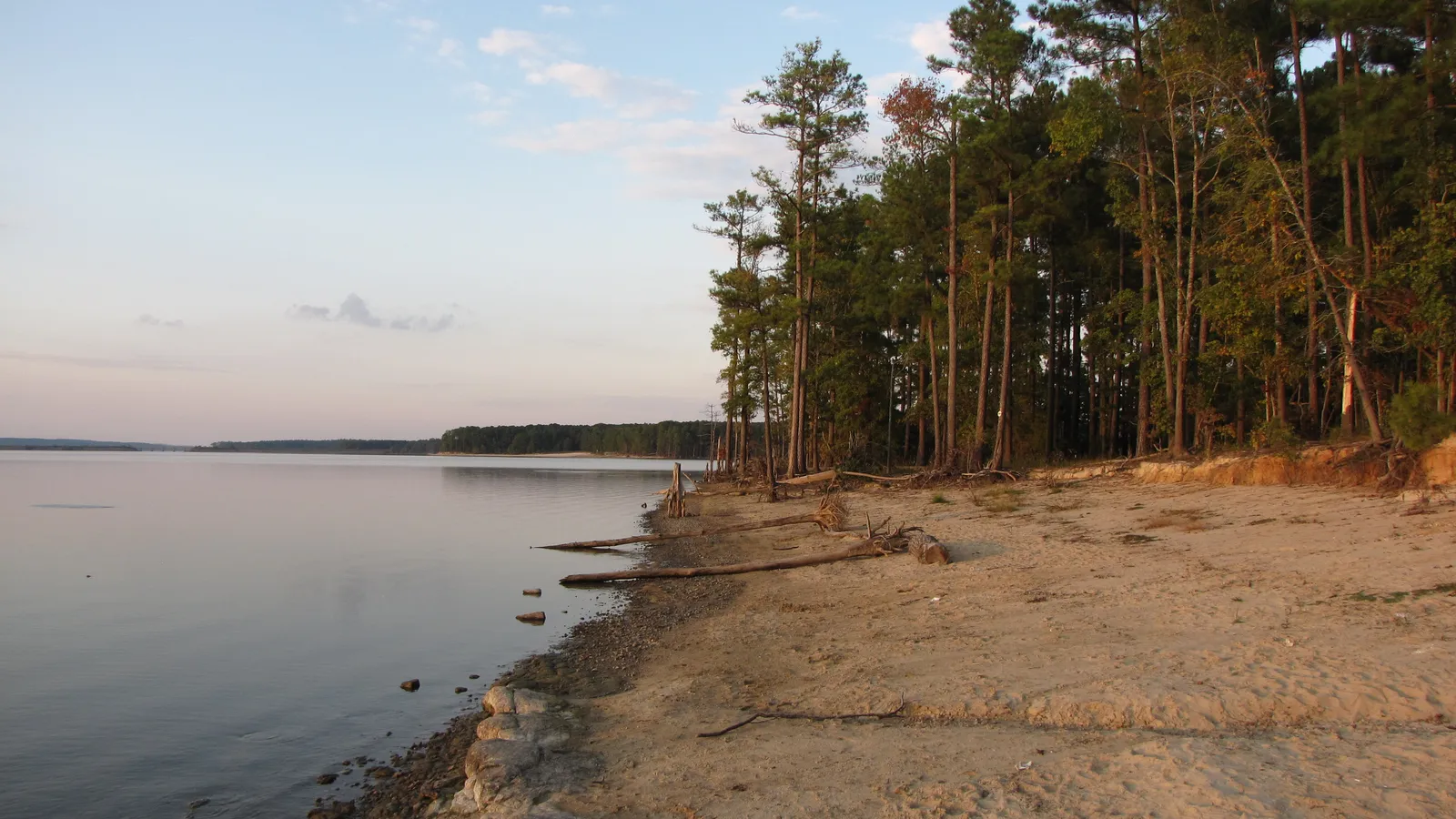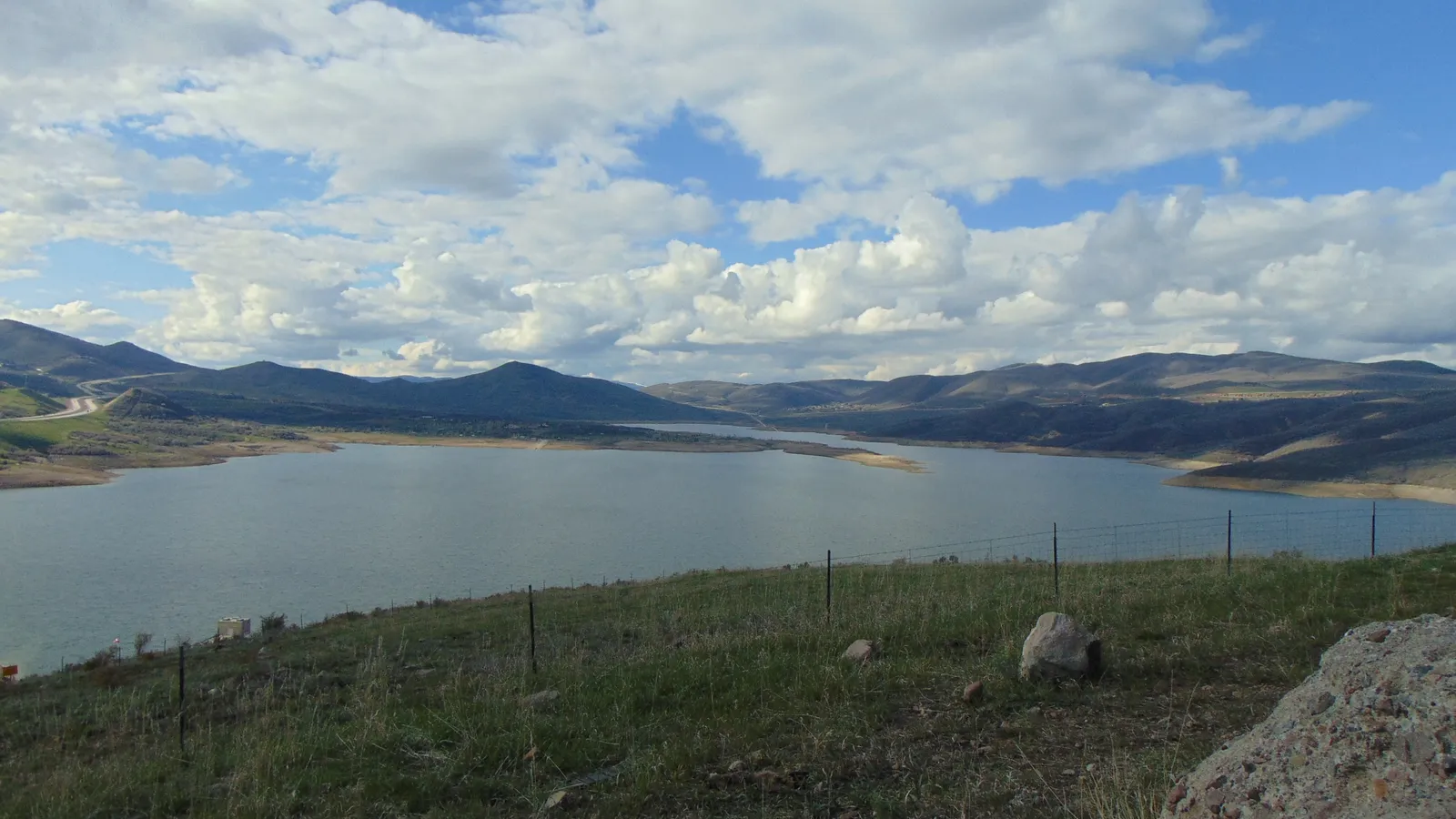




For most people the best place to paddle board near Denver is Big Soda Lake in Lakewood’s Bear Creek Lake Park: it.s a small lake set aside for swimming and paddling, with rentals on the shore. For more room, paddle Chatfield or Cherry Creek State Park, and for a mountain setting head into the foothills to Evergreen Lake, where you can rent a board at the lake house.
Most paddling around Denver happens on reservoirs. That’s good news for beginners: they’re flat, close to town and well run, with rentals and swim beaches. The trade-offs are crowds on summer weekends, powerboats on the bigger reservoirs, and wind that can pick up quickly on the open plains.
Quick answer
- First time on a board: Big Soda Lake in Bear Creek Lake Park, Lakewood.
- Biggest water with mountain views: Chatfield State Park, southwest of the city.
- Closest to central Denver: Cherry Creek State Park, with rentals at the marina.
- No gas motors: Aurora Reservoir, which only allows non-motorized and electric boats.
- Mountain lake: Evergreen Lake, open for boating in summer only.
The best places to paddle board in Denver
Chatfield State Park
Directions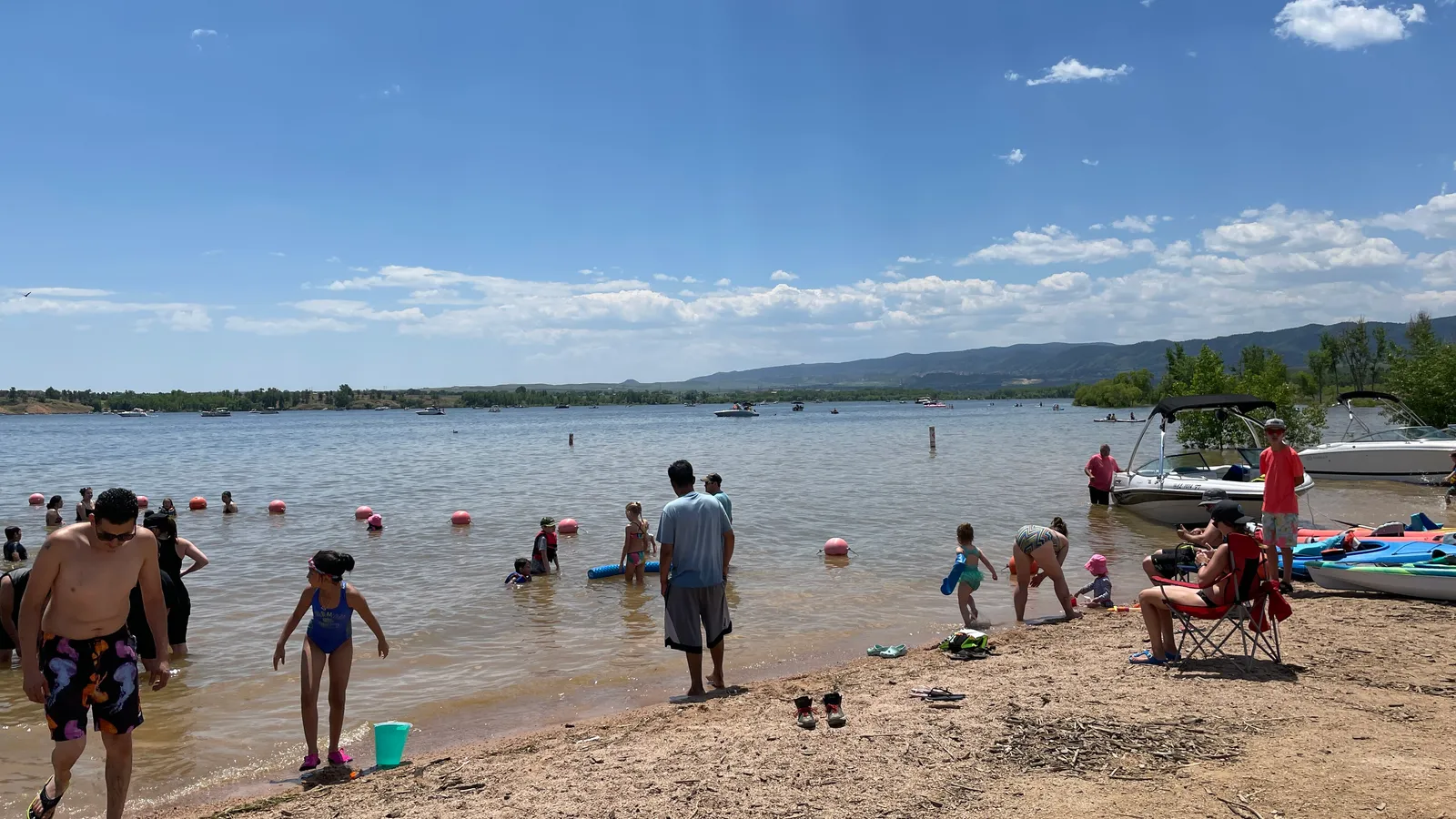
Best for: a big reservoir with foothill views, mixed abilities. Flat in the morning; busy with boats on weekends.
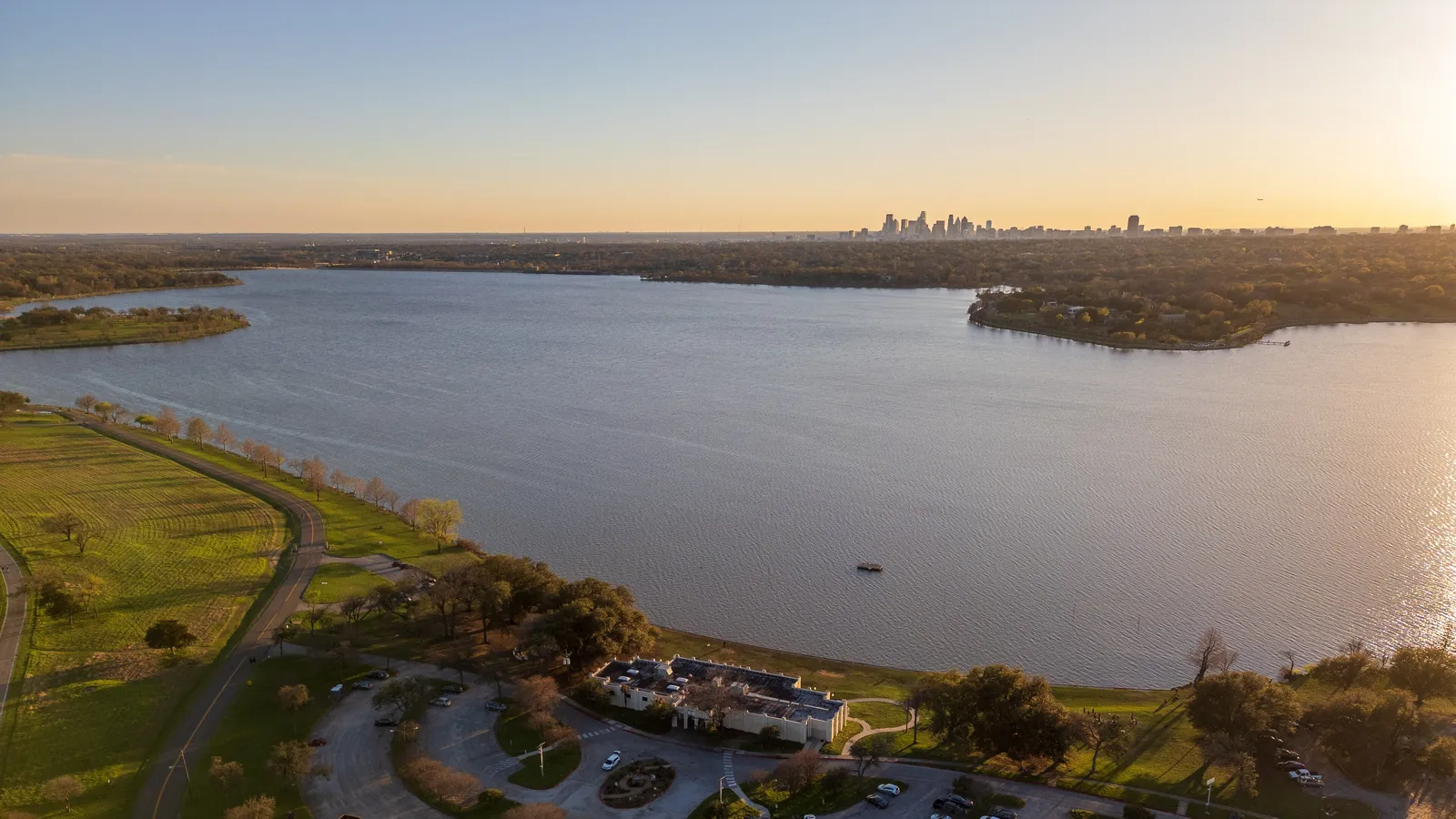
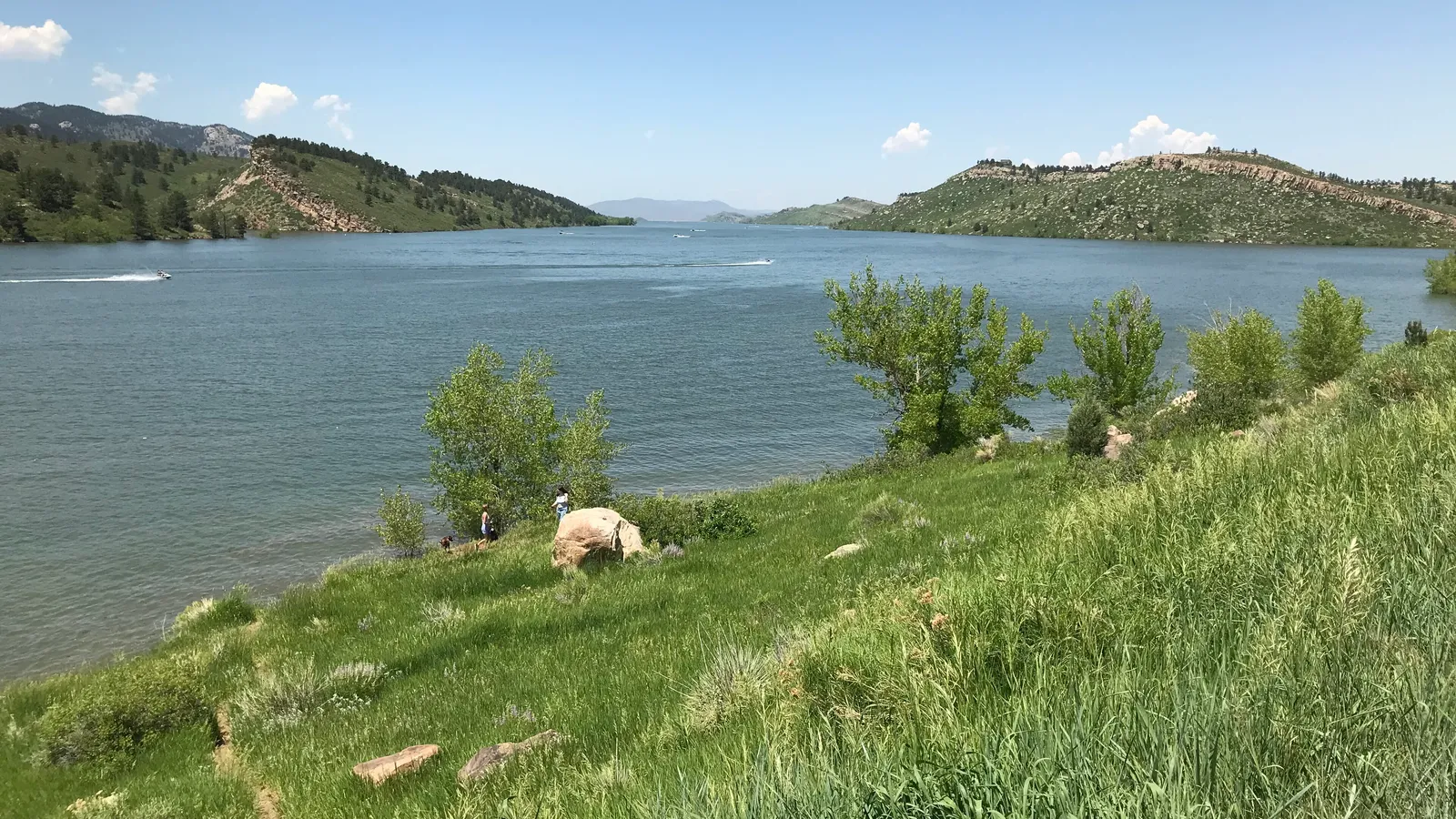
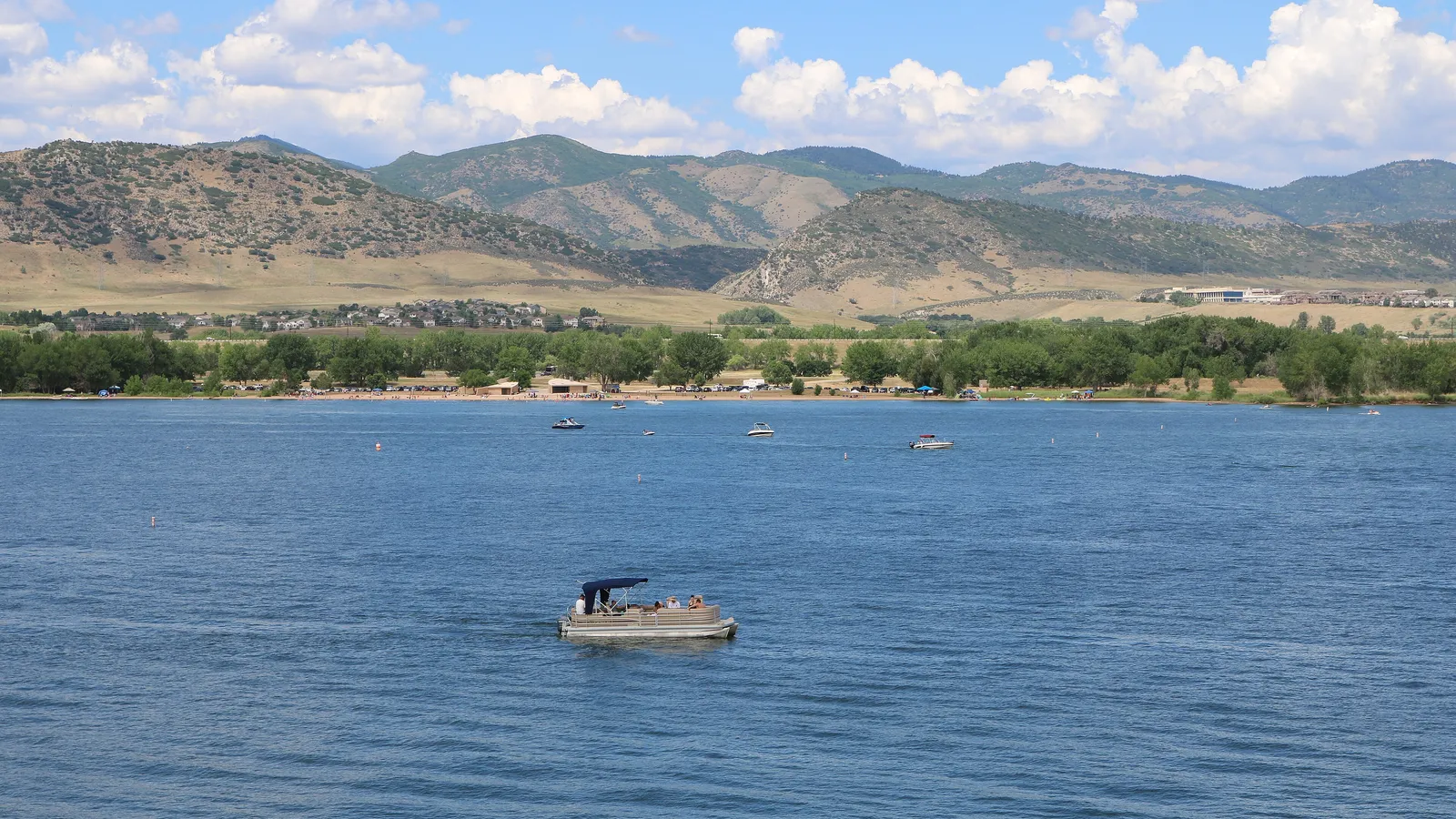
Chatfield State Park, southwest of Denver near Littleton, wraps around a 1,355-acre reservoir with the foothills rising behind it. Colorado Parks and Wildlife allows paddle boarding both on the reservoir and on the park’s gravel ponds, which are smaller.
Where to launch: From the shore near the swim beach, outside the roped swimming area, or try the gravel ponds if the main reservoir is choppy. The swim beach is open from Memorial Day to Labor Day, sunrise to sunset, with no lifeguard on duty. The park is open 5 a.m. to 10 p.m.
Fees: A daily vehicle pass costs $12 to $17 at the time of writing, depending on the day, or $4 per person if you walk or bike in.
Good to know: Chatfield allows jet skis and waterskiing, so stay close to shore and away from the boat ramps on the northwest and southeast sides. Leashed dogs are allowed in the park, and there’s an off-leash area that needs a separate pass.
Cherry Creek State Park
Directions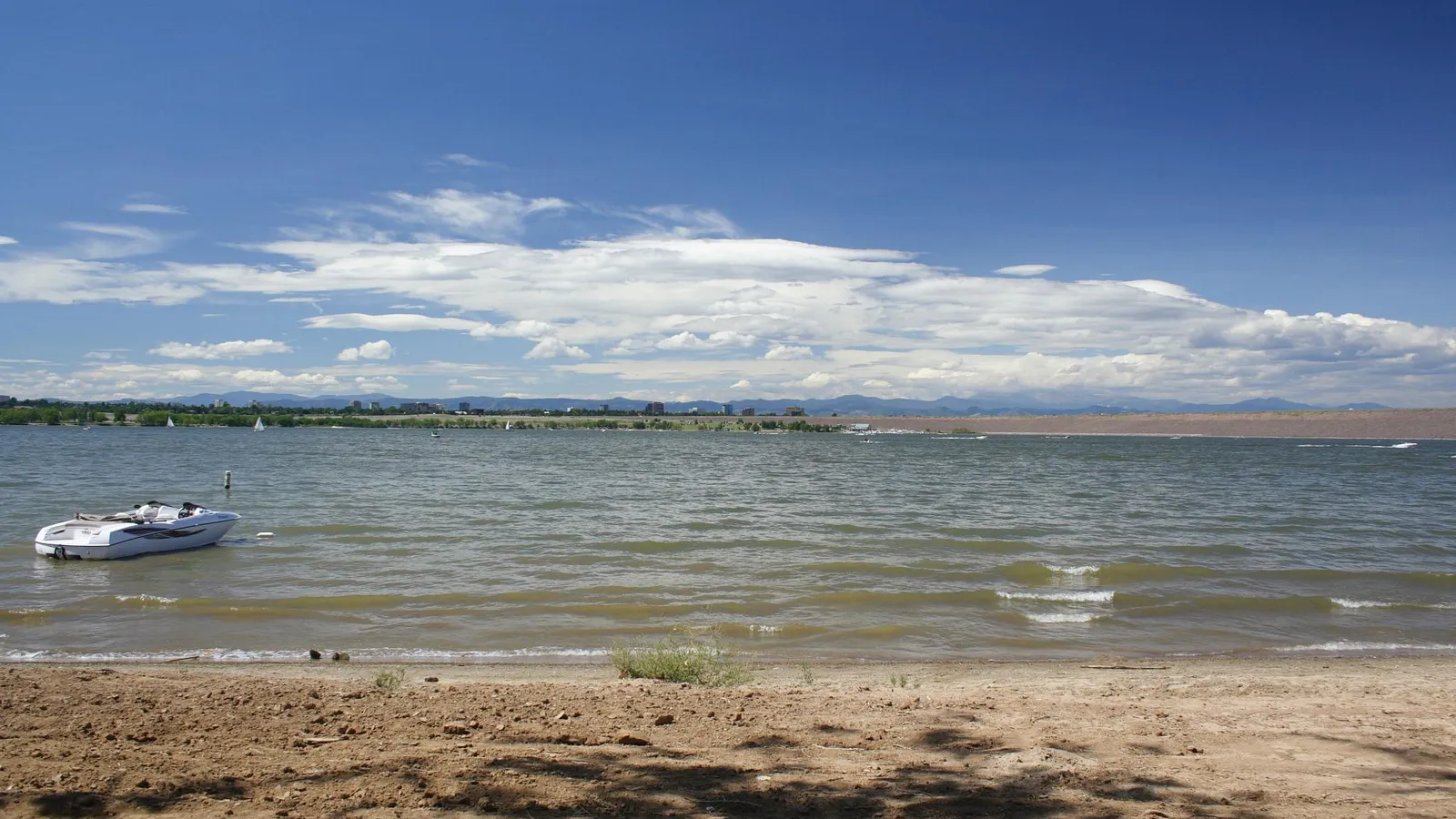
Best for: an easy trip from central Denver, rentals. Flat water, with powerboats in the middle.
Cherry Creek State Park in Aurora surrounds an 850-acre reservoir in the southeast metro area, the closest big water to downtown. It has a marina, two boat ramps and a sandy swim beach with a roped swimming area.
Where to launch: From the shore near the marina on the west side, or near the swim beach on the east side. Boating runs from March 1 to November 30, weather permitting. On summer weekends and holidays, the park enforces a carrying capacity, so arrive early.
Rentals: Rocky Mountain Paddleboard rents paddle boards at the marina and from a trailer near the swim beach in summer.
Good to know: Waterskiers run counter-clockwise in the open water north of the ski line, so keep to the shoreline and the no-wake areas. Eurasian watermilfoil, an invasive weed, has been found in the reservoir, so clean, drain and dry your board before taking it anywhere else. A daily vehicle pass is $10 to $15 at the time of writing.
Big Soda Lake (Bear Creek Lake Park)
DirectionsBest for: beginners, families, SUP yoga. Flat water.
Bear Creek Lake Park, on Morrison Road in Lakewood, has three lakes. Bear Creek Lake is the boating and fishing reservoir; Big Soda Lake is the one for swimming and paddle boarding, with a sandy beach. Its small size makes it the friendliest place near Denver to learn.
Where to launch: From the beach at Big Soda Lake, outside the designated swimming area. The swim beach is open in summer, and the park charges a per-vehicle entry fee.
Rentals: Rocky Mountain Paddleboard rents paddle boards, kayaks and canoes at Big Soda and Little Soda lakes in summer.
Good to know: The City of Lakewood doesn’t require inspections for non-motorized paddle boards, kayaks and canoes, because the state exempts them. It’s still worth cleaning and drying your board between lakes.
Aurora Reservoir
Directions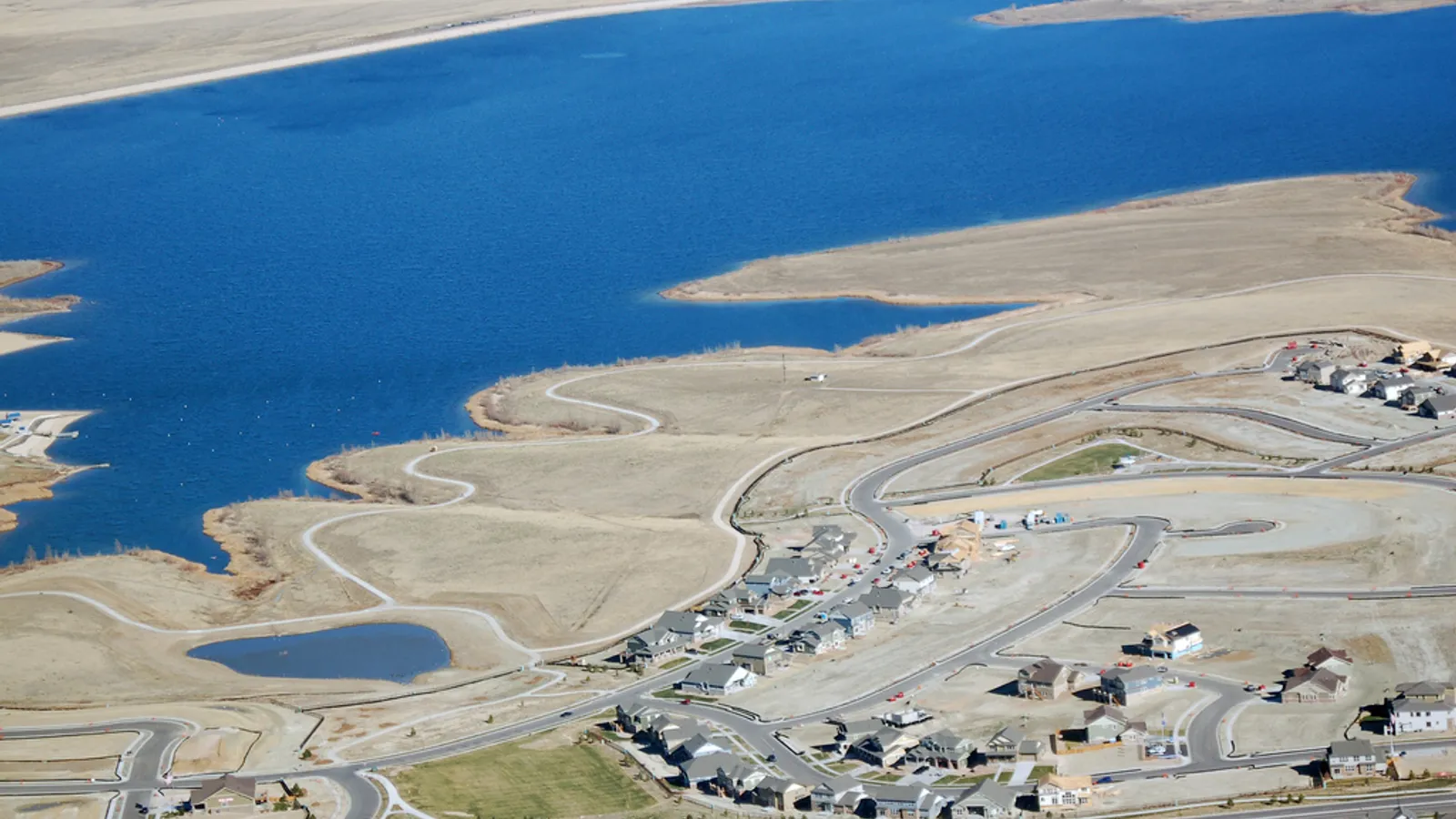
Best for: quiet paddling, longer distances. Flat in the morning; exposed to wind.
Aurora Reservoir, on the southeast edge of Aurora, allows only non-motorized boats and electric motors, with no gas engines. That makes it far quieter than Chatfield or Cherry Creek, with no wakes to deal with.
Where to launch: Hand-carry your board to the beach next to the boat ramp. Boating season starts once the ice thaws, usually mid to late March, and ends November 30. There’s a per-vehicle entry fee or season pass.
Rentals: The City of Aurora rents paddle boards and single kayaks at the reservoir from Memorial Day weekend to Labor Day, weather permitting, at $20 an hour at the time of writing, including a life jacket and paddle.
Good to know: Every person on a paddle board here must have a life jacket, and children 12 and under must wear one at all times. Boats that hold water or are launched from a trailer need a Water Access Pass and an inspection; a plain paddle board doesn’t. The reservoir sits on open prairie, so afternoon wind can build a real chop.
Evergreen Lake
Directions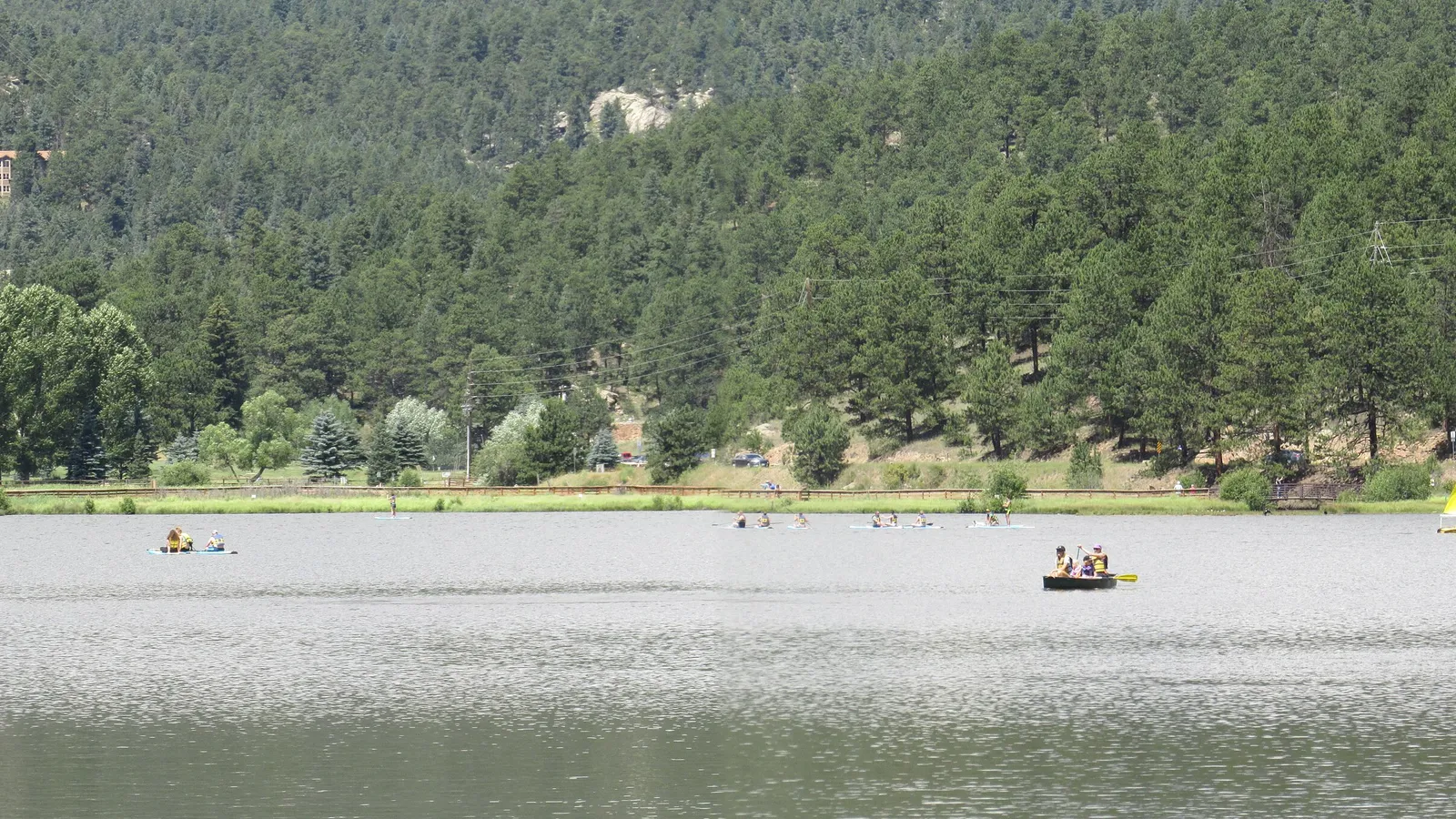
Best for: a mountain setting, short paddles, families. Flat water.
Evergreen Lake is a small mountain lake in the town of Evergreen, in the foothills west of Denver, ringed by pine-covered hills. It’s run by the Evergreen Park & Recreation District, and in winter it becomes a skating rink.
Where to launch: From the Evergreen Lake House (29612 Upper Bear Creek Road). Bringing your own board? You’ll need a day pass and an aquatic nuisance species inspection before you launch.
Rentals: The lake house rents paddle boards at $25 an hour, plus XL boards for up to four people, kayaks and canoes, first come first served. Life jackets are included. Boating is seasonal, and it had already closed for the year by early October 2026.
Good to know: Life jackets must be worn on every boat and board at all times, no exceptions. Nobody, pets included, can swim in the lake, though leashed pets can ride on rental boats. Hours change with the weather; call the boating hotline (720-880-1391) before driving up.
When to go
The paddling season around Denver runs from late May to early September, when rentals and swim beaches are open. Some reservoirs open for boating from spring to late fall, but the water stays cold early in the season, especially at Evergreen. Check our wetsuit check on cool days.
- Summer (June–August): warmest water and air, and the busiest weekends. Go on a weekday or early morning to avoid crowds and boat wakes.
- Afternoons: summer thunderstorms often build over the mountains in the afternoon, and wind picks up on the reservoirs. Plan to be off the water by early afternoon, and get off at the first sign of lightning.
- Altitude: Denver sits at about 5,280 feet. The sun is stronger and you’ll tire sooner, so bring water and sunscreen.
Planning a lap of Chatfield or Aurora Reservoir? Our Trip time calculator estimates how long it’ll take at your pace.
Rules and safety in Denver
Colorado treats a paddle board as a vessel, so the state’s boating rules apply:
- Life jacket: carry a US Coast Guard–approved life jacket for each person. Children under 13 must wear one. Some lakes go further: Evergreen Lake requires everyone to wear one. See our pick of the best PFDs for SUP.
- Whistle: carry a whistle or other sound-producing device.
- Your name on the board: write your name and a phone number or address on your paddle board, so a lost board can be traced back to you.
Invasive species rules:
- Paddle boards are exempt from Colorado’s mandatory aquatic nuisance species inspections, because they’re hand-launched and don’t hold water. Some local lakes, such as Evergreen, still inspect every private craft.
- Clean, drain and dry your board after every lake anyway. Zebra and quagga mussels, and weeds like the watermilfoil at Cherry Creek, hitch rides on boards and leashes.
And a few habits worth keeping:
- Stay out of swim areas and boat lanes, and keep to the no-wake zones.
- Wear a leash on the big reservoirs so the wind can’t take your board.
- Watch the sky. Lightning and sudden wind are the biggest risks on Front Range lakes.
FAQ
Where can beginners paddle board near Denver?
Big Soda Lake in Bear Creek Lake Park, Lakewood. It.s small, set aside for swimming and paddling, and has rentals on the beach. Cherry Creek State Park is a good second choice if you stay near the shore.
Do I need a permit to paddle board in Colorado?
No permit or registration for a paddle board, but you pay park entry at every reservoir in this guide, and Evergreen Lake charges a day pass for private boards. You don’t need an inspection for a plain paddle board at state parks, but some local lakes inspect all boats.
Can you paddle board in Denver city parks?
The big options are the state parks and reservoirs around the city rather than downtown park lakes. Check with Denver Parks and Recreation before launching on any city lake, as rules vary.
Can I bring my dog paddle boarding near Denver?
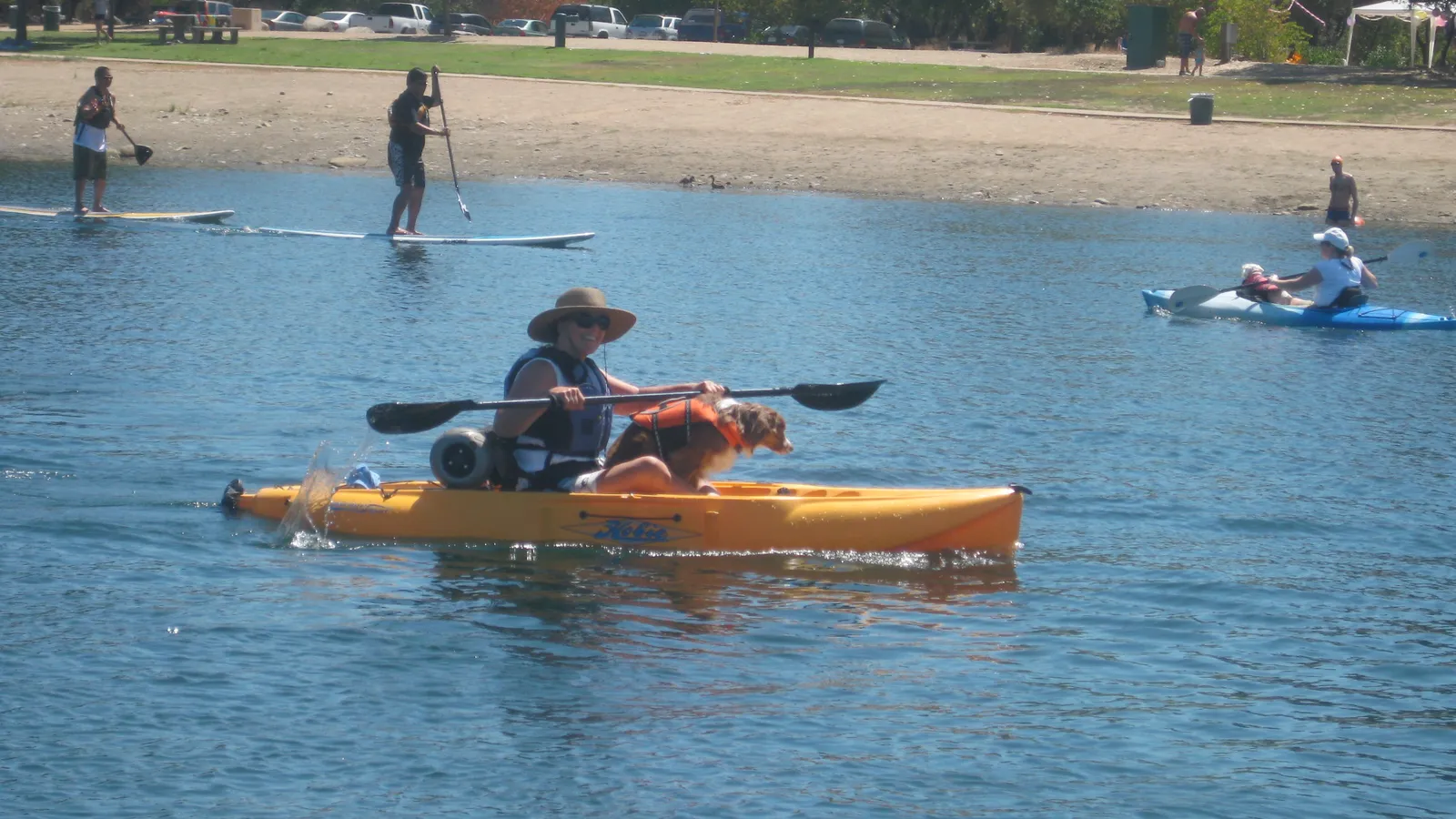
Leashed dogs are allowed at Chatfield and Cherry Creek state parks, both of which also have off-leash areas with a separate pass. At Evergreen Lake, pets can ride on rental boats but can’t swim. Read how to paddle board with a dog before your first trip.
What size paddle board do I need for Denver’s reservoirs?
A stable all-around board suits Big Soda and Evergreen. On Chatfield, Cherry Creek and Aurora, where wind and wakes build, a longer board tracks better. Our Board Fitter suggests a size based on your weight, skill and where you’ll paddle.